
Plants
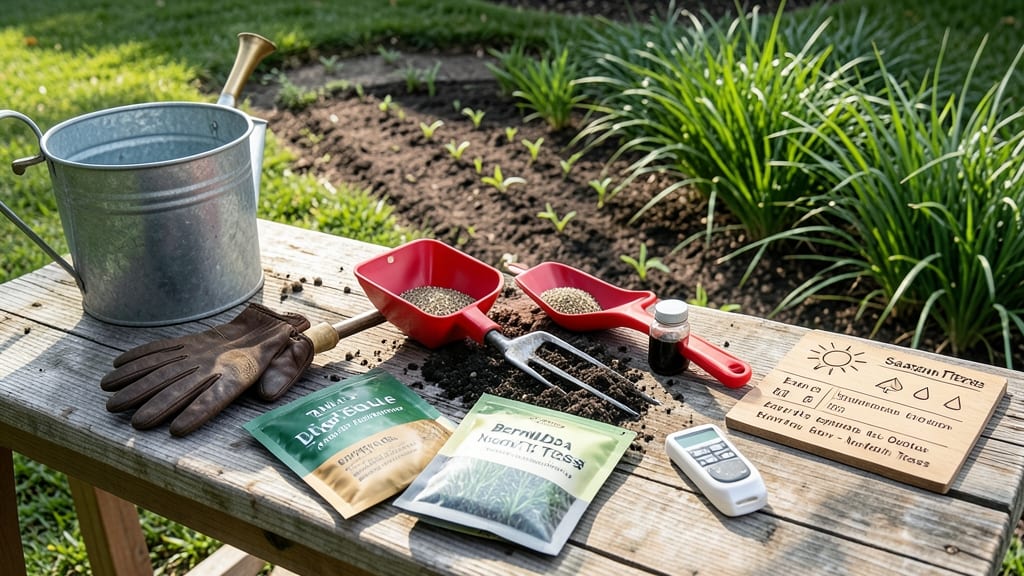
Planting grass seed in North Texas at the right time is the key to beating the heat and drought before winter sets in.
Picture this: you’ve spent hours preparing your soil, choosing the perfect seed blend, and even battling weeds—only to watch your new lawn wilt under 100-degree afternoons or freeze before it takes hold.
That’s why timing matters more than anything else in Zone 8a, where summers are brutal and winters can be unpredictable.
Late summer, from late August to early October, is your best shot for deep root growth before the first frost hits around mid-November. This window gives your grass a fighting chance to establish itself before winter dormancy, while avoiding the scorching heat of peak summer.
In this guide, I’ll break down the exact planting schedule for North Texas, from soil prep to watering tricks that actually work—so you can skip the guesswork and get that lush, green lawn you’ve been dreaming of.
Optimal planting windows for North Texas grass seed (late summer vs. fall)
Timing your grass seed planting in North Texas is everything—especially when balancing 100°F summers and unpredictable freeze risks. The 6-week window from mid-August to early October is my top recommendation for deep root establishment before winter dormancy.
This period gives seedlings time to grow strong before November’s first frost (typically around November 15 in USDA Zone 8a).
But what if you miss that window? Fall planting (late September to early October) is still viable, though it narrows as temperatures drop. The key is soil temperature—ideal conditions are 60–75°F—not just air temperature.
In Dallas, soils stay warm longer than in Wichita Falls, where cooler nights arrive earlier. Let’s break down the best planting windows and what they mean for your lawn’s success.
🌱 Comparison Table: Late Summer vs. Fall Planting for North Texas Grass Seed
| Factor | Late Summer (Mid-Aug–Early Oct) | Fall (Late Sept–Early Oct) |
|---|---|---|
| Planting Window | 6 weeks (Aug 15–Oct 1) | 3 weeks (Sept 20–Oct 10) |
| Soil Temp Threshold | 60–75°F (ideal) | 60–70°F (critical) |
| Root Growth Potential | Deep (4–6 inches) | Moderate (2–4 inches) |
| Dallas-Fort Worth Window | Aug 20–Sep 30 | Sep 25–Oct 5 |
| Wichita Falls Window | Aug 25–Sep 20 | Sep 20–Sep 30 |
| Watering Needs | 2x/day (morning/evening) | 1x/day (morning) |
| Frost Risk | Low (before Oct 15) | Moderate (after Oct 1) |
| Best Grass Types | Tall Fescue, Bermuda | Tall Fescue, Ryegrass |
Late summer planting gives you the longest window for root development, especially critical for clay-heavy North Texas soils that dry out quickly.
In Dallas-Fort Worth, you’ve got until late September to plant before soil temperatures dip below 65°F, while Wichita Falls cools faster—aim for mid-August to early September there. The trade-off?
Late summer requires more frequent watering to combat 100°F+ days, but the payoff is a thicker, drought-resistant lawn by winter.
Fall planting is riskier but still effective if you act fast. The 3-week window (late September to early October) is tight, so monitor soil temperatures with a soil thermometer—stop planting if temps drop below 60°F.
Fall seedlings focus on root growth rather than top growth, making them hardier for winter. However, cool-season grasses like Tall Fescue thrive best in fall, while warm-season grasses like Bermuda struggle to establish before frost.
Regional microclimates play a huge role. In urban Dallas, heat islands keep soils warmer longer, extending your window by 1–2 weeks compared to rural areas. Meanwhile, Wichita Falls’ higher elevation means cooler nights, so plant 2 weeks earlier than Dallas.
Always check your local Cooperative Extension Service for hyper-local frost dates—they’re your best resource for microclimate adjustments.
One critical mistake I see? Planting too late in fall and ending up with weak, frost-bitten seedlings. If you’re planting in October, use a lightweight mulch (like straw) to insulate roots and water deeply before frost to prevent winter desiccation.
For late fallers, ryegrass is your best bet—it germinates faster in cool soils and handles light frost better than Tall Fescue.
Pro tip: Test your soil pH (aim for 6.0
Step-by-step late summer grass seed planting checklist for North Texas
Late summer in North Texas is your golden opportunity to plant grass seed—when daytime highs dip below 90°F and nights stay above 60°F. This 6-week window (mid-August to early October) lets seeds germinate without scorching while giving roots time to strengthen before winter.
But rushing or skipping steps can turn your investment into a sad, patchy lawn. Let’s break it down into actionable phases so your new grass thrives.
Start with a soil test to confirm your lawn’s pH is between 6.0 and 7.0. North Texas soils often lean alkaline, so you may need to add sulfur or peat moss to adjust.
If your soil tests high in clay (common in Dallas-Fort Worth), till in 2–3 inches of compost to improve drainage. Skipping this step means poor seed-to-soil contact, which leads to uneven germination.
Now for the step-by-step checklist—your roadmap to a lush lawn:
Remove debris, dethatch, and loosen top 2 inches of soil with a rake or tiller. Aim for a fine, crumbly texture—like cake batter, not concrete.
North Texas heat favors Bermuda (drought-tolerant) or Zoysia (shade-friendly), but Tall Fescue wins for cool-season resilience. Mix types for year-round coverage.
Scatter seed ¼ inch deep for fine grasses, ⅛ inch for Bermuda. Lightly rake to bury seeds without smothering them—think whisper-thin coverage, not a snowfall.
First 2 weeks: Water twice daily (morning + evening) for 10–15 minutes to keep soil moist but not soggy. After germination, taper to deep watering 2x/week.
Shield seedlings from birds with netting and avoid foot traffic for 4–6 weeks. If temps spike over 95°F, provide light shade cloth during peak heat.
Wait 6 weeks post-planting, then apply a low-nitrogen starter fertilizer (10-10-10). Skip high-nitrogen blends—they burn tender roots.
Post-planting, monitor for fungus signs (yellow patches)—a red flag in North Texas’ humid late summers. If you spot issues, switch to evening watering and apply a copper-based fungicide.
Patience is key: full root establishment takes 8–12 weeks, but the payoff is a lawn that outlasts Texas’ brutal winters.
Pro tip: Mark your calendar for late October to apply a winterizer fertilizer. This preps your grass for dormancy and ensures a springtime green-up that puts your neighbors to shame.
With this checklist, you’re not just planting grass—you’re building a North Texas-proof lawn that survives the heat, drought, and freeze cycles. 🌱