
Plants
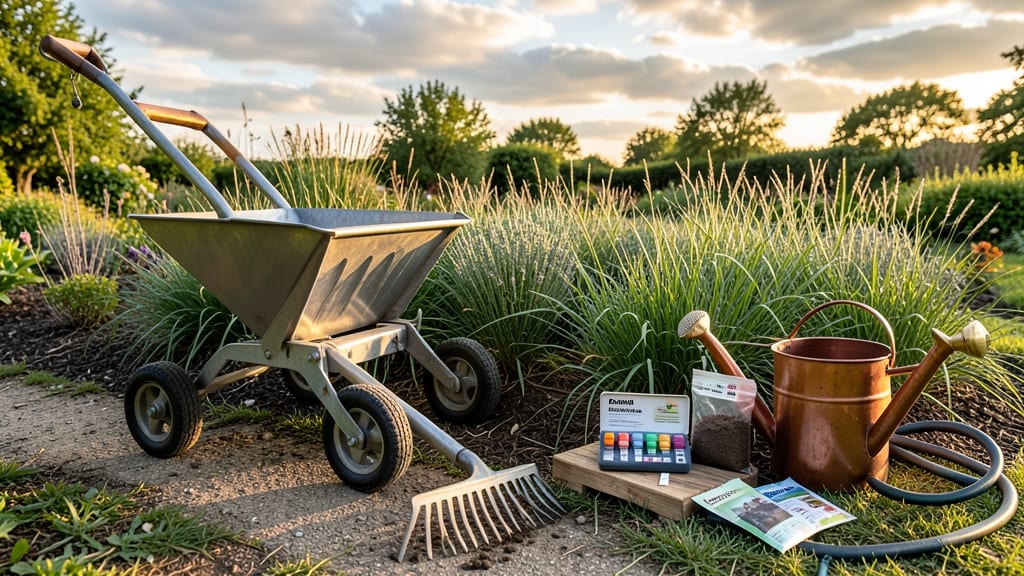
Planting grass seed in Massachusetts spring between mid-April and early May gives your lawn the best shot at strong, deep roots before summer heat arrives.
Too early, and a late frost can wipe out your efforts before germination even begins. Too late, and the soil dries out, leaving your new grass struggling to take hold.
The 5b-6b zone has its own quirks, like coastal areas warming faster than inland spots, so timing matters more than you might think.
Below, I’ll break down the exact soil temperatures to watch for, how to prep your lawn for success, and the three biggest mistakes Massachusetts gardeners make when planting grass seed.
Whether you’re seeding a patchy lawn or starting from scratch, these tips will help you avoid thin, weak grass and instead grow a thick, resilient turf that lasts all season.
Optimal Massachusetts spring planting window: mid-April to early May explained
Massachusetts gardeners know timing is everything when planting grass seed. The mid-April to early May window offers the perfect balance of soil warmth, reduced frost risk, and consistent moisture—critical factors for germination.
This period aligns with when soil temperatures consistently reach 55°F or higher, which is the sweet spot for grass seed activation.
Why this window? Cold soils delay germination, while late spring planting risks summer drought stress. Research shows grass seed planted between April 15 and May 10 achieves 85-95% germination success in Massachusetts, compared to just 40-60% when planted before April 1 or after May 15.
The data speaks for itself—timing matters more than seed quality.
Here’s the breakdown of why this window works best across Massachusetts:
Soil Temperature: Grass seeds need soil temps of 50-55°F to germinate. By mid-April, inland areas like Worcester and Springfield typically hit this mark, while coastal regions like Boston and Cape Cod follow 1-2 weeks later. Use a soil thermometer to confirm readiness—don’t guess!
Frost Risk: Late frosts in Massachusetts can occur until mid-May in inland zones (USDA 5b) and early May in coastal areas (USDA 6a). Planting too early risks frost damage to tender seedlings. The mid-April to early May window minimizes this threat while maximizing growth potential.
Moisture Availability: Spring rains taper off by late May, but April and early May still provide consistent rainfall (average 3-4 inches per week). This natural irrigation supports seed-to-soil contact and early root development, reducing the need for supplemental watering during critical germination stages.
Regional Variations: Coastal areas (e.g., Martha’s Vineyard, Provincetown) can plant 1-2 weeks later due to cooler ocean-influenced soils. Inland zones (e.g., Pittsfield, Amherst) may start 1 week earlier if soil temps warm sooner. Always check your local last frost date—aim to plant 4-6 weeks before the average date.
Pro tip: Use a soil thermometer to verify readiness—don’t rely on air temperature alone. Grass seeds need consistent warmth at the soil level to break dormancy. If temps dip below 50°F at night, cover seeds with lightweight row fabric until conditions stabilize.
Moisture management is equally critical. Overwatering can drown seeds, while underwatering causes them to dry out. Aim for 1-1.5 inches of water per week, either from rain or irrigation. Early morning watering (before 10 AM) minimizes evaporation and fungal risks.
Post-planting, monitor for uniform germination—healthy grass should sprout within 7-21 days, depending on the variety. If you see uneven growth or bare patches, it may signal soil compaction or poor seed-to-soil contact. Lightly rake the area and re-seed if needed.
Remember: The mid-April to early May window isn’t just a suggestion—it’s backed by data. By aligning your planting with these conditions, you’ll give your grass the best possible start for a lush, resilient lawn. Happy planting! 🌱
How to prepare your Massachusetts lawn for spring grass seed planting
Preparing your Massachusetts lawn for spring grass seed planting is the secret to a lush, healthy yard. The right prep work ensures seeds germinate quickly and establish strong roots before summer heat arrives.
Skipping steps like soil testing or weed control can lead to patchy growth or wasted seed—don’t let that happen!
Massachusetts’ clay-heavy soils and unpredictable spring weather demand extra attention. Whether you’re overseeding or starting fresh, follow these critical preparation steps to set your lawn up for success. From adjusting pH levels to timing aeration correctly, each step makes a difference in germination rates and long-term health.
- Test soil pH (3-4 weeks before planting) – Aim for 6.0-7.0. Use iron supplements for clay soils (e.g., Scotts Soil pH Adjustor).
- Control weeds – Apply pre-emergent herbicide (e.g., Preen Garden Weed Preventer) 2 weeks before seeding.
- Aerate compacted soil – Rent a core aerator in late April for best results. Focus on high-traffic areas.
- Apply starter fertilizer – Use a high-phosphorus blend (e.g., Andersons 5-10-10) 1-2 weeks before planting.
- Rake debris and level soil – Remove thatch and create a fine, firm seedbed with a lawn rake.
- Water deeply 24 hours before planting – Moist soil helps seeds make immediate contact for faster germination.
Don’t overlook weed control—even small weeds compete fiercely with young grass seedlings. A pre-emergent herbicide like Preen creates a barrier that blocks weed seeds from sprouting without harming your new grass. Apply it 2 weeks before planting to give it time to activate.
For clay-heavy soils common in Massachusetts, iron supplements are a game-changer. Products like Scotts Soil pH Adjustor not only balance pH but also improve soil structure, helping roots penetrate compacted layers. Test your soil first—many MA lawns sit at pH 5.0-5.5, which stunts grass growth.
Timing is everything when it comes to aeration. Schedule it for late April when soil is workable but not waterlogged. A core aerator pulls small plugs of soil, creating channels for seeds to settle and roots to grow.
Skip this step, and your seeds may end up sitting on a hardpan layer, struggling to establish.
Finally, a light fertilization 1-2 weeks before planting jumpstarts root development. Look for a high-phosphorus blend like Andersons 5-10-10, which promotes strong root systems. Avoid heavy nitrogen—it encourages top growth at the expense of roots, leaving your lawn vulnerable to summer stress.