
Plants
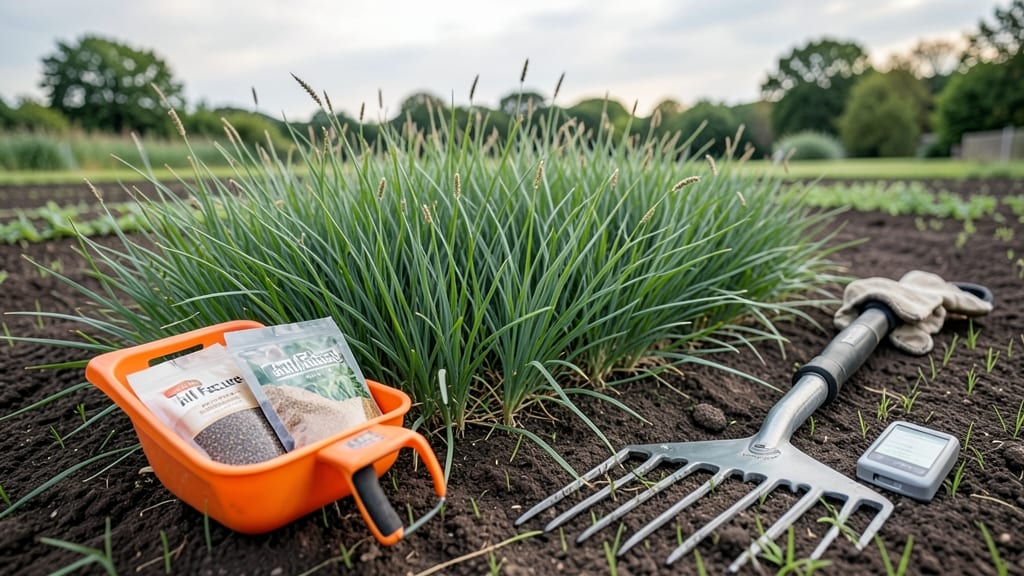
Planting grass seed in Colorado at the right time means the difference between a lush lawn and years of patchy recovery.
Colorado’s diverse elevations—from high mountain valleys to arid Front Range plains—create wildly different planting windows for 🌱 grass seed. Get this wrong, and your lawn could struggle for years. Here’s the science-backed timeline to maximize germination and survival rates.
Most Colorado gardeners know the basics: early spring or fall are the best times to plant. But the Front Range’s 5,000-foot elevation behaves differently than the Western Slope’s 7,000-foot climate, and the High Country’s 9,000-foot zones demand even more precision.
In this guide, you’ll discover the exact months to plant by elevation zone, how to prep your soil for fast germination, and the one mistake that kills more Colorado lawns than anything else.
Colorado grass seed planting calendar by elevation zones
Colorado’s dramatic elevation shifts mean your Denver lawn and Eagle County pasture can’t follow the same planting schedule. The Front Range (5,000–7,000 ft) enjoys milder springs, while High Country (9,000+ ft) faces late frosts until June. Even soil temperatures vary by 20°F between these zones—critical for seed germination.
Cool-season grasses like Kentucky bluegrass and fescue dominate Colorado lawns, thriving when daytime highs hit 60–70°F. Warm-season grasses (Bermuda, buffalo) are rare but need 75°F+ soil to activate. Missing these windows risks poor root establishment or seed washout from spring rains.
Here’s your zone-specific planting calendar, including frost risk timelines and soil temp thresholds to avoid the #1 Colorado gardening mistake: planting too late in spring.
For Front Range gardeners, early spring planting (March 15) gives seeds 6–8 weeks of warm soil before summer drought hits. Test soil temps with a soil thermometer—wait until readings hit 50°F consistently for 5 days. In Denver’s urban heat islands, mulch newly seeded areas to retain moisture.
At 7,000–9,000 ft, delay until after May 1 to avoid late frosts. Use winter ryegrass as a temporary cover crop if seeding in late summer—it protects soil and adds organic matter. High Country seeders should prioritize tall fescue blends (like ‘Remington’), which tolerate 30°F soil temps.
Fall planting works best when daytime highs drop below 85°F but nights stay above 40°F. For High Country, aim for July 15–August 15—this gives roots time to establish before first frosts (typically September 15 at 9,000 ft).
Use a lightweight straw mulch (not hay) to prevent seed smothering.
Pro tip: Colorado’s elevation bands create microclimates even within cities. Check your exact elevation using Google Earth’s terrain tool—a 500-ft difference can shift your planting window by 2 weeks. For example, Boulder’s flatlands (5,400 ft) plant like Front Range, while Golden’s foothills (6,000 ft) align with Mountain Foothills.
If you’re seeding in September, monitor 10-day forecasts for hard frosts. In Zone 5–6 (most of Colorado), a 28°F night can kill new grass. Use frost blankets for the first 2 weeks post-planting—especially in High Country where radiation frosts are common.
Remember: Cool-season grasses need consistent moisture for 30 days post-planting. In arid Front Range areas, this means daily watering (not sprinklers—use soaker hoses for even distribution). Overwatering in High Country causes erosion, so use drip irrigation on slopes.
Your elevation zone isn’t just about timing—it dictates grass variety, watering needs, and even fertilizer schedules
How to adjust planting for Colorado’s microclimates and grass types
Colorado’s microclimates can shift planting windows by 4-6 weeks depending on your location. Cool-season grasses like Kentucky bluegrass and fescue dominate Colorado lawns, thriving in 50–65°F soil—ideal for spring and fall planting.
Meanwhile, warm-season grasses like Bermuda and buffalo grass prefer 75–85°F soil, pushing their window to late spring or summer.
Urban heat islands in cities like Denver can raise soil temps by 5–10°F, allowing early spring planting. In contrast, high-altitude areas (9,000+ ft) may delay planting until late May or early June to avoid frost.
Wind exposure also matters—open prairie areas dry out faster, requiring earlier seeding to capitalize on spring moisture.
Drought stress is another critical factor. Warm-season grasses like buffalo grass handle Colorado’s dry spells better but need consistent watering during establishment. Cool-season grasses establish faster in cooler, wetter springs but may struggle in hot, dry summers if planted too late.
Cool-Season Grasses (Kentucky Bluegrass, Fescue)
| Pros | Cons |
|---|---|
| Thrives in 50–65°F soil | Needs frequent watering in summer |
| Establishes in 2–4 weeks | Goes dormant in heat |
| Best for spring/fall planting | Susceptible to drought stress |
Warm-Season Grasses (Bermuda, Buffalo)
| Pros | Cons |
|---|---|
| Handles 90°F+ heat well | Slow to establish (6–8 weeks) |
| Drought-tolerant once established | Needs warm soil (75–85°F) |
| Best for summer planting | Goes dormant in cold |
For high-elevation gardens (7,000–9,000 ft), aim for late April to early June planting. Use a soil thermometer to confirm temps—cool-season grasses need 50°F+ for germination. In urban areas, adjust for heat islands by planting 2–3 weeks earlier than rural zones.
Wind exposure is critical in open prairie regions. Use windbreaks or straw mulch to protect seeds. Bermuda grass is your best bet here—it recovers faster from wind damage. For shaded yards, opt for fine fescue, which tolerates partial shade better than Kentucky bluegrass.
Always test your soil pH (6.0–7.5 ideal) and amend with compost before planting. Water deeply twice daily for the first 2 weeks to encourage root growth. With the right adjustments, your Colorado lawn can thrive year-round—no matter the microclimate! 🌱