
Lawn
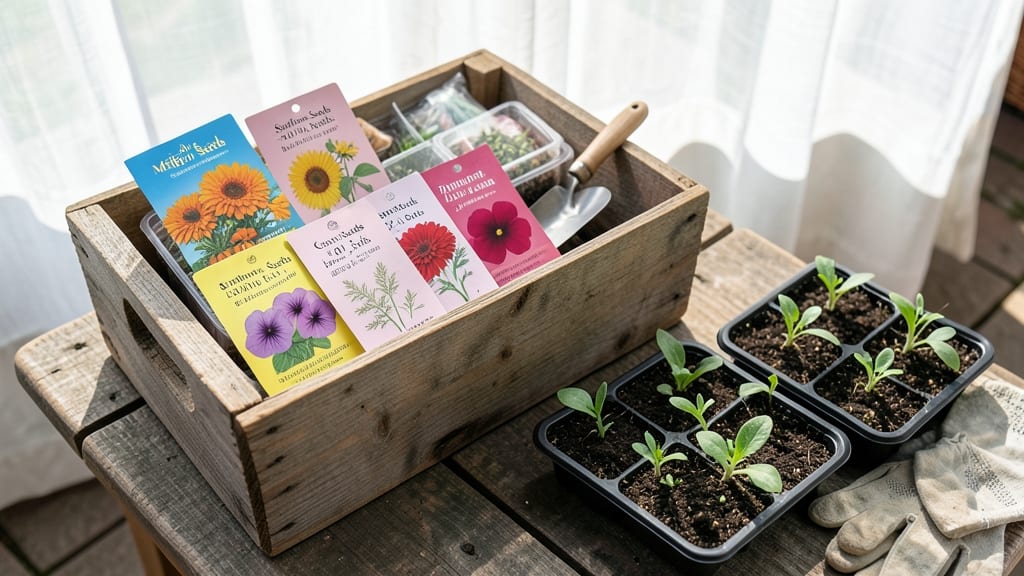
Mastering common flower seed identification means the difference between a garden full of vibrant blooms and a patch of disappointment. 🌸 I’ve spent years sorting through seed packets, and the key is always those tiny details—shape, texture, even the way they catch the light—that tell you exactly what you’re planting.
The right identification helps you match seeds to your climate, sunlight, and soil. A sunflower seed looks nothing like a zinnia’s, but both need different growing conditions.
Once you learn to spot those subtle differences—like the fuzzy edges of a dandelion seed or the smooth, rounded shape of a marigold—you’ll never second-guess your seed choices again.
By the end, you’ll recognize seeds at a glance and know exactly which ones to plant for your brightest, most productive garden. No more guessing, no more wasted packets—just confident planting that leads to months of colorful blooms.
This guide covers everything from common favorites like zinnias and cosmos to wildflower surprises you might find in your own backyard. Let’s get those seeds sorted and your garden thriving!
📚 In This Guide
- What you need
- Instructions
- Tips and common mistakes
- Wrapping up and next steps
What you need
- ● Magnifying glass or hand lens (10x magnification recommended for close inspection of seed details).
- ● Field guide or printed reference (e.g., National Audubon Society Field Guide to North American Wildflowers or a digital app like iNaturalist).
- ● Notebook or digital device (for recording observations, seed shapes, colors, and locations).
- ● Small seed collection kit (paper envelopes or resealable bags—50+ labeled slots to avoid mix-ups).
- ● Ruler or measuring tape (for noting seed size, in inches or millimeters).
- ○ Gloves (optional but recommended) (nitrile or latex to protect hands from prickly seeds or allergens).
- ● Digital camera with macro setting (or smartphone with a seed/flower photography app like PlantNet).
- ● Seed identification key or flowchart (printed or saved on a tablet for quick reference).
- ● Moisture meter or spray bottle (to test seed viability if planting later).
- ● Portable UV light (blacklight) (reveals patterns in some seeds under UV light—great for advanced ID!).
- ● Seed germination testing kit (if you plan to grow collected seeds).
How to identify common flower seeds at a glance
Mastering flower seed identification starts with recognizing key traits—shape, texture, and color cues that reveal everything you need to know.
🌱 Step 1: Examine Seed Shape and Size
Seed shape is your first clue. Flat, winged seeds like those of milkweed or maple trees catch the wind for dispersal, while round, plump seeds like lupine or poppy are often heavy and designed to fall straight to the ground. I always compare seeds to common objects—a dime-sized seed is likely a sunflower, while tiny, almost dust-like seeds belong to cosmos or zinnia.
Size matters too: Large, bean-like seeds (about ½ inch long) are almost always lupine or sweet pea, while tiny, papery packets (no bigger than ⅛ inch) are usually snapdragons or petunias. Hold seeds against a ruler—they rarely lie about their identity.
🌿 Step 2: Check Seed Texture and Surface Details
Run your fingers over the seeds—smooth, glossy surfaces often belong to coleus or impatiens, while rough or bumpy textures are classic marigold or dahlia traits. Papery or feathery coatings (like oktoberfest zinnia seeds) dissolve in water, while hard, woody shells (like monarda or bee balm) resist moisture. I keep a magnifying glass handy—fine ridges or hairs can distinguish nasturtium seeds from snapdragons, which are almost identical at first glance.
Some seeds have distinctive markings: black-and-white speckled seeds are larkspur, while deep red or brown seeds with a shiny sheen are likely four o’clocks. If a seed feels light as a feather, it’s probably a wind-dispersed variety like queen anne’s lace (wild carrot).
✂️ Step 3: Look for Attached Structures
Seeds don’t always travel alone—feathery plumes (like cleome or amaranth) are unmistakable, while tiny, hooked bristles (found on dandelion or thistle) cling to fur or clothing. Winged seeds (like milkweed) spin when dropped, and gelatinous coatings (common in foxglove or columbine) stick to surfaces. I save seed packets with these structures intact—they’re the easiest to match later.
If a seed is still attached to a dry, papery pod, note the pod’s shape: long, slender pods (like snapdragons) split open dramatically, while round, bulbous pods (like lupine) burst with a pop. Spiky seed heads (like teasel or thistle) are a dead giveaway for prickly plants.
💧 Step 4: Test for Moisture Sensitivity
Some seeds swell dramatically when wet—a hard, dry seed that softens and darkens within 10-15 minutes of soaking is likely hyacinth bean or wisteria. Others, like poppies, remain firm but slightly pliable. I drop a few seeds into a glass of water: floating seeds (like lily) need special treatment, while sinking seeds (like marigold) are ready for direct planting.
Watch for color changes—seeds that turn darker or develop a slight sheen when damp are often tender perennials (like hollyhock or foxglove). Seeds that stay matte and unchanged are usually annuals (like zinnia or cosmos) that can wait for planting.
☀️ Step 5: Compare to Known Seed Charts
Cross-reference your findings with seed identification charts—most include size, shape, and color alongside the plant’s mature form. I keep a printed guide near my workspace and circle unknown seeds in pencil before checking. Digital apps (like Seed ID or iNaturalist) let you upload photos for instant matches, but nothing beats hands-on comparison. Start with common annuals (like marigold, zinnia, or sunflower) before tackling wildflowers (like black-eyed Susan or coneflower).
If a seed doesn’t match anything familiar, plant it anyway—some of the best surprises come from mystery seeds. Label the pot with the date and location found, then observe which plants emerge. Mature leaves, flower shape, and growth habit will reveal the identity within 4-6 weeks.
Tips & tricks for mastering flower seed identification
Here's what nobody tells you about turning seed identification into a foolproof skill.
Use a Reference Guide: Keep a printed seed identification chart nearby while you work. I always cross-reference my findings with a reliable guide—it's like having a botanist in your pocket. For tricky seeds, compare them side-by-side with known samples. The visual comparison is often more reliable than memory alone.
Lighting Makes All the Difference: Natural daylight is your best friend for seed identification. Place your seeds near a bright window or use a small desk lamp with a magnifying attachment. Artificial lighting can distort colors and textures, making it harder to spot those subtle details that distinguish similar seeds.
Create a Seed Reference Collection: Build your own seed library by collecting and labeling samples from known plants. Store them in small envelopes with the plant name and collection date. Over time, you'll develop an intuitive sense for seed characteristics that becomes second nature. This hands-on approach is far more effective than memorizing descriptions.
Test Moisture Sensitivity Systematically: When testing seeds for moisture sensitivity in Step 4, use a timer for those critical 10-15 minutes. Some seeds show dramatic changes within seconds, while others take the full timeframe. I always test a small batch first to understand the behavior before committing to planting. This method reveals hidden clues about seed viability and plant type.
Pro Tips for Common Flower Seed Identification
- Here's what nobody tells you about turning seed identification into a foolproof skill.
- Use a Reference Guide: Keep a printed seed identification chart nearby while you work.
- Lighting Makes All the Difference: Natural daylight is your best friend for seed identification.
Frequently asked questions
Got questions about flower seed ID? You’re not alone! Here are some of the most common queries—plus quick answers to help you grow with confidence.
How do I tell if my flower seeds are still viable before planting?
Test viability by placing seeds in a damp paper towel, sealing them in a bag, and storing them in a warm spot for 5–7 days. If most sprout, they’re good to go! For extra peace of mind, check the seed packet’s expiration date—most seeds lose potency after 1–2 years. Pro tip: Store seeds in a cool, dry place to extend their shelf life.
When’s the best time to plant flower seeds indoors vs. outdoors?
Indoors: Start 6–8 weeks before the last frost (e.g., late winter for spring blooms). Outdoors: Wait until soil temps hit 60°F+ and nighttime frost risk is gone. Cold-hardy flowers (like snapdragons) can go in earlier, but tender varieties (e.g., petunias) need warmth. Check your USDA zone for local timing!
What if my flower seeds don’t germinate? How do I troubleshoot?
Try these fixes:
- Depth: Plant seeds at 2–3x their width (too deep = no sprouts).
- Moisture: Keep soil consistently damp (not soggy). Use a spray bottle for delicate seeds.
- Light: Some seeds (like poppies) need sunlight to germinate—don’t bury them!
- Heat: Warmth boosts germination. Try a seedling heat mat or place pots on a sunny windowsill.
Can I identify flower seeds without a packet? How do I match them to plants?
Yes! Use these clues:
Seed Feature
Likely Flower
Large, flat, and heart-shaped
Lilies or fritillaries
Tiny, round, and black
Calendula or marigolds
Feathery or winged
Delphiniums or lupines
Long, thin, and papery
Peas or sweet peas
Are there easy flower seeds for beginners?
Start with these foolproof picks:
- Marigolds – Fast-growing, pest-repellent, and drought-tolerant.
- Zinnias – Bright colors, thrive in heat, and self-seed easily.
- Sunflowers – Giant seeds = easy planting; great for pollinators.
- Nasturtiums – Edible, shade-tolerant, and germinate in 5–7 days.
Wrapping up and next steps
Mastering common flower seed identification opens up a world of vibrant gardens and thriving ecosystems—whether you're a beginner or a seasoned gardener! 🌸 By now, you’ve learned to spot key traits like leaf shape, seed structure, and growth habits, giving you the confidence to start planting with purpose.
Ready to take the next step? Grab a notebook, explore local seed catalogs, or even join a gardening forum to swap tips with fellow enthusiasts. Your green thumb is about to bloom brighter than ever!
- Pro Tip: Snap photos of seeds you find—apps like iNaturalist can help verify your ID in seconds!
- 🌱 Action Step: Try growing 3 new varieties this season and track their progress!