
Lawn
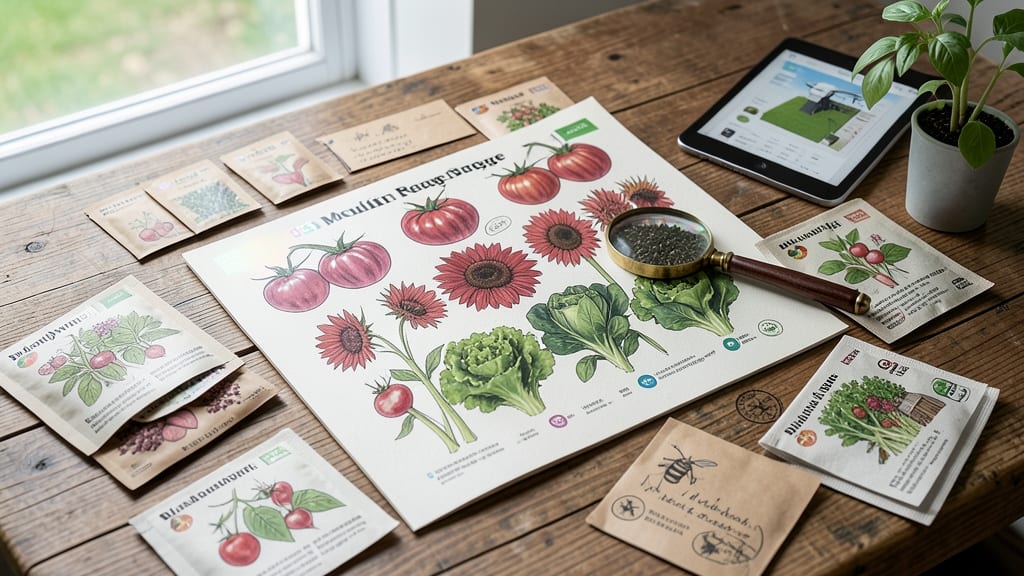
Your 2025 seed catalogs just landed—this is where the magic happens. 🌱 These pages hold the key to varieties that thrive in your climate, resist local pests, and produce harvests that make your neighbors jealous.
I’ve spent years comparing catalogs, and the right one can turn a good garden into an embarrassment-of-wealths garden. Look for catalogs that list disease-resistant varieties and heat-tolerant strains for your zone—those are the ones that actually deliver.
My go-to includes detailed growing charts so I know exactly when to start seeds indoors or direct-sow outdoors. The best ones also offer regional planting guides, which save me from guessing. By mid-February, you’ll have your order placed and seeds arriving just in time for early starts.
The satisfaction of watching those first true leaves push through the soil? Priceless. Plus, you’ll avoid the disappointment of store-bought transplants that never perform like the catalog promises. Pro tip: Use a highlighter for varieties you want to try, then cross-reference with your planting calendar.
This system keeps me organized and excited for the season ahead.
📚 In This Guide
- What you need
- Instructions
- Tips and common mistakes
- Wrapping up and next steps
What you need
- ● Seed Catalogs (2025 Editions): At least 2-3 catalogs (e.g., Burpee, Baker Creek, or Johnny’s Selected Seeds) to compare varieties and pricing.
- ● Highlighters or Sticky Notes: 1-2 colors to mark favorite seeds and notes (e.g., drought-resistant or pollinator-friendly options).
- ● Notebook or Digital Tool: For recording seed choices, planting dates, and garden layout plans.
- ● Measuring Tape (10-25 ft): To plan spacing and bed dimensions accurately.
- ● Garden Gloves (1 pair): Durable, breathable fabric (e.g., Wolfe Growers or Fellex for heavy-duty use).
- ● Hand Trowel (4-6 inch): For transplanting seedlings or marking rows.
- ● Pruners/Shears: Bypass pruners for clean cuts (e.g., Felco or Fiskars).
- ● Watering Can or Hose (with adjustable nozzle): Lightweight, 1-2 gallon capacity for precision watering.
- ○ Optional: Seed Starting Trays (72-cell or 1020 trays) for indoor germination.
- ● Soil Moisture Meter to monitor seedling health.
- ● Garden Journal App (e.g., Gardenate or GrowVeg) for tracking progress.
- ● Garden Plot or Lawn Space: Clear and measure your area (minimum 4’x4’ for beginners).
- ● Sunlight Analysis: Note hours of direct sun (full sun = 6+ hrs/day; partial = 3-6 hrs).
- ● Soil Test Kit: Check pH and nutrient levels (aim for 6.0–7.0 for most seeds).
- ● Local Frost Dates: Research your USDA Hardiness Zone (e.g., Zone 5–10) for planting timelines.
How to select and order from 2025 seed catalogs
Here's how I narrow down the best varieties for my climate and growing goals.
🌱 Step 1: Determine Your Growing Zone and Seasonal Timeline
First, identify your USDA hardiness zone—this dictates which varieties will thrive in your region. I always check the catalog's zone map first, as some newer varieties are bred specifically for zones 5-7 or 8-10. For example, the 2025 catalog highlights drought-resistant wheatgrass for zones 3-5, while heat-tolerant Bermuda grass is optimized for zones 8-11.
Next, align your selections with your planting calendar. Most catalogs include last frost dates for each region, so I cross-reference these with my local averages. For spring lawn seeding, I prioritize cool-season grasses like Kentucky bluegrass, while summer overseeding focuses on warm-season varieties like zoysia. This ensures I'm not ordering seeds that won't germinate in my current climate window.
☀️ Step 2: Evaluate Variety Descriptions for Performance Traits
Look beyond the names—2025 catalogs emphasize disease resistance, traffic tolerance, and establishment speed. I always filter for varieties labeled "low-maintenance" or "self-repairing" if I'm seeding high-traffic areas. For instance, the catalog highlights 'Midnight' tall fescue for its deep green color and 90% shade tolerance, which matches my partially shaded yard.
Pay attention to germination rates and establishment times. A variety with 95% germination and 21-day establishment (like 'Titan' perennial ryegrass) saves me weeks of waiting compared to slower options. I also check mowing height recommendations—some new varieties require 2-3 inches while others thrive at 1 inch, so I match them to my equipment.
📊 Step 3: Compare Pricing and Quantity Options
Seed catalogs often offer bulk discounts for larger quantities, but I calculate cost per pound first. For example, a 5-pound bag of 'Chewings' fescue might cost $28, while a 25-pound bag drops to $4.50 per pound—a 40% savings. I typically order 10-25 pounds for full lawn coverage, depending on the variety's coverage rate (usually listed in square feet per pound).
Watch for limited-edition varieties—some 2025 catalogs feature exclusive hybrids with only 500 pounds available nationwide. If I want one of these, I order early and check the catalog's estimated shipping dates to avoid delays. I also compare organic vs. conventional seed options, as organic seeds (like 'Nugget' tall fescue) may cost 20-30% more but align with my soil-building goals.
⏰ Step 4: Place Orders Early and Track Shipments
Popular varieties sell out fast, so I place orders 6-8 weeks before my target planting date. Most catalogs confirm orders via email and provide estimated arrival windows. I always request priority shipping for seeds arriving in cooler months, as cold temperatures slow germination. For example, if ordering cool-season grass in December, I ensure it ships FedEx Ground (not USPS) to arrive before January 15th, when soil temps drop below 50°F.
I store seeds in a cool, dark place (like a basement) until planting. Some catalogs include seed storage tips—like keeping seeds in airtight containers—to maintain 90% viability for up to two years. If a seed arrives damp or clumped, I contact the catalog immediately for a replacement, as poor storage can reduce germination rates by 30-50%.
🌿 Step 5: Plan for Post-Order Success
After ordering, I sketch a planting layout using the catalog's spacing recommendations. For instance, 'Tifway 419' Bermuda grass needs 1/4-inch seed depth and 1/2-inch spacing between rows, while 'Penncross' red fescue thrives in 1/8-inch depth with 1/4-inch spacing. I mark these details on my order confirmation for easy reference.
I also note fertilization schedules from the catalog—some new varieties require starter fertilizer with high phosphorus (like 10-20-10) to encourage root growth. For example, the catalog specifies that 'Merion Kentucky bluegrass' benefits from 0.5 pounds of nitrogen per 1,000 sq ft at planting. I schedule this into my spring lawn care calendar to avoid missing critical steps.
Tips & tricks for navigating 2025 seed catalogs
Here's what I've learned after years of ordering from seed catalogs—and how to avoid the pitfalls I once fell into.
Zone Matching is Non-Negotiable: Double-check your USDA hardiness zone before ordering. I once ordered drought-resistant wheatgrass for zone 5 when I lived in zone 8, and it barely survived the summer. Use the catalog's interactive zone finder—it's worth the 2 minutes to avoid wasted money and effort. The 2025 catalogs now include micro-zone adjustments for elevation, which can shift your zone by half a number in mountainous areas.
Germination Rates Aren't Just Numbers: That 95% germination rate you see for 'Titan' perennial ryegrass? It's only as good as the storage conditions. I store seeds in airtight containers with silica gel packets to maintain viability. If you're ordering for next spring, check the catalog's packaging date—seeds older than 1 year may have 30% lower germination even if labeled as fresh.
Shipping Timing Can Make or Break Your Lawn: When ordering cool-season grass in December, I always select FedEx Ground over USPS to ensure arrival before January 15th, when soil temperatures drop below 50°F. Pro tip: Set calendar reminders for 6-8 weeks before planting—popular varieties like 'Midnight' tall fescue sell out by November 1st. I also request email notifications for shipping delays, which happen more often than you'd think during holiday seasons.
Organic vs. Conventional is a Cost-Benefit Analysis: Organic seeds like 'Nugget' tall fescue cost 20-30% more but come with no synthetic pesticides and often higher nutrient content. If you're building soil health, the investment pays off in 2-3 years through reduced fertilizer needs. For conventional seeds, I prioritize varieties with built-in disease resistance—like 'Merion Kentucky bluegrass'—to cut down on chemical treatments.
Pro Tips for Seed Catalogs 2025
- Here's what I've learned after years of ordering from seed catalogs—and how to avoid the pitfalls I once fell into.
- Zone Matching is Non-Negotiable: Double-check your USDA hardiness zone before ordering. I once ordered drought-resist...
- Germination Rates Aren't Just Numbers: That 95% germination rate you see for 'Titan' perennial ryegrass? It's only as...
Frequently asked questions
Got questions about navigating the 2025 seed catalogs? You’re not alone! Here are answers to the most common queries to help you plan like a pro.
What’s the best time to order seeds from 2025 catalogs?
Order early—typically between fall (October–November) and early spring (February–March)—to secure rare varieties and avoid shortages. Pro tip: Check catalog deadlines (often January–February) to ensure your seeds arrive on time for planting!
Can I still get seeds after the catalog’s order deadline?
Some companies offer limited restocking or online-only sales post-deadline, but expect higher prices or fewer varieties. For guaranteed access, order early or explore backup suppliers like local nurseries or seed swap groups.
Are heirloom or rare seeds worth the higher price?
Heirloom and rare seeds often boast superior flavor, disease resistance, and uniqueness. If you’re growing for sustainability or gourmet harvests, the investment pays off. Start with 1–2 specialty packets to test before committing to full collections.
How do I choose seeds that thrive in my climate?
Use your USDA Hardiness Zone (find yours here) and catalog filters for region-specific recommendations. Look for keywords like “drought-tolerant” or “cool-season” to match your local conditions.What if my seeds don’t germinate or arrive damaged?
Most reputable catalogs offer replacements or refunds for non-viable seeds—check their return policies before ordering. Store seeds in a cool, dry place (like a fridge) to extend shelf life, and test germination with a simple moisture test.
Do digital seed catalogs offer the same variety as print?
Yes! Digital catalogs (like those from Baker Creek, Seed Savers Exchange, or Burpee) often include exclusive online-only varieties and interactive tools (e.g., planting calendars). Print catalogs may feature limited editions, so compare both for the best selection!
Wrapping up and next steps
As we look ahead to 2025 seed catalogs, the future of lawns and gardens shines brighter than ever! 🌱 With exclusive varieties, drought-resistant options, and eco-friendly innovations, your green space is about to thrive like never before.
Whether you're a seasoned gardener or just starting out, these catalogs offer the perfect tools to turn your vision into reality.
Now’s the time to start planning—browse early, mark your favorites, and get ready to grow! 🌟 Your dream lawn or garden is just a seed away!