
Propagation
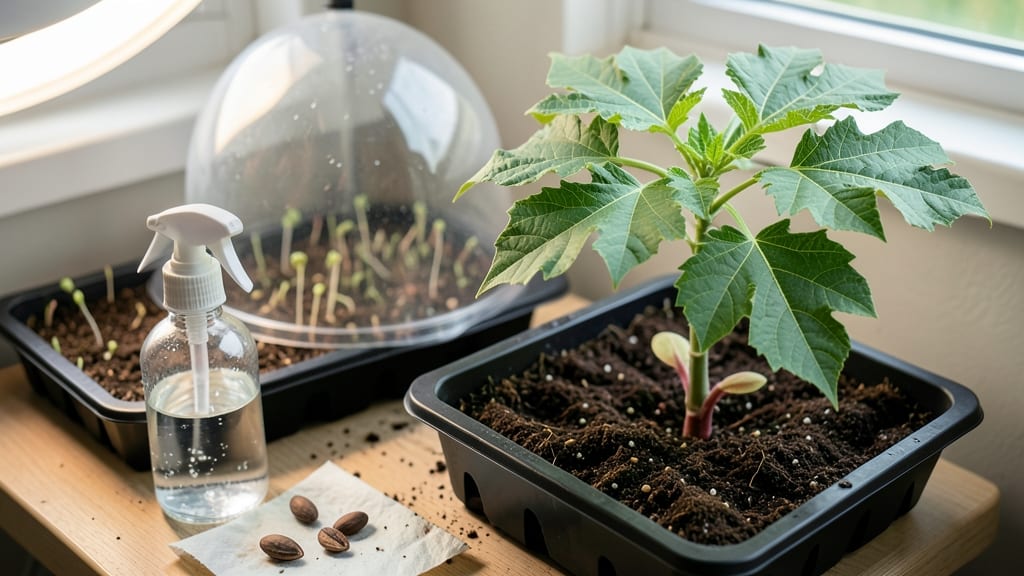
Papaya seed germination happens in just 7 days when you use these warmth tricks. 🌱 I've learned that papayas need cozy conditions to break dormancy—too cool, and they stall for weeks. The secret lies in mimicking their tropical origins with simple household adjustments.
Start with fresh seeds from ripe fruit, soaking them overnight in warm water to soften the shell. Plant them just beneath the soil surface where warmth lingers, and keep the soil consistently damp but never soggy.
A clear plastic bag over the pot creates a mini greenhouse effect that speeds up germination.
Within a week, you'll see those first tiny radicles pushing through the soil, followed by the seed leaves unfurling. The seedlings grow surprisingly fast once they break through, reaching transplant size in about 6 weeks with proper care.
This method works year-round indoors, even in cooler climates. Just keep the soil warm—place the pot on a seedling mat or near a sunny window—and you'll have papaya seedlings ready for transplanting before most gardeners even think about starting theirs.
📚 In This Guide
- What you need
- Instructions
- Tips and common mistakes
- Wrapping up and next steps
What you need
- ● Fresh papaya seeds – Harvest from a ripe, organic papaya (or buy high-quality seeds). Quantity: 10–20 seeds (for multiple germination attempts).
- ● Germination medium – Choose one of these: Coconut coir bricks (rehydrated) – 1–2 bricks (holds moisture well).
- ● Peat moss or seed-starting mix – 1 small bag (1–2 quarts) (sterile and lightweight).
- ● Paper towels or coffee filters – 2–3 sheets (for quick moisture control).
- ● Small containers – Options: Seedling trays with domes (6–12 cell packs).
- ● Plastic or glass containers (e.g., takeout boxes, mason jars).
- ● Ziplock bags (for paper towel method).
- ● Spray bottle – 1 (for gentle watering; avoid over-saturating).
- ● Heating mat or warm spot – Critical! Maintain 80–90°F (27–32°C) for speedy germination. Options: Seedling heat mat (1, ~12" x 24").
- ● Top of a fridge or sunny windowsill (if ambient temps are warm).
- ● Humidity dome – Keeps moisture high (reduces transplant shock).
- ● Grow lights – 1–2 LED bulbs (12–16 hrs/day once sprouts emerge).
- ● Fertilizer – Diluted seaweed extract or fish emulsion (after 2–3 true leaves).
- ● pH test kit – Ensures soil pH is 6.0–6.5 (ideal for papayas).
- ● Notebook & pen – Track germination progress (fun for beginners!).
Step-by-step instructions for germinating papaya seeds quickly
Here’s how to coax those papaya seeds to sprout in just 7 days—no waiting months.
🌱 Step 1: Extract and Prepare the Seeds
Cut open a ripe papaya and scoop out the black seeds, rinsing them gently in water to remove the slimy pulp. Let them dry on a paper towel for 12-24 hours—this prevents rot later. I like to spread them in a single layer and leave them uncovered until they’re no longer sticky to the touch.
Once dry, place the seeds in a small bowl of lukewarm water and let them soak for 24 hours. This softens the outer shell and kickstarts germination. You’ll see tiny cracks form along the seed’s edges—that’s your cue they’re ready for planting.
💧 Step 2: Set Up a Warm Germination Chamber
Fill a small container (like a seedling tray or even a repurposed plastic cup) with moistened cocopeat or vermiculite—these hold moisture without compacting like soil. Press the seeds ½ inch deep into the mix, spacing them about 1 inch apart to avoid crowding. I use a toothpick to poke holes and drop seeds in one by one.
Cover the container with clear plastic wrap or a humidity dome to trap warmth and moisture. Place it in a spot where the temperature stays at 80-85°F—a sunny windowsill, on top of a fridge, or near a heat mat works best. Check daily for condensation on the plastic; if it’s dry, mist the soil lightly.
☀️ Step 3: Monitor and Maintain Ideal Conditions
Within 3-5 days, you’ll see tiny white roots emerge first—this is your signal to keep the soil consistently moist but never soggy. Once the first true leaves (not the initial seed leaves) appear, remove the plastic cover immediately to prevent fungal growth. I’ve seen seedlings collapse overnight from trapped moisture.
Move the container to bright, indirect light as soon as sprouts break through. Avoid direct sun at this stage—it can scorch delicate seedlings. You’ll know they’re thriving when the stems stay firm and leaves unfurl with a glossy sheen.
⏰ Step 4: Transplant Seedlings for Strong Growth
After 7-10 days, when seedlings have 2-3 true leaves and a sturdy root system, transplant them into individual 4-inch pots filled with well-draining potting mix. Handle the seedlings by their leaves, never the stems, to avoid damaging the delicate roots.
Keep the soil moist but not waterlogged for the first week after transplanting. Place the pots in a warm, bright spot (still avoiding harsh midday sun) and gradually introduce them to outdoor conditions over 10 days if you’re hardening them off. You’ll know they’re ready for the garden when they’ve doubled in size and show no signs of stress.
Tips & tricks for fast papaya seed germination
Common pitfalls—and how to sidestep every one—when racing to get those papaya seeds sprouting in record time.
The Drying Phase: Don't rush the 12-24 hour drying period—this is where most people fail. I've seen seeds rot within days when left too damp. Spread them in a single layer with space between each seed, and check periodically. They're ready when they're completely dry to the touch and no longer sticky, not just when they look dry. A gentle shake should make them rattle slightly in the paper towel.
Soaking Secrets: The 24-hour soak in lukewarm water is non-negotiable for breaking dormancy, but here's what nobody tells you: Use distilled or filtered water if possible, as tap water chemicals can inhibit germination. After soaking, drain the seeds thoroughly—standing water will cause them to rot before they even sprout. I like to pour them into a fine mesh strainer and let them drip dry for 5 minutes before planting.
Temperature Matters: That 80-85°F range is critical, but achieving it can be tricky. If your home runs cooler, place your germination container on top of a refrigerator (not inside) or use a seedling heat mat set to low. For warmer climates, position the container in indirect light away from direct sun—those seeds can overheat and die if exposed to temperatures above 90°F. I've had success using a small aquarium heater set to 82°F in a plastic container with a tight lid.
Light Transition: The shift from darkness under plastic to bright light is delicate. When you remove the plastic cover after true leaves appear, do it gradually over 2-3 days by propping it open slightly each morning. This prevents shock to the seedlings. Also, avoid fluorescent lights—they don't provide the full spectrum needed. Natural sunlight filtered through a sheer curtain works best for the first week after germination.
Pro Tips for Papaya Seed Germination
- Common pitfalls—and how to sidestep every one—when racing to get those papaya seeds sprouting in record time.
- The Drying Phase: Don't rush the 12-24 hour drying period—this is where most people fail.
- Soaking Secrets: The 24-hour soak in lukewarm water is non-negotiable for breaking dormancy, but here's what nobody tells you: Use distilled or filtered water if possible, as tap water chemicals can inhibit germination.
Frequently asked questions
Got questions about germinating papaya seeds? You’re not alone! Here are answers to the most common queries to help you grow those fast, happy sprouts in no time.
How warm does it need to be for papaya seeds to germinate?
Papaya seeds thrive in warmth—aim for 75–90°F (24–32°C). Use a seedling heat mat, warm water soaks, or place them near a sunny window. If your space is cooler, try a clear plastic bag to trap heat and moisture. Patience is key—slower germination may take 10–14 days in cooler temps!
Why are my papaya seeds taking so long to sprout?
Slow germination is usually due to cold temps, dry conditions, or old seeds. Try these fixes:
- Boost warmth: Move trays to a warmer spot or use a heat mat.
- Rehydrate: Soak seeds in warm water for 24 hours before replanting.
- Check viability: If seeds float during soaking, they’re likely nonviable.
Can I germinate papaya seeds in water instead of soil?
Yes! Water germination is a great way to speed up the process. Place seeds in a jar of warm water (change daily) until roots and sprouts appear (3–7 days). Once sprouted, transfer gently to moist soil. Pro tip: Use a mesh or paper towel to support fragile sprouts during the move!
How do I know if a papaya seed is still good for germination?
Test seed viability with the float test:
- Good seeds: Sink to the bottom (plump, firm).
- Bad seeds: Float (hollow or dried out).
What’s the best soil mix for papaya seed germination?
Use a light, well-draining mix like:
- 50% peat moss or coco coir
- 30% perlite or vermiculite
- 20% sand or compost
Wrapping up and next steps
Germinating papaya seeds in just 7 days is totally doable with the right warmth, moisture, and patience! 🌱 By following these simple steps—from soaking to transplanting—you’ll soon be watching tiny sprouts burst through the soil, ready to grow into thriving plants.
Whether you’re a gardening newbie or a seasoned green thumb, this process is rewarding and fun.
Now that you’re armed with the know-how, grab those seeds and get planting! 🌿 Start small, experiment with your setup, and enjoy the magic of life growing right before your eyes. Happy gardening—your future papaya harvest awaits!