
Plants
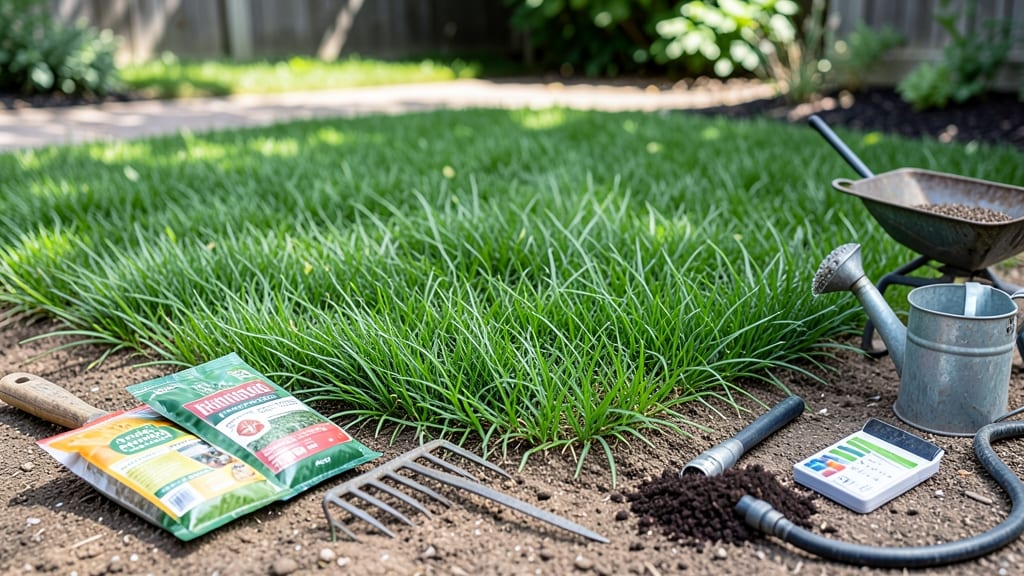
Planting grass seed in Wyoming requires timing that accounts for elevation shifts, frost risks, and soil temperatures—all of which can change dramatically within a single county.
Picture this: You prep your soil in early March, only to watch frost kill your new seedlings because you missed the 4,000-foot elevation warning. Or you wait too late in fall, and winter arrives before roots take hold.
Wyoming’s USDA zones 4a–7b and microclimates mean the "perfect" window isn’t one date—it’s a range.
In this guide, you’ll learn the exact elevation-based planting windows for Wyoming’s lowlands, foothills, and mountains, plus how to adjust for soil type, wind, and the hardiest grass varieties for your zone.
Skip the guesswork and discover the science-backed timing that ensures your lawn thrives year-round, no matter where in Wyoming you’re planting.
Wyoming’s 3 elevation zones for grass seed planting timing
Wyoming’s elevation extremes create three distinct zones for grass seed planting, each with unique frost risks and soil temperature requirements. In the Lowlands (4,000–6,000 ft), like Laramie or Casper, you’ll see earlier springs and longer growing seasons.
Meanwhile, mountain areas (8,000+ ft), such as Jackson Hole or Cody, face delayed springs and shorter windows. Understanding these zones helps you avoid planting too early (risking frost damage) or too late (missing ideal germination temps).
For all zones, aim for soil temperatures between 50–65°F—this range triggers consistent germination. Use a soil thermometer to check depths of 2–4 inches. In Wyoming’s foothills (6,000–8,000 ft), like Cheyenne or Rawlins, timing becomes critical: a late frost can wipe out seedlings if planted too soon.
Regional exceptions exist—Jackson Hole’s high-altitude valleys may need a 4-week delay compared to Cheyenne’s plains.
Spring vs. fall planting also shifts by zone. Lowlands often allow March–April spring seeding, while mountains may wait until late May. Fall planting in lowlands extends to mid-September, but high-elevation areas must finish by early August to avoid early frosts. Use your local USDA hardiness zone (4a–7b) as a baseline, but elevation trumps zone boundaries here.
In Cheyenne (5,400 ft), for example, you can plant Kentucky bluegrass as early as mid-March if soil temps stay above 50°F. But in Jackson Hole (6,200 ft), wait until late April—even then, cover seeds with straw mulch to protect against lingering cold snaps. Fescue grasses, which thrive in cooler temps, are ideal for mountain zones and can handle earlier planting than warm-season varieties.
Always check your local frost dates from the National Weather Service or Wyoming State Climate Office. For instance, Rock Springs (6,100 ft) averages its last frost on April 10, while Lander (5,300 ft) sees frost-free conditions by March 25.
Planting 4–6 weeks before these dates gives seeds time to establish roots before summer heat or winter dormancy sets in.
Soil preparation varies by zone too. In dry lowlands, amend clay soils with compost and sand to improve drainage.
Mountain soils often stay wet longer—test for waterlogged conditions and raise beds if needed. pH levels should sit between 6.0–7.5; Wyoming’s alkaline soils may need sulfur or peat moss adjustments. Always conduct a soil test before planting.
For fall planting, prioritize cool-season grasses like tall fescue or ryegrass, which establish roots before winter. In lowlands, aim for late August seeding; in mountains, finish by mid-July.
Fall-seeded grass benefits from cooler temps and consistent moisture, reducing drought stress. Water deeply 2–3 times per week until germination (about 14–21 days).
Regional microclimates add another layer. Wind exposure in Jackson Hole can dry out seeds quickly—use windbreaks or straw mulch to retain moisture. Shaded areas (common in mountain valleys) may need shade-tolerant grasses like fine fescue. Always match your grass seed blend to your zone’s climate: <
Critical factors beyond elevation: soil, microclimate, and grass seed choices
Wyoming’s diverse soil types and microclimates can shift your ideal planting window by weeks. For example, clay-heavy soils in Laramie hold moisture longer, delaying spring planting by 2–3 weeks, while sandy soils in the Bighorn Basin dry out faster, requiring earlier seeding.
Always test your soil’s drainage and pH—aim for 6.0–7.5 for cool-season grasses like Kentucky bluegrass or tall fescue.
Wind exposure is another game-changer. In open prairie areas (e.g., near Casper), strong winds can dry out newly seeded lawns. Use windbreaks like temporary fencing or native shrubs to protect seeds until roots establish.
Shade also matters: Partial shade (3–6 hours of sun) suits fine fescue, while full sun (6+ hours) is critical for Bermuda grass, though the latter thrives only in USDA Zone 7b+.
Your grass seed choice directly impacts timing. Cool-season grasses (like ryegrass) germinate best at 50–65°F soil temps, making late August to early September ideal for fall planting. Warm-season grasses (e.g., zoysia) need 65–75°F soil temps, so wait until mid-May to June in lowland areas.
Mixing seed types? Prioritize cool-season blends for Wyoming’s long winters.
🌱 Key Takeaway: Wyoming Grass Seed Planting Adjustments
Use a soil thermometer—cool-season seeds need 50–65°F; warm-season 65–75°F.
Add windbreaks if your area averages 10+ mph winds during germination.
Full sun = Bermuda/Buffalo grass; partial shade = Fine fescue.
Plant 4–6 weeks before your area’s last frost date (check USDA Zone Map).
✅ Pro Tip: Wyoming’s high-altitude areas (8,000+ ft) may need 2 weeks later than lowlands.
Before seeding, run a pre-planting checklist to avoid common pitfalls. Start with a soil test (available through Wyoming Extension offices for ~$20). Amend clay soils with sand or compost; for sandy soils, mix in peat moss to retain moisture.
Mark your last frost date (e.g., April 15 in Laramie, May 1 in Jackson) and plant 4–6 weeks prior for cool-season grasses.
For wind-prone areas, consider hydroseeding, which uses a mulch-seed slurry to lock in moisture. If your lawn gets less than 6 hours of sun, opt for shade-tolerant grasses like creeping red fescue.
Always water deeply after planting—1/2 inch per week—and avoid walking on new seeds until they’re 1–2 inches tall.
Wyoming’s microclimates mean your neighbor’s perfect timing might fail for you. For example, Jackson Hole’s shorter growing season demands earlier spring planting (late April) compared to Cheyenne’s longer window (March–April). When in doubt, start with a small test patch and adjust your full lawn’s timeline based on its success.