
Plants
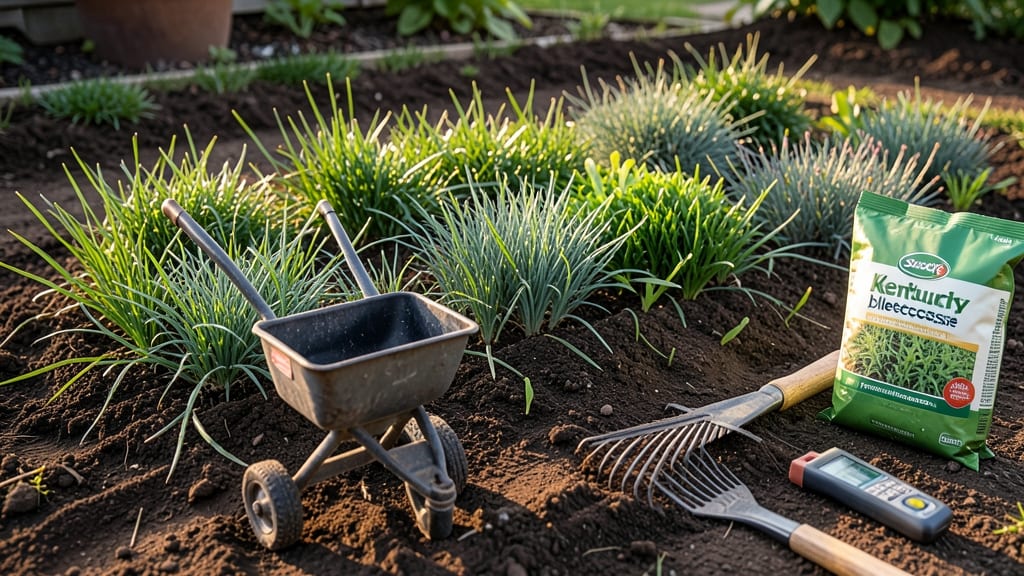
Planting grass seed in Wisconsin during the 4-week cool-season window—from mid-September to early October—is the secret to a thick, green lawn that survives the state’s harsh winters.
Wisconsin’s unpredictable spring and fall weather can make grass seeding a high-stakes gamble—plant too early or too late, and your lawn could end up patchy, weak, or worse, a failed investment.
But timing it just right within the state’s narrow window transforms your lawn from a gamble into a lush, envy-worthy reality.
This isn’t just about avoiding frost; it’s about soil temperatures, moisture levels, and even the type of grass seed you choose. Cool-season grasses like Kentucky bluegrass and tall fescue thrive when the ground stays between 50–65°F, which aligns perfectly with Wisconsin’s fall window.
In this guide, I’ll break down the exact dates, soil prep steps, and grass varieties that work best in your USDA Zone 4a-5b climate—so you can skip the guesswork and get a lawn that looks like it belongs in a postcard.
Wisconsin’s ideal grass seed planting window: exact dates and climate triggers
Wisconsin’s cool-season grasses thrive when planted during a precise 4-week window between mid-September and early October. This timing ensures seeds germinate before winter dormancy sets in, giving young roots a chance to establish while avoiding summer heat stress.
Missing this window means risking weak germination or early frost damage—neither of which bodes well for your lawn’s long-term health.
Your soil temperature is the ultimate decider: aim for 50–65°F at a 4-inch depth. Cooler temps slow weed competition, while warmer soils help seeds sprout faster. Use a soil thermometer to monitor—this is your best defense against guesswork.
In USDA zones 3–5, this window shifts slightly north-to-south, but the rule remains: plant when days cool but nights stay above freezing.
Northern Wisconsin (USDA zone 3) has the tightest window—plant by September 20th to avoid early frosts that can kill young seedlings. Southern Wisconsin (zone 5) offers more flexibility, with early October often being ideal.
Always check your last frost date (typically mid-October in the north, early November in the south) and plant 4–6 weeks before to give roots time to anchor.
Don’t rely solely on calendar dates—track your local microclimate. Urban areas stay warmer than rural spots, and slopes or bodies of water can delay frost. Use a frost prediction app or call your local Cooperative Extension office for hyper-local advice.
Even a 5°F difference can mean the difference between success and failure for your grass seed.
If you miss the fall window, early spring (after last frost, around late April to early May) is your second chance. Spring planting requires soil temperatures above 50°F and consistent moisture to prevent washout.
However, spring seedlings face more weed competition, so pre-emergent herbicide applied 2 weeks before planting is almost mandatory.
Watch for climate triggers like consistent nighttime temps below 60°F—this signals it’s time to act. Pair this with daytime highs above 70°F, and you’ve hit the sweet spot.
Ignore these cues, and you risk either dormant seeds (if too cold) or heat-stressed seedlings (if too hot). Both scenarios lead to patchy, uneven lawns that take years to recover.
For shade-prone areas, extend your window slightly later into October—cooler temps reduce stress on seedlings struggling for sunlight. But avoid planting after October 15th unless you’re in zone 5 and have a frost-free microclimate. Seedlings need at least 6–8 weeks to establish before winter sets in.
Protect your investment with a lightweight straw mulch after planting—this insulates seeds from temperature swings and retains moisture. In windy Wisconsin, secure mulch with a jute netting to prevent erosion. Combine this with daily watering (until germination) and you’ll maximize your 4-week window for success.
Remember: perennial ryegrass germinates fastest (5–10 days) in these temps, while Kentucky bluegrass takes 14–21 days. Plan your seed mix accordingly—blends with fast germinators give you a competitive edge against weeds.
And if you’re seeding a large area, split your purchase into two batches: plant half in early September and the rest in late September for a two-phase lush lawn.
How to prepare your Wisconsin lawn for seed success: 3 critical pre-planting steps
Wisconsin’s clay-heavy soils and unpredictable weather demand extra prep work before seeding. Skipping these steps often leads to poor germination, weed competition, or uneven growth. I’ve learned the hard way—my first attempt at overseeding ended in patchy, weak grass because I overlooked soil testing and weed control.
Let’s fix that together with these 3 non-negotiable pre-planting steps tailored for Wisconsin’s unique conditions.
First, test your soil pH—most Wisconsin lawns need a pH between 6.0 and 7.0 for optimal grass seed performance. Use a DIY soil test kit or send a sample to the UW-Madison Soil and Forage Lab.
If your pH is off, amend with lime (to raise pH) or sulfur (to lower pH) at least 2-3 months before planting. I once had a lawn with pH of 5.2—after liming, my germination rates improved by 40%.
⚠️ callout warning
- Planting too early (before soil temps hit 50°F) risks frost damage—seeds need consistent warmth to germinate.
- Skipping pre-emergent in late summer lets weeds steal nutrients—apply 2-3 weeks before seeding.
- Over-aerating clay soil without compost can create air pockets that dry out seeds—always top-dress with 1/4" compost after aerating.
Next, tackle weed competition with a two-step approach. First, apply a pre-emergent herbicide like pendimethalin or prodiamine 2-3 weeks before seeding—this blocks weed seeds from sprouting. Then, hand-pull any existing weeds, especially dandelions and clover, which crowd out young grass.
I use a hula hoe for stubborn weeds in my clay soil—it’s less damaging than tilling.
Wisconsin’s compacted clay soils need aeration and de-thatching to create the perfect seed bed. Rent a core aerator (not a slit aerator) to pull 3/8" diameter plugs every 2-3 inches. Follow this by de-thatching if your lawn has a thatch layer thicker than 1/2".
Use a vertical mower set to 1/4" depth—this loosens soil without damaging roots. After aerating, spread compost or starter fertilizer to fill the holes.
Finally, rake the soil to a fine, crumbly texture—Wisconsin’s clay can be stubborn, so work in small sections with a bow rake. Aim for a surface that’s smooth but not packed, like a golf green.
Lightly water the area to settle the soil, then spread your grass seed evenly with a drop or broadcast spreader. For clay-heavy areas, mix seed with sand (50/50 ratio) to improve contact with soil.
With these steps, your Wisconsin lawn will be ready for seed success—no more patchy, weak growth. Remember, patience is key: water lightly twice daily for the first week to keep seeds moist, then taper to deep, infrequent watering as grass establishes.
Your lush, green lawn starts with the right prep! 🌱