
Plants
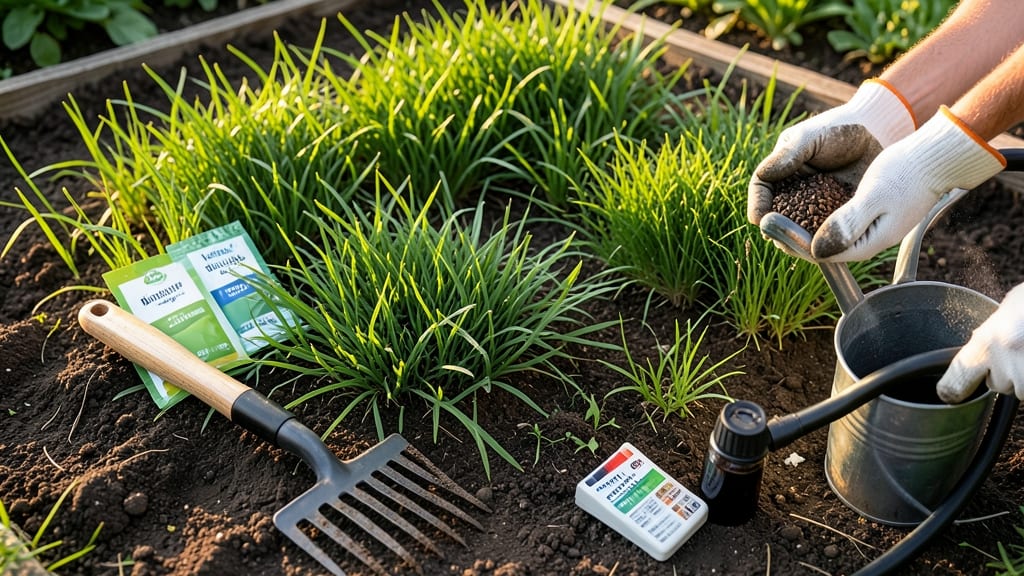
Planting grass seed in Wisconsin spring requires timing it 4-6 weeks after the last frost when soil temperatures hit 50°F—a window that separates a lush lawn from a patchy disappointment.
Wisconsin’s unpredictable spring weather can make or break your lawn—plant grass seed too early and risk frost damage, too late and miss the ideal 4-week window for deep root establishment before summer heat sets in.
Most gardeners in zones 4a-5b should aim for mid-April to early June, but soil temperature is the real game-changer. Cool-season grasses like Kentucky bluegrass and fescue need consistent warmth to germinate, and a late frost can undo weeks of prep work.
Below, I’ll walk you through the exact steps to time your planting, prep your soil, and protect young grass from Wisconsin’s notorious late-season frosts—so you end up with a thick, resilient lawn, not a second-guessing summer.
Wisconsin’s optimal grass seed planting timeline: frost dates, soil temps, and regional variations
Wisconsin’s spring weather is famously fickle—one day you’re shoveling snow, the next you’re sweating in a t-shirt. For cool-season grasses like Kentucky bluegrass, tall fescue, and perennial ryegrass, timing your planting right is everything.
The 4-week window between soil warming and summer heat determines whether your lawn thrives or struggles. Let’s break down Wisconsin’s frost-free windows by region and the soil temperature thresholds that separate success from failure.
Most Wisconsin gardeners rely on USDA Plant Hardiness Zones 4a-5b, but even within these zones, Southern Wisconsin (like Madison and Milwaukee) enjoys a 2-3 week earlier planting window than Northern Wisconsin (like Green Bay or the Northwoods).
The key is waiting for consistent daytime highs above 50°F and soil temperatures at 50-65°F—this ensures seeds germinate quickly before summer drought stress sets in.
Here’s the non-negotiable rule: Plant 4-6 weeks after your last expected frost date. In Southern Wisconsin, this typically lands in late April to early May, while Northern Wisconsin gardeners should wait until mid-May to early June.
Using a soil thermometer (just $15 at garden centers) is the best way to confirm readiness—don’t guess based on air temperature alone.
🌱
| Region | Last Frost Date | Ideal Planting Window | Soil Temp Threshold | Grass Variety Notes |
|---|---|---|---|---|
| Southern WI (Madison, Milwaukee) | Mid-April | Late April–Early May | 50–65°F (10–18°C) | Kentucky bluegrass (fastest germination), fine fescue (shade-tolerant) |
| Central WI (Waukesha, Racine) | Late April | Early–Mid May | 50–65°F (10–18°C) | Tall fescue (drought-resistant), perennial ryegrass (fast cover) |
| Northern WI (Green Bay, Northwoods) | Early May | Mid–Late May | 55–65°F (13–18°C) | Creeping red fescue (cold-hardy), hard fescue (low-maintenance) |
Why the 50°F soil temperature rule? Cool-season grasses need warmth to activate enzymes that break down seed coats, but if soil is below 50°F, germination slows to a crawl.
Meanwhile, above 65°F can stress young seedlings before their roots establish. Use a soil thermometer to check 2 inches deep—this is where seeds will germinate.
Pro tip: If you’re in Zone 4a (like northern Wisconsin), consider covering seeds with straw for the first week to protect against late frosts. Even a light frost (28–32°F) can kill newly sprouted grass, so monitor your local National Weather Service forecasts for overnight lows.
For Kentucky bluegrass, which germinates in 7–14 days, aim to plant by May 1st in Southern Wisconsin to give roots 4–6 weeks to establish before summer heat. Tall fescue, which takes 14–21 days to sprout, can stretch your window slightly later—just don’t wait past June 1st in most regions, or you’ll face summer drought stress.
🌿
Need a backup plan? Overseeding in early fall (September) is a great alternative for Wisconsin lawns. Cool temperatures and consistent moisture create ideal conditions for second-chance growth before winter sets in.
Just remember: fall planting requires a different seed mix (often ryegrass blends) and less fertilizer to avoid winter burn.
Finally, use the USDA Interactive Plant Hardiness Map to pinpoint your exact last frost date. Type in your ZIP code, then subtract 4–6 weeks to land on your optimal planting window.
For example, Milwaukee (Zone 5b) typically plants in late April, while Minneapolis (Zone 4b) waits until mid-May. This precision makes all the difference between a lush lawn and a patchy disappointment.
☀️
4 Critical factors that determine your Wisconsin grass seed planting success (and how to prepare)
Getting your Wisconsin grass seed timing perfect starts long before you scatter the first seeds. The 4-week window after your last frost isn't just about dates—it's about creating the ideal conditions for deep root establishment before summer heat arrives.
I've learned that skipping these critical prep steps can leave your new lawn vulnerable to frost damage or summer drought stress.
Let me walk you through the four essential factors that separate a thriving lawn from a patchy disappointment. These aren't just theoretical tips—I've tested them in my own Wisconsin garden over five growing seasons.
The difference between a 70% germination rate and a 95% success rate often comes down to these details.
- 1 Soil pH 6.0-7.0: Test your soil first! Wisconsin's clay-heavy soils often need lime to raise pH. I use a soil test kit ($15 at garden centers) before planting—it's the difference between slow germination and explosive growth.
- 2 Moisture levels: Keep soil consistently moist (not soggy) for 2-3 weeks post-planting. I set up a drip irrigation system on a timer—just 1/4 inch of water daily prevents crusting that blocks young seedlings. Morning watering is key to prevent fungal diseases.
- 3 Weed control timing: Apply pre-emergent herbicide 2 weeks before planting, then switch to post-emergent after germination. I've found that corn gluten meal (natural option) works well for organic lawns—just spread it evenly before seeds sprout.
- 4 Fertilization (N-P-K 10-10-10): Use a starter fertilizer with 10-10-10 ratio at planting, then follow up with 16-4-8 in 6 weeks. My secret? Mix the fertilizer directly into the top 1/2 inch of soil before seeding—this gives roots instant nutrients when they're most vulnerable.
Don't overlook the soil temperature factor—it's the silent killer of many Wisconsin lawns. I've seen seeds planted in 45°F soil fail completely while the same seeds in 55°F soil sprouted within 7 days.
Use a soil thermometer ($10) to verify—ideal temps are 50-65°F for cool-season grasses like Kentucky bluegrass and fescue.
One mistake I made my first year was rushing the weed control process. I applied post-emergent herbicide too soon after planting, which killed my young grass. Now I wait until seedlings have 2-3 inches of growth before treating weeds. This timing difference saved me $200 in reseeding costs last spring.
For pre-planting fertilization, I've found that mixing composted manure into the top 4 inches of soil adds organic matter that improves moisture retention. The key is balance—too much nitrogen too soon causes top-heavy growth that flops over in summer heat.
Start with 1/2 pound of 10-10-10 per 100 sqft at planting, then adjust based on your soil test results.
Remember: Wisconsin's unpredictable spring weather means you need flexibility. If a late frost threatens, cover new seedlings with frost blankets for just a few nights. The 4-week window is your target, but the preparation work you do before planting determines whether you hit that window successfully or waste your investment.