
Plants
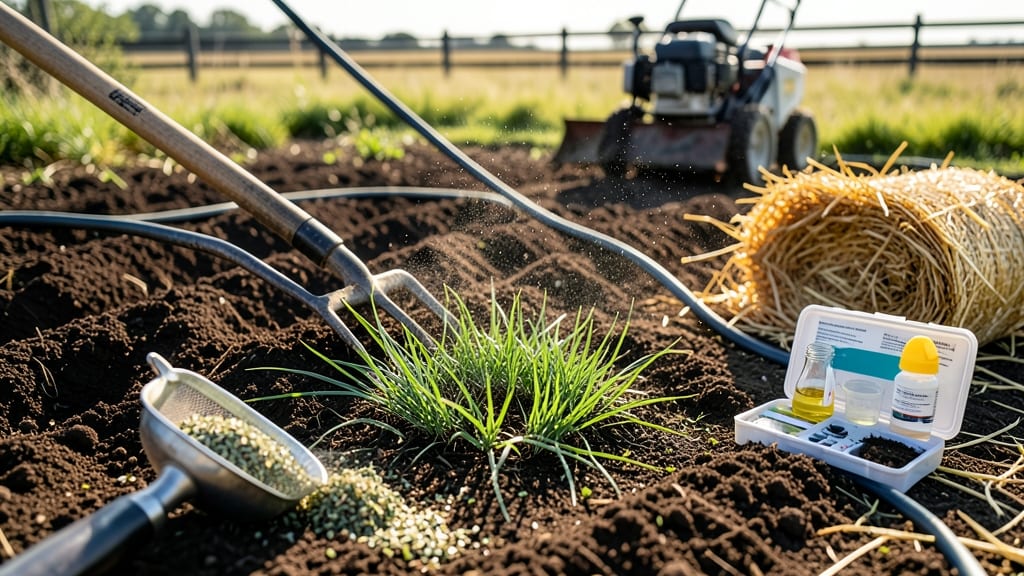
Plant grass seed in Kansas spring after the last frost date and when soil reaches 50°F—typically mid-March to early April for most regions.
Timing your grass seed planting in Kansas isn’t just about avoiding frost—it’s about giving your lawn the perfect 4-week window to establish deep roots before summer’s heat arrives. Get it wrong, and you’ll battle weeds, shallow growth, or even seed loss.
With Kansas’ USDA zones 5b-7a, the exact window shifts from north to south, but the rule stays the same: wait for consistent daytime highs above 50°F and at least two weeks of frost-free nights. That’s when your 🌱 seed gets the moisture and warmth it needs to sprout strong.
Below, I’ll break down the exact dates for your region, how to prep your soil for germination, and the 3 critical care steps that keep your new lawn from turning into a weed patch.
Kansas spring planting timeline: exact dates by region (2024 last frost data)
Planting grass seed in Kansas requires precision—your timing must align with soil temperatures, last frost dates, and regional microclimates to ensure deep root establishment.
The 4-week window after last frost is critical, but Kansas' three distinct regions (North, Central, South) have different optimal planting dates due to varying climate patterns.
Northern Kansas (USDA Zones 5b-6a) experiences earlier frosts and cooler soils, while Southern Kansas (USDA Zones 6b-7a) enjoys warmer springs and longer growing seasons. Even a 2-week delay in planting can reduce root depth by 30-40%, making your lawn vulnerable to summer heat and drought.
Here’s your region-specific planting timeline based on 2024 historical frost data from Kansas State University and local weather stations. Use these dates as your starting point, then adjust based on soil temperature (aim for 50°F+) and moisture levels.
For Northern Kansas, the April 16–May 10 window is ideal because soils warm slowly. If you plant too early (before April 16), frost can kill seedlings, while planting after May 10 risks shallow roots before summer heat arrives.
Use a soil thermometer to confirm temperatures—50°F is non-negotiable for germination.
Central Kansas offers a 2-week advantage with its April 6–25 window.
This region often faces dry springs, so prioritize irrigation if rainfall drops below 1 inch per week. Tall fescue thrives here due to its drought tolerance, but it still needs consistent moisture for the first 4 weeks after planting.
Southern Kansas gardeners can start as early as March 21, but soil temperature is the limiting factor. Wait until soils hit 55°F+ for warm-season grasses like Bermuda or Buffalo grass.
These varieties won’t germinate below 60°F, so rushing can waste seed. If you’re planting cool-season grasses, stick to the April 10 deadline.
Adjust your timeline if unusual weather occurs. Check the Kansas Mesonet for real-time soil temps and National Weather Service alerts for late frosts. A 5-day forecast of consistent 50°F+ days is your green light—don’t let one warm day trick you into planting too soon.
Pro tip: Use black plastic mulch in Northern Kansas to warm soils 2–3°F faster if you’re pushing the planting window. In Southern Kansas, straw mulch helps retain moisture for early spring plantings. Both methods can extend your planting window by 7–10 days.
Remember, the 4-week establishment period is your golden window—this is when roots grow deep enough to survive Kansas’ summer droughts and winter freezes. Rush it, and you’ll end up with a thin, weedy lawn that requires double the care.
Plan ahead, test your soil, and mark your calendar with these region-specific dates.
5 Critical factors that determine your planting success (beyond just dates)
Planting grass seed in Kansas isn’t just about dodging the last frost date—it’s about creating the perfect conditions for deep root establishment before summer’s heat arrives. I’ve learned the hard way that even the best seed can fail if these five factors aren’t dialed in.
Let’s break down what truly matters beyond just the calendar.
First, soil temperature is your secret weapon. Grass seeds need soil to stay above 50°F (10°C) for consistent germination. In Kansas, this usually means waiting until late March or early April, but a soil thermometer is your best friend here.
Cold soil slows growth, leaving your lawn vulnerable to weeds and drought.
Next, moisture retention can make or break your success. Kansas’ clay-heavy soils hold water well, but they can also become waterlogged. Aim for 1–1.5 inches of water per week during germination, and always water in the morning to reduce evaporation.
A light mulch of straw can help retain moisture without smothering new shoots.
Weed competition is another silent killer. If you don’t tackle weeds before planting, they’ll steal nutrients and sunlight from your grass. I recommend a pre-emergent herbicide 2–3 weeks before seeding, followed by hand-pulling any stubborn weeds. A thick stand of grass is your best defense against future weed invasions.
Now, let’s talk seed variety selection. Not all grass types thrive in Kansas’ climate. For most of the state, a tall fescue/bluegrass blend offers the best drought tolerance and heat resistance.
If you’re in the southern part of the state, consider adding Bermuda grass for extra heat resilience. Always check the seed label for cool-season vs. warm-season designations.
Finally, pre-planting soil prep sets the stage for success. Kansas soils often need aeration to improve drainage and root penetration. Rent a core aerator and go over your lawn 2–3 weeks before seeding. After aerating, spread a 2–3 inch layer of compost to boost organic matter and improve moisture retention.
🌱 5 Critical Factors for Kansas Grass Seed Success
- 1. Soil Temperature: Wait until soil reaches 50°F (10°C) for germination.
- 2. Moisture Retention: Keep soil consistently moist with 1–1.5 inches/week.
- 3. Weed Control: Apply pre-emergent 2–3 weeks before seeding.
- 4. Seed Variety: Choose tall fescue/bluegrass blends for Kansas.
- 5. Soil Prep: Aerate + compost 2–3 weeks before planting.
Pro Tip: Test your soil’s pH (ideal: 6.0–7.0) and amend if needed before seeding.
Remember, these factors work together to create a lawn that’s not just green now, but resilient for years. I’ve seen lawns planted at the "right time" fail because of poor soil prep, while others planted slightly late thrive because of perfect moisture and weed control.
Pay attention to the details, and your grass will reward you with deep roots and lush growth.
Once your seeds are in the ground, monitor soil moisture daily for the first two weeks. A light sprinkle in the morning keeps seeds from drying out while preventing fungal issues.
With these factors in check, you’ll be well on your way to a Kansas lawn that’s the envy of the neighborhood.