
Fertilization
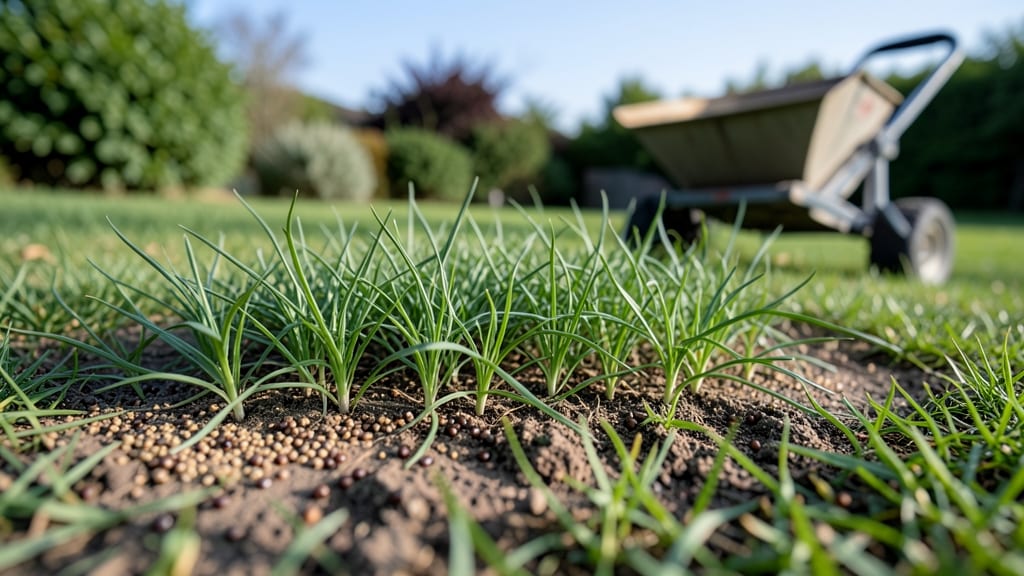
Fertilizing your lawn 6-8 weeks after overseeding is the game-changer for strong root growth and thick grass coverage.
Picture this: you’ve just spread new seed, kept it moist, and watched those first green shoots push through—only to hit a wall when you fertilize too soon. That’s because seedlings need time to establish roots before they can handle nutrients.
The 6-8 week rule isn’t just a suggestion; it’s how you avoid burning tender new grass while giving it the boost it needs to thrive.
Timing matters because over-fertilizing can overwhelm seedlings, leading to stunted growth or even death. Instead, waiting lets the grass focus on root development first, setting the stage for a lush, resilient lawn.
Whether you’re overseeding in fall or spring, this window ensures your grass gets the right nutrients at the right time.
Below, I’ll break down exactly when to apply fertilizer, the best types to use, and how to adjust for your climate—so you can skip the guesswork and get a lawn that’s the envy of the neighborhood.

The 6-8 week fertilization window explained: why timing matters for new grass
When you overseed your lawn, those tiny grass seeds need all their energy focused on root development and leaf growth, not digesting excess nutrients.
That’s why the 6-8 week fertilization window exists—it’s the perfect balance between giving new grass what it needs while preventing fertilizer burn that can scorch delicate seedlings.
Think of it like feeding a baby: too much too soon can overwhelm them, but just the right amount at the right time helps them thrive.
New grass seedlings have shallow root systems for the first few weeks, meaning they can’t absorb nutrients efficiently. Applying fertilizer too early—like within 2-4 weeks—can create a salt buildup in the soil, which dehydrates the roots and stunts growth.
The 6-8 week window gives those roots time to establish a deeper network, so when you do fertilize, the nutrients go where they’re needed most: down into the soil where the roots can access them.
Here’s the science behind it: Grass seeds need phosphorus for early root growth, but once they’ve sprouted, they shift their focus to nitrogen for leaf development.
Fertilizers high in nitrogen (like 24-0-5 or 30-0-4 blends) are great for established lawns, but they can be toxic to seedlings if applied too soon. Waiting until those roots are 2-3 inches deep ensures the fertilizer works with your grass, not against it.
Temperature plays a huge role in this timeline. Cool-season grasses like fescue and ryegrass grow best when soil temps are between 50-65°F, which is why fall overseeding (late August to early October) works so well.
If you’re in a warmer climate and overseeding in spring, those roots might establish faster—sometimes in as little as 5 weeks—but you’ll still want to monitor growth closely before fertilizing.
Moisture is just as critical as timing. New grass needs consistent soil moisture to avoid stress, but overwatering can also dilute nutrients and wash them away. Aim for 1 inch of water per week (including rainfall) and water in the early morning to reduce evaporation.
If your lawn shows signs of yellowing or wilting before the 6-8 week mark, it’s likely thirsty—not ready for fertilizer.
One common mistake is assuming all grass types follow the same timeline. Warm-season grasses like Bermuda or Zoysia grow more aggressively in heat and might be ready for fertilizer in 4-6 weeks, while cool-season varieties take longer.
Always check for 2-3 inches of root growth before fertilizing, regardless of the calendar. You can gently pull a small section of grass—if the roots are thick and white, it’s time to feed.
If you’re overseeding in late fall (October-November), you might need to adjust your timeline. Cooler temps slow growth, so the 8-week window becomes more like 10-12 weeks. In these cases, a light application of starter fertilizer at 4 weeks can help kickstart growth, but avoid high-nitrogen products.
The key is to match the fertilizer to the grass’s growth stage, not the season.
Pro tip: Use a slow-release fertilizer when you do apply it at the 6-8 week mark. These products provide a steady stream of nutrients over 6-8 weeks, preventing spikes that can burn new grass.
Look for labels with water-insoluble nitrogen (WIN) or sulfur-coated urea—these are gentler on seedlings. Pair it with a light topdressing of compost to improve soil structure and moisture retention.
Remember, the goal isn’t just a green lawn—it’s a deep-rooted, drought-resistant lawn that stays healthy year-round. By waiting until those roots are established, you’re setting your grass up for success, not just a quick color boost. Patience here pays off in thicker turf and fewer bare spots next season.
How to adjust fertilization based on grass type and climate Zones
Not all grass is created equal—and neither are their fertilization needs. Cool-season grasses like fescue and ryegrass thrive in northern climates, while warm-season varieties such as Bermuda and Zoysia dominate southern lawns.
Your USDA hardiness zone and grass type dictate when (and how) to fertilize after overseeding to avoid burning delicate seedlings or stunting growth.
In northern regions (zones 3-6), cool-season grasses peak in fall fertilization (September-October), while southern lawns (zones 7-10) shift focus to late spring (April-May) for warm-season grasses. The key? Adjust timing based on when your grass naturally enters its active growth phase—not just the calendar.
- 1. Cool-Season Grasses (Zones 3-6): Fertilize 6-8 weeks after overseeding in late summer/early fall (August-September). Use a low-nitrogen starter (e.g., 20-0-5) to avoid seedling burn.
- 2. Warm-Season Grasses (Zones 7-10): Wait 8-10 weeks post-overseeding, applying fertilizer in late spring (April-May). Opt for slow-release nitrogen (e.g., 30-0-4) to support root depth.
- 3. Transition Zones (6-7): Split applications: light fall feed (October) + spring boost (March). Monitor soil temps—fertilize only when above 55°F for 5+ days.
- 4. Northern Climates (Zones 3-5): Prioritize fall fertilization (September) with high phosphorus (e.g., 10-20-10) to strengthen roots before winter. Skip spring—grass is dormant.
- 5. Southern Climates (Zones 8-10): Time fertilizer for early summer (June) to align with warm-season growth. Avoid winter apps—grasses go dormant and won’t use nutrients.
For cool-season grasses, think of fertilization as a fall wake-up call. Apply a light nitrogen blend (e.g., 24-0-5) when daytime temps hover around 60-70°F. This timing helps new seedlings establish roots before winter dormancy. Northern gardeners should also test soil pH—aim for 6.0-7.0 to maximize nutrient uptake.
In southern zones, warm-season grasses like Zoysia need a spring jumpstart. Delay fertilization until soil temps exceed 65°F for 7+ days.
Use a high-nitrogen, slow-release formula (e.g., 34-0-4) to fuel rapid growth without overwhelming young roots. Southern lawns often benefit from a second summer application in August to maintain vibrancy.
Regardless of your zone, avoid high-phosphorus fertilizers immediately after overseeding—new grass doesn’t need extra phosphorus for root development. Instead, focus on nitrogen for leaf growth and potassium for stress resistance. For example, a 10-0-10 blend works well for transition-zone lawns in spring.
Remember: Climate dictates timing, but grass type dictates type. Cool-season grasses need fall feeds, while warm-season varieties crave spring/summer boosts. Always calibrate your spreader for 1 lb of fertilizer per 100 sqft to prevent overapplication—especially in drought-prone zones where runoff is a risk. 🌱