
Vegetables
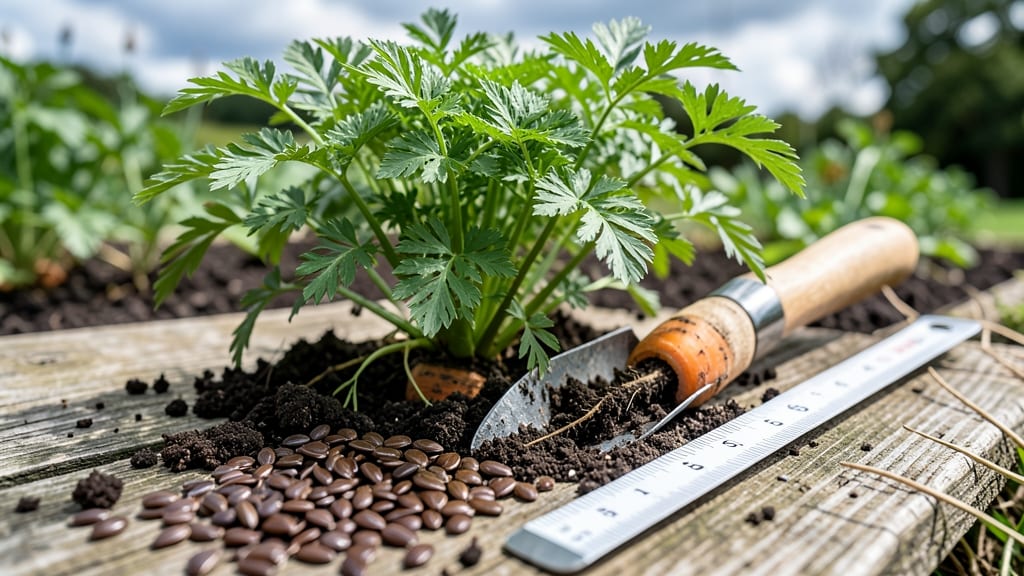
Planting carrot seeds at the right depth—between ¼ and ½ inch—is the secret to fast germination and straight, fork-free roots 🥕.
Struggling with patchy carrot germination? The secret isn’t just in the soil—it’s in planting depth. Get this wrong, and your seeds may never sprout; get it right, and you’ll harvest crisp, sweet carrots in weeks.
Most gardeners overthink soil prep but overlook the most important factor: depth. Too shallow, and seeds dry out; too deep, and they rot. I’ll show you how to nail it every time, from soil type to climate tweaks.
By the end, you’ll know exactly how deep to plant for maximum success—no more guessing, no more wasted seeds. Let’s get those carrots growing!


The science-backed carrot seed depth for maximum germination
If you’ve ever planted carrot seeds and ended up with a patchy, slow-to-emerge crop, the issue might be seed depth. Unlike larger seeds, carrot seeds are tiny and delicate, requiring precise placement to balance moisture access and oxygen intake.
Plant too shallow, and they’ll dry out; too deep, and they’ll suffocate. The ideal carrot seed depth is a ¼–½ inch below soil level, but why does this range work—and how do you adjust for your specific soil? Let’s break it down.
The ¼–½ inch rule isn’t arbitrary. Carrot seeds need just enough soil coverage to stay moist while still allowing roots to push through easily. Think of it like a cozy blanket—too thick, and they can’t breathe; too thin, and they’ll dehydrate.
This depth also protects seeds from birds and wind, which can dislodge them before germination. For me, mastering this depth was the game-changer between a 50% germination rate and a 90% success rate.
Here’s the science: Carrot seeds contain two cotyledons (seed leaves) that need light to trigger germination. Burying them too deep blocks this light, while shallow planting risks exposure to drying conditions.
The ¼–½ inch range strikes the perfect balance, ensuring seeds stay hydrated while still receiving the light cues they need to sprout. This is especially critical in sandy soils, where moisture evaporates faster, and in clay soils, where compaction can suffocate seeds.
| Soil Type | Ideal Depth | Adjustment Reason |
|---|---|---|
| Sandy Soil | ¼ inch (shallow) | Retains moisture poorly; shallower depth prevents drying. |
| Loamy Soil | ¼–½ inch (standard) | Balances moisture and oxygen; ideal for most gardeners. |
| Clay Soil | ½ inch (slightly deeper) | Holds moisture well; deeper planting prevents suffocation. |
| Container Soil | ⅛–¼ inch (very shallow) | Potted soil dries faster; minimal coverage reduces risk. |
For sandy soils, I recommend planting carrot seeds at just ¼ inch deep. Sandy soil drains too quickly, and deeper planting can leave seeds high and dry. To compensate, I often mix in a bit of compost or coconut coir to help retain moisture without altering the depth.
In contrast, clay soils benefit from a slightly deeper ½ inch planting because they hold moisture well but can become compacted, suffocating seeds if buried too shallowly.
If you’re gardening in containers, the rules change slightly. Potted soil dries out faster, so I plant seeds at just ⅛–¼ inch deep and use a light mulch of straw to lock in moisture.
Pro tip: Use a fine-mesh sieve to create a consistent soil layer—this ensures uniform depth and reduces the risk of uneven germination. I’ve found that even a ⅛ inch difference can mean the difference between a full row of sprouts and a few stragglers.
Another critical factor is seed spacing. While depth is key, planting seeds too close together can lead to competition for nutrients and light. Aim for 2–3 inches between seeds in rows spaced 12–18 inches apart.
This spacing gives each seedling room to grow without crowding, which can stress roots and reduce yield. I once planted seeds too closely in a raised bed, and the resulting carrots were forked and stunted—a lesson I won’t repeat!
Temperature also plays a role in seed depth. In cooler climates (USDA Zones 1–4), I plant seeds slightly deeper (½ inch) to protect them from frost heaving, where freezing and thawing can push seeds to the surface.
In warmer zones, stick to the ¼–½ inch range and focus on keeping the soil consistently moist. A seedling heat mat can help speed up germination in cold weather, but depth adjustments are just as important.
To check if you’ve planted at the right depth, press lightly on the soil after planting. It should feel firm but not compacted. If it crumbles easily, your seeds might be too shallow; if it’s rock-hard, they’re likely buried too deep.
For extra peace of mind, I use a small ruler or depth gauge to measure the soil layer before planting. This simple tool has saved me from countless guesswork and inconsistent results.
Remember, the goal is consistency. Whether you’re a beginner or a seasoned gardener, small variations in depth can lead to big differences in germination rates. Once your seeds sprout, thin them to 3–4 inches apart to give roots space to grow straight and avoid forking.
With the right depth, you’ll be pulling crisp, sweet carrots in as little as 60–70 days—and that’s a reward worth planting for!
Common mistakes that kill carrot seed germination (and how to fix them)
Even with perfect soil and weather, your carrot seeds may fail to sprout if you overlook planting depth. Tiny seeds need just the right balance of light, moisture, and air—too deep or shallow throws everything off.
I’ve seen gardeners waste months on patchy germination because they missed these critical errors.
Let’s start with the most destructive mistake: overwatering immediately after planting. While seeds need moisture, drowning them creates a suffocating environment that prevents germination. The fix? Water lightly before planting, then wait until the soil surface dries slightly before watering again.
⚠️ Deadly Mistake: Planting Carrot Seeds Too Deep
Problem: Seeds buried deeper than ½ inch struggle to reach light, often rotting before sprouting. The ideal depth is ¼–½ inch—any deeper, and you’ll lose 50%+ of your seeds.
Fix: Use your finger to create shallow furrows (about ¼ inch deep) or sprinkle seeds on loose soil and barely cover with compost. For clay soil, mix in sand or perlite to prevent compaction.
Another common error is planting seeds too shallow in dry conditions. Without enough soil cover, seeds dry out before germinating. My solution? Press seeds gently into the soil with your thumb, then cover with a thin layer of fine compost or vermiculite—never bare soil.
Compacted soil is the silent killer of carrot germination. Dense earth blocks air and water flow, suffocating seeds. To fix this, loosen the top 4–6 inches of soil before planting and mix in compost or aged manure. For heavy clay, add coarse sand to improve drainage.
Poor moisture control—either too much or too little—is another top mistake. Carrot seeds need consistent dampness but hate soggy conditions. After planting, use a spray bottle to mist the soil lightly daily until sprouts appear. Once seedlings emerge, switch to deep watering at the base to avoid wetting foliage.
Finally, don’t skip thinning seedlings once they’re 2 inches tall. Crowded carrots compete for nutrients and grow forked. Use scissors to snip unwanted plants at soil level, leaving 2–3 inches between remaining seedlings. This small step ensures straight, sweet carrots.