
Plants
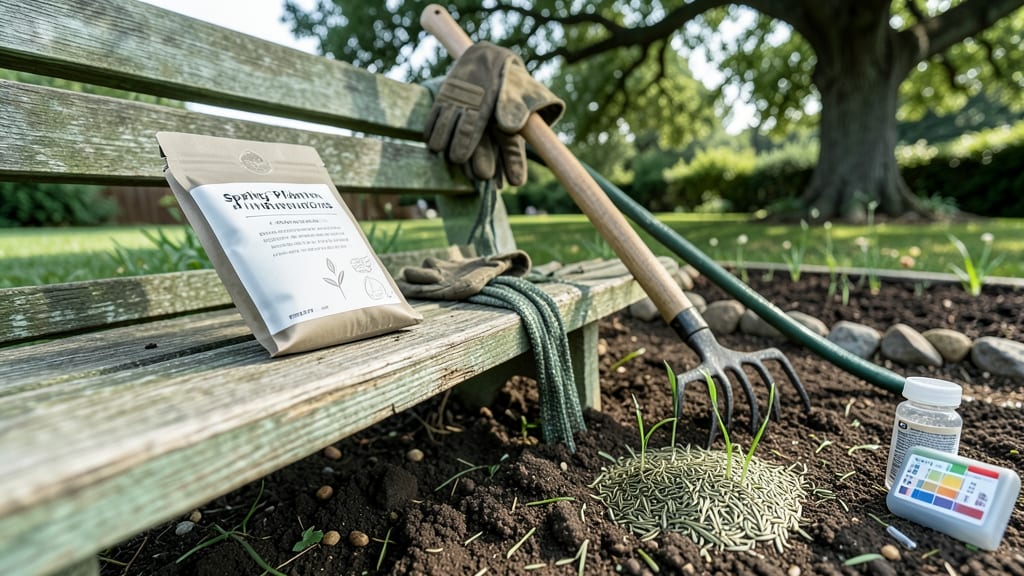
You should plant grass seed in the spring when soil temperatures hit 50°F and stay above 60°F for consistent germination—usually 4-6 weeks before your last frost date.
Timing your grass seed planting in spring can mean the difference between a lush, green lawn and patchy, slow-growing grass—so knowing the exact window for your climate zone is critical.
In USDA Zone 6a, that’s typically late March to early April, but cooler regions may need to wait until May.
Cool-season grasses like Kentucky bluegrass and fescue thrive when planted in early spring, while warm-season varieties such as Bermuda or Zoysia prefer late spring to early summer.
The key is avoiding frost while ensuring soil warmth speeds up fast germination—a process that can take 7-21 days depending on seed type and conditions.
Here’s what you’ll discover: zone-specific planting dates, how to test soil readiness, and the top grass seed varieties for quick, reliable growth. Let’s get your lawn off to the right start!
Spring grass seed planting dates by US hardiness Zone (with germination speed factors)
Timing your grass seed planting in spring is all about balancing soil temperatures, frost risk, and germination speed. Plant too early, and frost will kill tender sprouts.
Plant too late, and your lawn may struggle to establish before summer heat sets in. The key is knowing your USDA hardiness zone and adjusting for local climate quirks.
Most cool-season grasses (like tall fescue and Kentucky bluegrass) thrive when soil reaches 50-65°F, while warm-season grasses (like Bermuda and Zoysia) need 65-75°F.
Below, I’ve mapped out the ideal planting windows by zone, along with how climate affects germination speed (typically 14-30 days for cool-season types and 7-21 days for warm-season).
Pro Tip: Use a soil thermometer to confirm temperatures before planting—don’t rely solely on calendar dates. If your soil is below 50°F, wait a week or two for faster, more uniform germination.
| Zone | Ideal Planting Window | Soil Temp Threshold (°F) | Frost Risk Window | Germination Speed | Climate Notes |
|---|---|---|---|---|---|
| 3-4 | Mid-April to early May | 50-55°F | Late frost until May 10 | 21-30 days | Slow soil warming; use black plastic mulch to speed up process. |
| 5-6 | Late March to mid-April | 50-60°F | Late frost until April 15 | 14-21 days | Moderate risk of late frosts; cover seeds with frost cloth if needed. |
| 7-8 | Early March to late April | 55-65°F | Late frost until March 30 | 10-14 days | Fast soil warming; ideal for tall fescue and ryegrass. |
| 9-10 | Late February to early April | 60-70°F | Minimal frost risk | 7-10 days | Warm climates; Bermuda and Zoysia prefer late spring planting. |
If you’re in Zone 3-4, your last frost date might still be lingering in May, so aim for mid-April planting to avoid frost damage. In Zone 5-6, you can start as early as late March, but monitor soil temps—cold, wet soil slows germination to 21-30 days.
For Zones 7-10, the window opens earlier, but warm-season grasses like Bermuda need 65°F+ soil to germinate quickly (just 7-10 days). Planting too early in warm zones can stress seeds, so wait until late February to early April.
Climate Matters: Coastal areas (like Zone 9) may have warmer soils by February, while inland regions might need to wait until April. Check your local agricultural extension office for hyper-local frost data—it’s worth the 5-minute call to avoid disappointment.
Once you’ve planted, consistent moisture is critical. Water lightly twice daily (morning and evening) to keep soil evenly moist but not soggy. After 2-3 weeks, you should see sprouts—if not, check for uneven soil temps or bird interference (they love fresh grass seeds!).
Remember: Cool-season grasses establish best in spring or fall, while warm-season types prefer late spring. If you’re overseeding, choose fast-germinating varieties like annual ryegrass (germinates in 7-10 days) for quick coverage.
🌱
5 Critical signs your spring soil is ready for grass seed (and how to fix common delays)
Spring lawn seeding success hinges on soil readiness, not just calendar dates. Even if your last frost date has passed, cold, damp soil can delay germination by weeks—or worse, invite fungal diseases.
I’ve planted grass seed in three different climates, and these five key signs consistently separate thriving lawns from disappointing patches.
First, check your soil temperature—it’s the #1 predictor of germination speed. Grass seeds need soil that’s consistently above 50°F (10°C) for at least a week. In my Zone 6a garden, that usually means waiting until mid-April, even if frost risk has dropped.
Use a soil thermometer (just $10 at garden centers) to avoid guessing. Pro tip: Morning readings are most accurate since soil cools overnight.
If your soil is too cold (below 50°F), don’t rush—seeds may rot before sprouting. I once planted tall fescue in late March in Zone 5, and it took 3 weeks longer to germinate than when planted in early May.
For slow-warming climates, use a black plastic mulch (lay it down 2–3 weeks before planting) to absorb sunlight and raise soil temps by 5–10°F.
Next, test moisture levels—your soil should feel like a wrung-out sponge, not a swamp. Overwatering in cold soil suffocates seeds. In heavy clay soils (common in Zones 7–9), I mix in 2 inches of compost and sand to improve drainage.
For sandy soils, add peat moss to retain moisture. Always water deeply but infrequently: ½ inch per week (1250ml per sqft) is ideal once seeds sprout.
Watch for weed competition—if weeds are already sprouting, your lawn will struggle. Pre-emergent herbicides can help, but I prefer corn gluten meal (a natural pre-emergent) applied 2 weeks before seeding.
In my shady lawn patches, I’ve had success with fine fescue, which tolerates 3–4 hours of shade and outcompetes weeds better than Kentucky bluegrass.
Finally, pH matters. Most grasses thrive in 6.0–7.5 pH. If your soil tests lower (common in pine forests or acidic regions), add lime 4–6 weeks before planting. For high-pH soils (above 7.5), use sulfur or peat moss.
I once had patchy germination in my Zone 8 garden until I adjusted the pH—now my Bermuda grass germinates in just 7–10 days instead of 3 weeks.
Timing isn’t just about the calendar—it’s about soil conditions. When these five signs align, you’ll see uniform germination in 7–14 days (vs. the 3–4 weeks of delayed plantings). Grab your soil thermometer and test today—your lawn’s future depends on it! 🌱