
Companion Plants
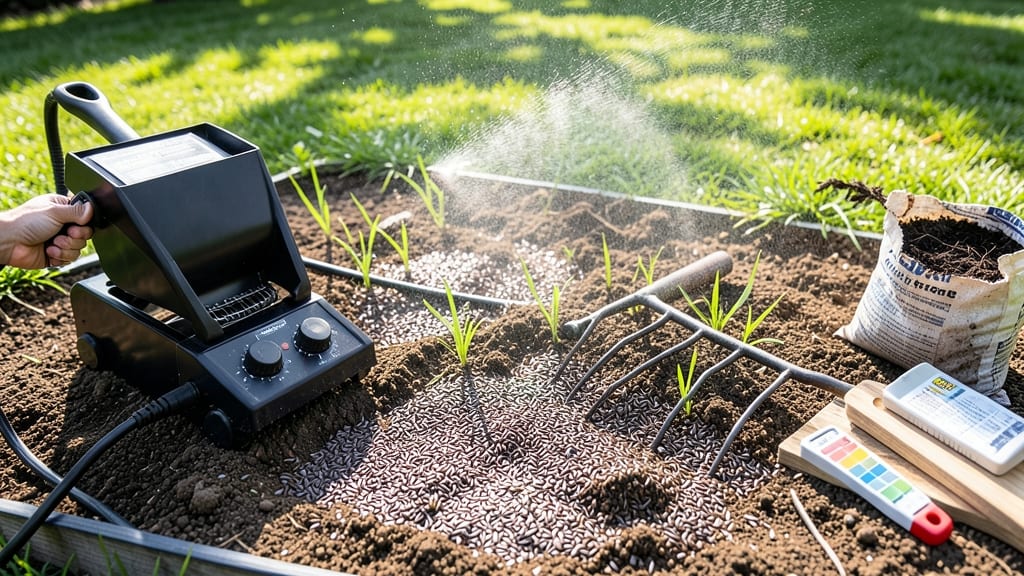
Planting grass seed in spring at the right time means the difference between a vibrant lawn and months of waiting for results.
Timing is everything—too early and frost will kill your efforts, too late and summer heat can stress young sprouts. But with the right soil temperature and frost-free window, you’ll set your lawn up for success.
Most regions hit the sweet spot between March and May, when soil warms to 50–65°F. In cooler zones like USDA 6a, wait until after your last frost date (around April 15 in many areas) to avoid damage.
Below, I’ll break down the exact timing for your climate, soil prep tips, and how to keep your new grass thriving once it’s planted.
Ideal soil temperature and frost-free window for spring grass seed planting
Timing your grass seed planting in spring is all about balancing soil warmth and frost risk. Grass seeds need consistent temperatures between 50°F and 65°F to germinate properly. Plant too early, and frost can kill tender sprouts; too late, and summer heat stresses young plants.
The key is finding that sweet spot after your last frost date when soil stays reliably warm.
Your local frost-free window determines the best planting window. For most U.S. regions, this falls between mid-April and early June, but exact timing varies by USDA hardiness zone. Northern climates (Zones 3-5) may wait until late May, while Southern regions (Zones 7-9) can start as early as March.
Always check your average last frost date—planting before this risks frost damage to delicate seedlings.
To find your frost-free window, use the National Weather Service or Old Farmer's Almanac for your ZIP code. Add 2-4 weeks to your last frost date to account for soil warming.
For example, if your last frost is April 15, aim to plant by May 1 in cooler zones or April 20 in milder climates.
For cooler climates, like the Pacific Northwest or New England, soil may stay below 50°F until late spring. Use a soil thermometer to confirm warmth before planting.
In warmer regions, like Texas or Florida, you can plant as early as February, but avoid summer heat by seeding in fall instead for better establishment.
Microclimates play a huge role—south-facing slopes warm faster than shaded areas. Test soil temperature at 4-inch depth in the morning.
If it’s consistently above 50°F for 5-7 days, it’s time to plant. Cool-season grasses (like Kentucky bluegrass) tolerate slightly cooler soil (40°F), while warm-season grasses (like Bermuda) need 65°F+.
Pro tip: Use black plastic mulch or straw mulch to warm soil faster in early spring. This can shave 1-2 weeks off your planting timeline. Just remove it once seeds sprout to prevent overheating. Always water deeply after planting to encourage root growth in warm soil conditions.
If you’re unsure about your local frost date, err on the side of planting later. Grass seeds can handle brief cold snaps if established, but frost damage to new sprouts is irreversible.
For high-altitude areas, like Denver or Salt Lake City, add an extra 2-3 weeks to your frost-free window due to cooler nights.
Remember: Soil temperature matters more than air temperature. A 60°F day with 40°F soil won’t support germination. Use a $10 soil thermometer—it’s the best way to avoid guesswork. Once your grass reaches 2-3 inches tall, it can handle more variable conditions.
Start your lawn right by matching your planting to soil warmth and frost-free dates. With the right timing, you’ll see uniform germination and a thick, healthy lawn in just 4-6 weeks—no more patchy, slow-growing grass! 🌱
Step-by-step guide: how to time your planting for maximum lawn success
Planting grass seed at the wrong time in spring can leave your lawn struggling. The key is balancing soil warmth and frost-free dates—too early, and frost kills sprouts; too late, and summer heat stresses seedlings.
My step-by-step checklist ensures you hit the perfect window for your region, whether you're in the cool North or mild South. Let’s break it down into actionable steps to avoid common pitfalls.
Before you even pick up your grass seed, know your last frost date. Check your local USDA hardiness zone—zones 3-5 (north) typically wait until mid-April to May, while zones 7-10 (south) can start as early as February.
Use the National Weather Service or a frost calendar for your exact location. Pro tip: Add 2-3 weeks to your last frost date to account for unpredictable late frosts.
- 1 Test soil temperature with a soil thermometer—aim for 50-65°F at 4-inch depth. Cool-season grasses (like Kentucky bluegrass) thrive at 50-60°F, while warm-season (like Bermuda) need 65-75°F.
- 2 Prep your soil 1-2 weeks before planting: Till 4-6 inches deep, remove weeds, and loosen compacted areas. Add compost or peat moss to improve drainage—soggy soil = root rot.
- 3 Choose the right seed for your climate: Cool-season (fescue, ryegrass) for northern regions; warm-season (centipede, zoysia) for southern areas. Mix seed types for faster germination and durability.
- 4 Plant within your frost-free window: For cool climates, seed in early spring (March-April) or early fall (September). In warm climates, seed in late spring (May) to avoid summer drought stress.
- 5 Water deeply and consistently: Keep soil moist but not soggy for the first 2-3 weeks. Water early morning to reduce evaporation and fungal risk. Aim for 1 inch of water per week, split into 2-3 sessions.
- 6 Adjust for microclimates: South-facing slopes warm faster—plant 1-2 weeks earlier. Shady areas or low spots stay cooler—delay planting by 10-14 days or choose shade-tolerant seed like fine fescue.
If you’re torn between early vs. late spring planting, weigh the trade-offs: Early planting risks frost damage but gives seedlings a head start before summer heat. Late planting avoids frost but may struggle with drought stress.
My rule of thumb? Plant as soon as soil hits 50°F and stay 14 days past your last frost date. For example, in Zone 5, that’s usually mid-April.
Don’t overlook seed selection—it’s your secret weapon for success. Cool-season grasses like tall fescue handle early spring better, while warm-season types like St. Augustine thrive when soil is consistently warm.
Check your seed bag for germination rates—aim for 85% or higher to avoid patchy lawns. Pro move: Mix fast-germinating (ryegrass) with slow-growing (bluegrass) for balanced coverage.
Once your grass sprouts (usually 7-21 days after planting), reduce watering to every