
Companion Plants
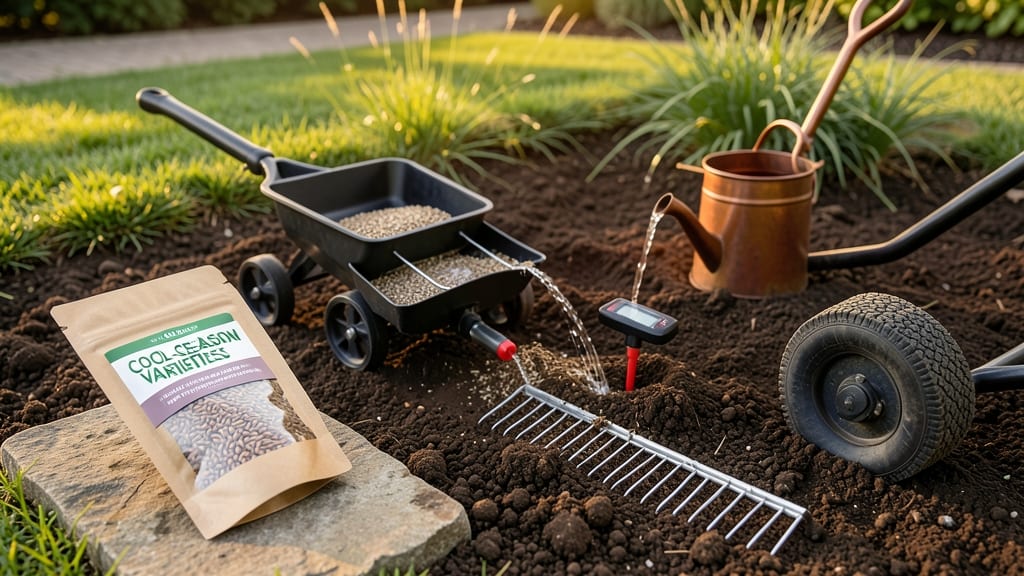
Planting grass seed in Minnesota at the right time means the difference between a thick, green lawn and a patchy, slow-growing mess.
Timing your grass seed planting in Minnesota isn’t just about the calendar—it’s about soil temperatures that ensure fast germination and thick, lush lawns. Get it wrong, and you’ll face patchy growth or wasted seeds.
In this guide, I’ll break down the exact months to plant in Minnesota’s 3a-5b zones, how to check soil warmth, and which grass varieties thrive fastest in your region.
You’ll learn when to start in early spring, how to adjust for late frosts, and the fastest way to establish a lawn before summer heat sets in.
Best months to plant grass seed in Minnesota based on soil temperature
Minnesota’s cool-season climate means timing your grass seed planting depends on soil temperatures, not just the calendar. Most cool-season grasses thrive when soil is between 50°F and 65°F, while warm-season grasses need warmer soil (65°F+).
Getting this right ensures fast germination and a thick, lush lawn—not patchy, slow growth.
In Minnesota, the best planting windows are early spring (March-April) and early fall (September-October). However, northern MN (USDA zones 3a-4a) has cooler soil longer than southern MN (zones 4b-5b), so adjust accordingly. Let’s break down the ideal soil temps and regional variations to help you pick the perfect time.
Pro Tip: Use a soil thermometer (available at garden centers) to check temps at 4-inch depth. This is the critical zone for seed germination. If temps are below 50°F, wait—cold soil slows growth and invites disease.
| Planting Window | Soil Temp Range (°F) | Best Months (North MN) | Best Months (South MN) | Grass Type |
|---|---|---|---|---|
| Early Spring | 50°F–60°F | Late April–Early May | March–Early April | Cool-season (Kentucky Bluegrass, Fine Fescue) |
| Late Spring | 60°F–65°F | Early May–Early June | April–May | Cool-season (Tall Fescue) |
| Early Fall | 55°F–65°F | Mid-September–Early October | Late August–September | Cool-season (All types) |
| Late Fall | 45°F–55°F | Late October (risky) | October (if frost-free) | Cool-season (Emergency only) |
| Warm-Season (Rare in MN) | 65°F+ | June–July (Southern MN only) | June–July | Buffalo Grass, Zoysia (Limited use) |
For northern Minnesota, aim to plant cool-season grasses like Kentucky Bluegrass or Fine Fescue in late April to early May. Soil temps here lag behind southern regions due to later snowmelt and cooler nights.
If you plant too early, seeds may rot in cold, wet soil. Conversely, southern Minnesota can start as early as March when soil reaches 50°F.
Fall planting is ideal for Minnesota because cooler air and warmer soil create perfect conditions. Seedlings establish roots before winter dormancy, resulting in thicker lawns the following spring.
In northern MN, target mid-September to early October; in the south, you can extend until late October—just ensure seeds germinate 4–6 weeks before frost.
If you’re considering warm-season grasses (like Buffalo Grass or Zoysia), these are rare in Minnesota but work in southern counties (e.g., Twin Cities, Rochester).
Plant in late May to June when soil is consistently 65°F+. These grasses go dormant in winter, so they’re not ideal for northern lawns.
Watch for unpredictable frost dates. Use the USDA Plant Hardiness Zone Map as a guide, but check your local cooperative extension office for last-frost averages. For example, Duluth (Zone 4a
How to check soil temperature and adjust planting for Minnesota’s climate
Minnesota’s climate throws curveballs—one day it’s warm enough to plant, the next, a late frost threatens your grass seed. The secret to success? Monitoring soil temperature, not just air temperature. Grass seeds need consistent warmth to germinate, and Minnesota’s 50-65°F soil range is your golden window.
Without this, your seeds may rot or fail to sprout, leaving bare patches that take months to recover.
I’ve learned the hard way that planting too early—even if the calendar says spring—can mean wasted seed and frustration. The key is patience and precision. A soil thermometer (just $10 at garden centers) becomes your best friend.
It tells you exactly when the ground is ready, regardless of what the weather app predicts. For Minnesota’s USDA zones 3a-5b, this often means waiting until mid-April to early May for spring planting, or September to early October for fall.
⚠️ callout warning ⚠️
Minnesota’s unpredictable spring can fool you—air temps may rise, but soil stays cold. Planting grass seed in below-50°F soil causes seeds to rot. Use a soil thermometer for 3 consecutive days at 50°F+ before planting. Pro tip: Check temps in the morning (soil warms slower than air).
🌱 Why it matters: Seeds need consistent warmth to activate enzymes for germination.
Start by testing your soil’s temperature in the morning (between 8-10 AM) for 3 consecutive days. Dig your thermometer 1 inch deep—this mimics where seeds will be planted. If temps hover around 50°F or higher, it’s time to prep your lawn.
For cool-season grasses (like Kentucky Bluegrass), aim for 50-65°F. If you’re planting warm-season grasses (like Bermuda), wait until soil reaches 65-75°F, which typically happens in late May to June in Minnesota.
Minnesota’s microclimates add another layer of complexity. Southern MN (like Minneapolis-St. Paul) often warms up 2-3 weeks earlier than northern regions (like Duluth). Check local frost dates from the MN State Climatology Office and adjust your planting window accordingly.
For example, if your area has a late frost risk in May, delay planting until after Mother’s Day to avoid damage.
Once you’ve confirmed the right soil temperature, act fast. Minnesota’s short growing season means you only get 2-3 planting windows per year: early spring (after last frost), late summer (August), and early fall (before first frost). For fall planting, aim to finish 4-6 weeks before the first expected frost.
This gives seeds time to germinate and establish roots before winter dormancy. Use a weather forecast app (like Old Farmer’s Almanac) to track 10-day outlooks and adjust your timeline.
After planting, keep soil consistently moist (not soggy) by watering lightly twice daily for the first 2 weeks. Use a sprinkler set to 0.25 inches per session to avoid displacing seeds. Once sprouts appear (7-14 days), deepen watering to 0.5 inches per week.
This encourages deep root growth, which is critical for surviving Minnesota’s freeze-thaw cycles. With the right soil temperature and care, your grass seed will germinate in 10-21 days, giving you a head start on a thick, lush lawn by summer.