
Plants
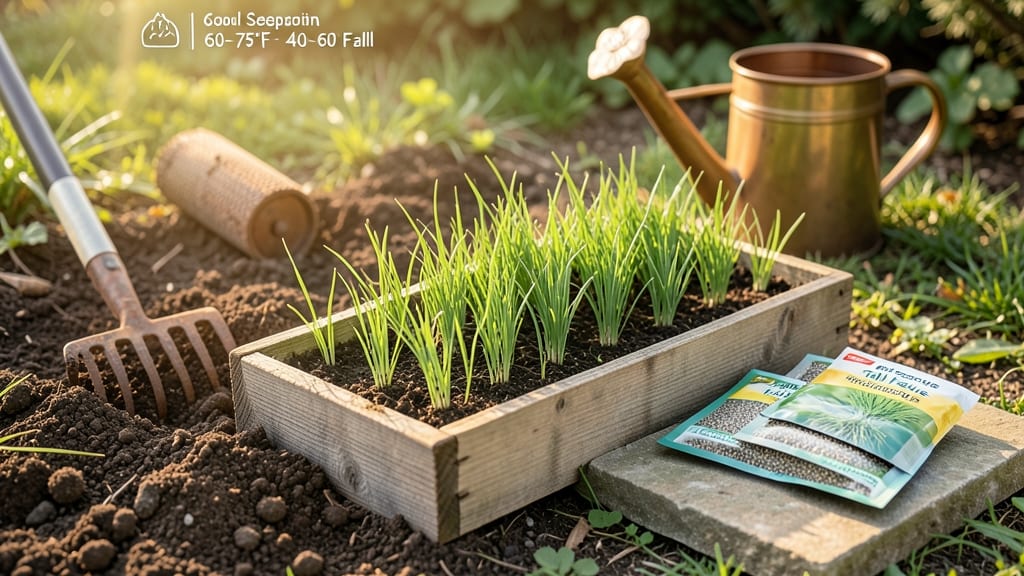
You can plant grass seed in Colorado once soil temperatures hit 50°F (10°C) and the last frost has passed—usually between March and April for most regions, with late summer (August–September) as a second window.
Colorado’s diverse elevations and unpredictable weather make timing your grass seed planting a critical decision—get it wrong, and you risk frost damage or wasted effort.
In Denver’s 5b zone, for example, last frosts average around April 15, while Colorado Springs’ 6a sees them by April 20. Planting too early means seedling stress; too late risks summer drought before roots establish.
Below, I break down the best planting months by elevation, the cold-hardy grass types that thrive in Colorado, and pro tips to keep your lawn lush through 100+°F summers and subzero winters.
Colorado grass seed planting timeline by elevation (with frost dates)
Colorado’s dramatic elevation changes—from desert lowlands to alpine meadows—create wildly different frost patterns that dictate your grass seed planting window.
In lowland areas (3,000–5,000 ft), like Grand Junction, you might plant as early as February, while mountain regions (7,000+ ft), such as Vail, often wait until May to avoid late frosts.
Timing isn’t just about dates; it’s about soil temperatures and frost-free days—get it wrong, and your seed could wash away or freeze before sprouting.
Most Colorado gardeners focus on two ideal planting windows: early spring (March–April) and late summer/early fall (August–September). Spring planting gives grass a head start before summer’s dry heat, while fall planting lets roots establish before winter dormancy.
The key is planting 4–6 weeks before your first fall frost or after your last spring frost, with soil temperatures consistently above 50°F (10°C). Below, we break down the exact timing for your elevation zone.
If you’re in the lowland zone (3,000–5,000 ft), like the Front Range or Western Slope, aim to plant Kentucky bluegrass or tall fescue in February–March or August–September. These areas enjoy 150–180 frost-free days, giving grass plenty of time to root before winter.
For example, Denver (5,280 ft) typically sees its last frost around April 15, so planting by March 15 ensures a safe window.
In the foothills (5,000–7,000 ft), such as Colorado Springs or Boulder, cooler nights and shorter growing seasons mean you should delay until April–May for spring planting.
Fall planting here shifts to August to avoid the first frost in late September. Fine fescue or chewing fescue thrive here—they’re drought-tolerant and handle cooler soils better than Kentucky bluegrass.
For mountain regions (7,000+ ft), like Aspen or Telluride, your timeline shifts dramatically. Spring planting often waits until May–June due to late frosts, while fall planting must wrap up by early August.
These zones have only 90–120 frost-free days, so creeping red fescue or wheatgrass mixes are your best bets—they establish quickly and tolerate cooler soils.
One common mistake? Planting too early in lowland areas or too late in mountain zones. Early planting can lead to washout from spring rains, while late planting risks frost damage before germination.
Always test soil temperature with a soil thermometer—aim for 50°F (10°C) for cool-season grasses. If temps dip below this, wait another week.
Don’t forget to account for microclimates! A south-facing slope in the mountains may warm up faster than a north-facing yard, while urban areas like Denver can experience heat islands that delay frost.
Use these general guidelines as a starting point, then adjust based on your specific yard conditions. With the right timing, you’ll have a lush, frost-resistant lawn that outlasts Colorado’s unpredictable weather.
🌱 For extra protection, consider a lightweight frost blanket if planting near your last frost date, or choose cold-hardy grass varieties like tall fescue for mountain regions. Your lawn will thank you for the precision!
Best grass seed types for Colorado’s climate and when to plant them
Colorado’s climate demands grass seed types that thrive in cool-season or warm-season conditions, depending on elevation. Cool-season grasses like Kentucky bluegrass and fescue dominate, while warm-season grasses like Bermuda and zoysia are better for southern regions. Choosing the right type ensures your lawn survives drought and temperature swings.
For most of Colorado, early spring (March–April) and late summer (August–September) are ideal planting windows. Cool-season grasses need cooler soil temps (50–65°F), while warm-season grasses prefer 65–75°F. Mountain regions (7,000+ ft) may delay planting until late spring due to late frost risks.
Cool-season grasses like Kentucky bluegrass and tall fescue are best for Colorado’s mountain and foothill regions, where winters are harsh. Tall fescue is my top pick for drought-prone areas—it thrives with less water and handles shade better than Kentucky bluegrass.
In southern Colorado (e.g., Pueblo, Colorado Springs), warm-season grasses like Bermuda or zoysia can work if planted in late spring (May–June). These grasses go dormant in winter but bounce back quickly in spring heat. However, they struggle in high-elevation zones.
For mountain lawns (7,000+ ft), stick to cool-season blends with fine fescue mixed in. These varieties tolerate cooler temps and thin soils. Avoid warm-season grasses—they’ll brown out before summer even arrives. Always check soil temperature before planting; use a soil thermometer for accuracy.
Pro tip: If you’re seeding in fall, aim for 6–8 weeks before first frost (typically late August–early September). This gives seeds time to establish roots before winter. Spring planting should happen 4–6 weeks after last frost (usually mid-April for Denver).