
Companion Plants
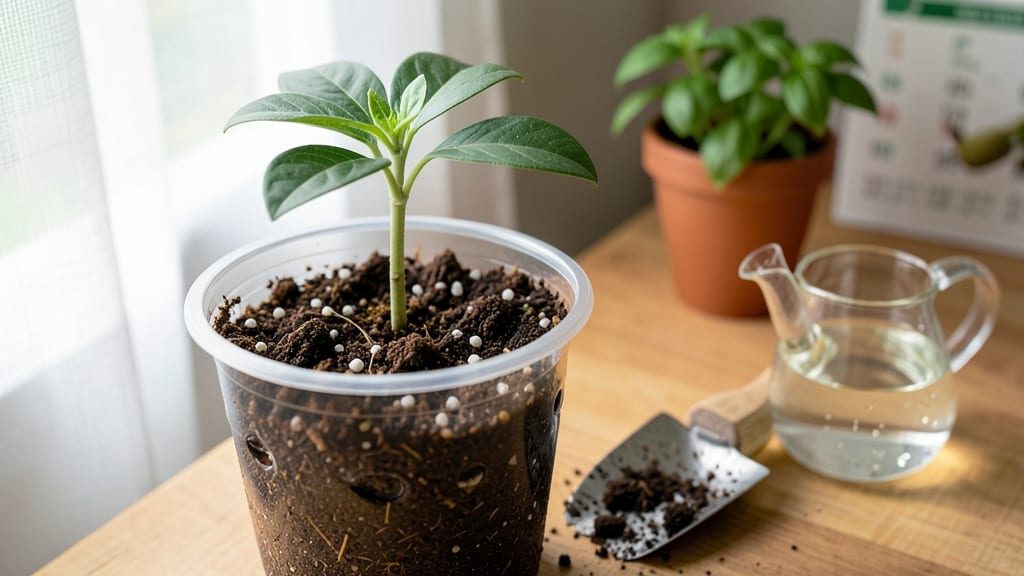
Planting your avocado seed in soil at the right time is the difference between a thriving 🥑 seedling and a sad, wilted loss.
You’ve got roots sprouting in water—but rushing them into soil too soon can shock the system. The key is waiting for warmth, whether you’re growing indoors or prepping for an outdoor move.
Most avocado seeds need soil temperatures between 65-80°F to avoid transplant shock. That means timing it right after your last frost (around late spring in USDA Zone 6a) or keeping it cozy indoors until the roots are strong enough.
Below, I’ll walk you through the exact cues to watch for—plus how to prep your seedling for the big transition so it doesn’t just survive, but thrives.
How to identify the perfect warmth-triggered planting window for avocado seeds
Planting your avocado seed too soon after sprouting can shock its delicate roots. The key to success lies in waiting for the right soil temperature and seedling maturity.
Avocado seedlings thrive when soil reaches 65-80°F—this warmth signals their readiness for permanent planting. Without this warmth, your seedling may struggle to establish roots properly in cooler conditions.
First, monitor your seedling's root development while it grows in water. Healthy roots should reach 2-3 inches long and form a dense network. These roots need space to expand in soil, so don't rush the transition.
Patience here prevents transplant shock, which often kills young seedlings before they even begin growing outdoors.
Next, observe your seedling's leaf growth and stem strength. A ready-to-plant seedling will have 2-4 sturdy leaves and a thick, woody stem. Weak stems or yellowing leaves mean it's not ready—keep it in water until it reaches these milestones.
This growth stage ensures your seedling can handle the stress of soil transplantation.
| Indicator | Ready Stage | Action Required |
|---|---|---|
| Root Length | 2-3 inches | Seedling can handle soil stress |
| Leaf Count | 2-4 sturdy leaves | Photosynthesis ready for growth |
| Stem Strength | Woody, thick stem | Supports outdoor conditions |
| Soil Temp | 65-80°F | Warmth triggers root expansion |
| Season | After last frost | Frost-free period confirmed |
To test your soil's warmth, use a simple soil thermometer or even your finger. Press your finger into the soil—if it feels warm but not hot, it's likely in the ideal range.
For precise readings, bury the thermometer 2 inches deep and check it daily. Morning readings are most accurate since soil cools overnight.
Outdoor conditions also matter. Plant only after the last frost date in your area, typically late spring in most climates. Check your local frost calendar to avoid accidental frost damage.
In warmer zones (like USDA Zone 9+), you can plant as early as February, while cooler zones may wait until May.
If you're planting in containers, warmth is easier to control. Place pots in a sunny spot where soil stays consistently warm. Use a heat mat if needed, especially for early spring plantings.
This gives your seedling a head start before outdoor temperatures stabilize. Just ensure the pot has drainage holes to prevent root rot.
Watch for new leaf growth after planting as a sign your seedling is adapting. If leaves wilt or turn yellow, it may need more warmth or water. Adjust care based on these visual cues. Remember, avocado seedlings are tropical plants—they crave warmth and thrive when conditions mimic their natural environment.
For indoor-grown seedlings, transition to soil when your home's indoor temperatures stay above 60°F consistently. Move the pot near a south-facing window for maximum sunlight. This gradual adjustment helps prevent shock. If you notice slow growth, supplement with a grow light for 12-14 hours daily until outdoor conditions improve.
Finally, avoid planting during heatwaves above 90°F. Extreme heat can stress young seedlings. Instead, aim for mild, sunny days with gentle breezes. This balance gives your avocado seedling the best chance to thrive in its new soil home.
Step-by-step transition process: moving avocado seedlings from water to soil
Now that your avocado seed has developed 2-3 inch roots in water, it’s time to prepare for its first soil adventure. The key is gradual adaptation—rushing this step often leads to shocked seedlings that wilt or rot. I’ve learned that patience here pays off with a healthier, stronger young tree.
Before planting, ensure your seedling has 4-6 mature leaves and a thickened stem (about pencil thickness). This signals it’s ready to handle soil’s drier conditions. I always check for no blackened roots or mushy stems—these are red flags for disease or overwatering in its water phase.
- Start 7-10 days before planting: Move container outside for 2-3 hours daily in partial shade.
- Gradually increase exposure by 1 hour/day until reaching full sun conditions.
- Watch for leaf scorch—if leaves curl, reduce sun exposure slightly.
- Use a well-draining mix: 50% potting soil, 30% perlite, 20% compost.
- Avoid garden soil—it’s too dense and can strangle young roots.
- Add a handful of worm castings for nutrients without overloading.
- Fill a 6-inch pot (or dig a hole twice as wide as the root ball) with prepared mix.
- Gently remove the seedling from water, rinse roots to remove algae, then plant so half the stem is buried (this encourages root growth).
- Pat soil lightly—don’t compact—and water until it drains from the bottom.
- Place in bright, indirect light for 3-5 days to reduce transplant shock.
- Water only when the top inch of soil feels dry—overwatering is the #1 killer here.
- After 2 weeks, introduce direct sunlight for 2-3 hours daily, increasing gradually.
After planting, I always monitor for yellowing leaves, which usually means overwatering or poor drainage. If this happens, let the soil dry out slightly before watering again. The first few weeks are critical—your seedling is adjusting to a whole new environment, and consistency is your best friend.
Pro tip: Place a humidity dome (or plastic bag) over the pot for the first week to retain moisture while roots establish. Remove it once new growth appears—this signals your seedling is thriving in its soil home.
With these steps, your avocado seedling will transition smoothly and grow into a vigorous young tree ready for its next phase.
Remember, every avocado seedling has its own pace. Mine took 3 weeks to fully adapt, while others adjust in just 10 days. Patience and observation are your greatest tools in this process. 🌱