
Plants
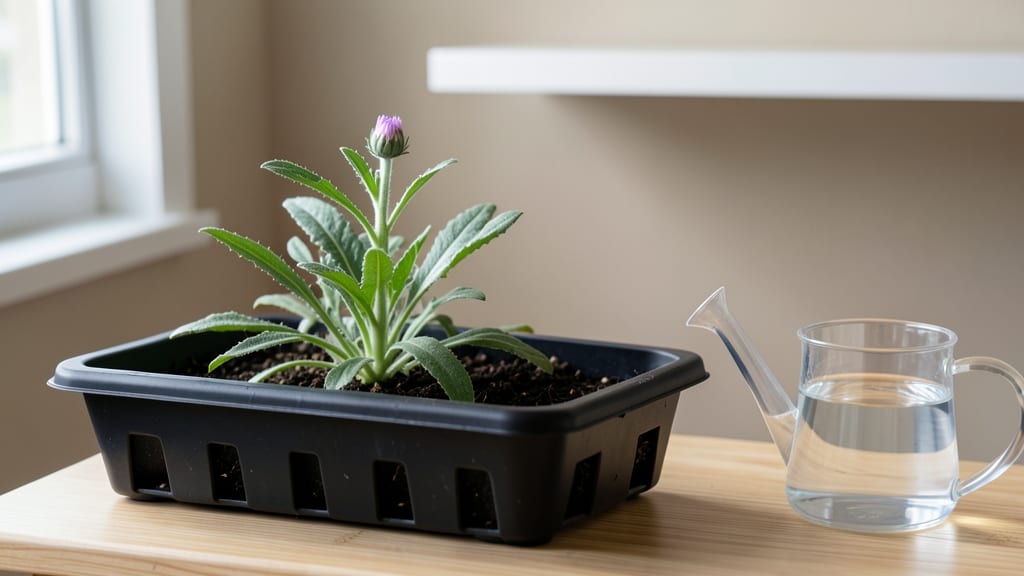
Bachelor button seedlings look like tiny, round cotyledons with fine stems at first, then grow into small, fuzzy-leafed clusters forming a compact rosette about 1-2 inches tall.
When you first spot bachelor button seedlings, they'll look like miniature versions of their adult form, just much smaller and more delicate. 🌱 The initial leaves, called cotyledons, are round and smooth, while the true leaves that follow are slightly fuzzy and grow in pairs.
These early stages are crucial because their slow, steady growth means they need consistent moisture without becoming waterlogged. I've found that keeping them in bright, indirect light helps prevent leggy stems while maintaining that signature compact shape.
What makes them stand out from other seedlings is their uniform growth pattern—the leaves stay close to the stem, creating that distinctive rosette shape. This trait helps distinguish them from similar flowers that might have more sprawling or irregular growth habits.
💡 In This Article
- Identifying Bachelor Button Seedling Stages by Leaf Shape and Color
- Common Bachelor Button Seedling Mistakes and How to Avoid Them
Identifying bachelor button seedling stages by leaf shape and color
The very first leaves you'll see on bachelor button seedlings are the cotyledons—those tiny, round leaves that appear within 7-14 days of germination.
These initial leaves are smooth-edged and slightly thicker than true leaves, measuring about ¼-inch wide with a vibrant green color that can sometimes have a faint purple tint when grown in cooler conditions.
This color variation is actually a protective mechanism—purple pigments help seedlings absorb more blue light, which is crucial for photosynthesis in low-light situations.
Once the true leaves emerge, you'll notice a dramatic shift in texture and arrangement. These leaves grow in pairs directly opposite each other (called "decussate" arrangement) and develop that signature fuzzy texture from tiny glandular hairs.
The leaves start at about ½-inch long and gradually increase in size, forming that compact rosette pattern. What's fascinating is how the stem remains extremely thin—often just 1-2 millimeters in diameter—while supporting this dense leaf cluster.
This delicate structure is why they're so sensitive to overhandling during their early growth phase.
The color progression is another key identifier. Early true leaves often appear deep green with purplish veins, which gradually lightens to a more uniform green as the seedlings mature. This color change happens because the plant shifts from relying on stored seed energy to producing its own food through photosynthesis.
In my experience, seedlings grown under 12-14 hours of light daily develop the most vibrant colors, while those with insufficient light may appear pale or elongated—a classic sign of "etiolation."
One of the most distinctive features is how the leaves cup slightly at the edges, creating a tiny bowl shape that helps channel water and nutrients toward the growing point. This adaptation is particularly useful in their natural Mediterranean habitat where water conservation is critical.
The rosette stays remarkably uniform because each new leaf pair emerges at a 90-degree angle to the previous pair, maintaining that perfect circular pattern that's so characteristic of bachelor buttons.
Light exposure dramatically affects these early stages. In bright, indirect light (like a north-facing window), seedlings develop their signature compact shape with leaves growing close to the stem. But when exposed to direct sunlight, the stems can become thick and leggy as the plant stretches toward the light source.
This is why many growers use grow lights at a distance of 6-12 inches to maintain that ideal growth pattern. The key is finding that sweet spot where the light is intense enough for photosynthesis but not so harsh that it burns the delicate leaves.
Here's what to watch for when comparing stages:
- Cotyledon stage: Single round leaves, ¼-inch wide, smooth texture
- First true leaves: Fuzzy texture, ½-inch long, purple-tinged veins
- Mature rosette: 1-2 inches tall, uniform circular pattern, deep green leaves
This progression from smooth cotyledons to fuzzy true leaves is what makes bachelor button seedlings so distinctive compared to other annuals. The combination of their compact growth habit, paired leaves, and that signature fuzziness creates a visual fingerprint that's hard to mistake once you know what to look for. 🌿