
Size
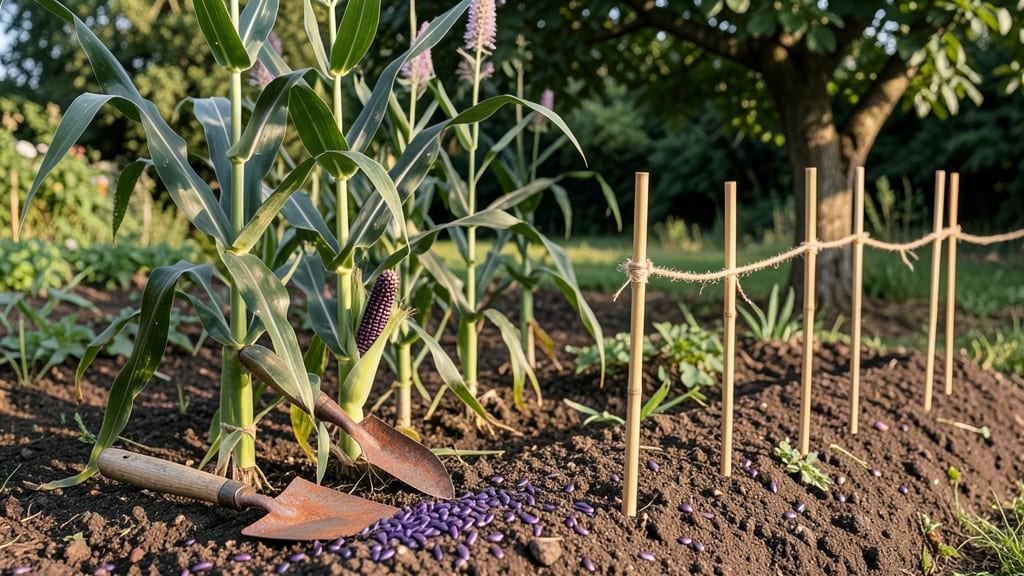
Growing violet corn from seed delivers stunning purple stalks that double as food and decor—90 days from planting to harvest. 🌱 I planted mine last spring, and the deep magenta hues turned my garden into a showstopper while also yielding tender kernels.
The secret isn't fancy; it's timing, spacing, and a little patience to let those dramatic stalks mature.
Start with rich, well-draining soil mixed with compost—violet corn loves nutrients. Plant seeds 1 inch deep, 12 inches apart, and give them full sun (at least 6-8 hours daily).
The first few weeks are critical: keep soil consistently moist but not soggy, and thin seedlings to the strongest 2-3 per hill. Most home gardens can handle 4-6 plants without crowding.
By mid-summer, you'll see those iconic purple stalks shooting up, reaching 6-8 feet tall at maturity. The kernels stay sweet and tender when harvested before the husks turn brown. Even if you don't eat them, the ornamental value is unbeatable—neighbors will ask how you grew such a striking plant.
The best part? It thrives in most climates (zones 4-11) and resists common corn pests better than white varieties.
Here's the catch: violet corn needs space—don't try to squeeze it into containers. And if you live in a hot, dry area, mulch heavily to retain moisture. With the right setup, you'll have both a garden centerpiece and a harvest you can pop fresh or freeze for later.
Ready to grow something that looks as good as it tastes?
📚 In This Guide
- What you need
- Instructions
- Tips and common mistakes
- Wrapping up and next steps
What you need
- ● Violet corn seeds: 1–2 lbs (or ~50–100 seeds, depending on desired yield)
- ● Well-draining soil: Mix of 60% topsoil, 30% compost, and 10% perlite/sand (pH 6.0–7.0)
- ● Growing space: Backyard/raised bed: 12–18 inches apart in rows 3 feet apart
- ● Containers: Minimum 12-inch depth, 1 plant per 5-gallon pot
- ● Organic fertilizer: Balanced 10-10-10 or compost tea (apply at planting and mid-season)
- ● Watering can/hose: With a gentle spray nozzle (avoid wetting leaves)
- ● Garden trowel or transplanter (for seedling transfer)
- ○ Stakes or trellis (optional, for heavy ears—4–6 ft tall)
- ● Mulch (straw or grass clippings) (to retain moisture and suppress weeds)
- ● Pest deterrents: Neem oil spray (for aphids/corn earworms)
- ● Row covers (early season, to deter birds)
- ● Pruning shears (for removing dead leaves or side shoots)
- ○ Garden journal (optional, to track growth stages and harvest dates!)
Step-by-step instructions for growing stunning violet corn
Here's how I transform vibrant purple kernels into a jaw-dropping summer centerpiece—ready in just 90 days.
🌱 Step 1: Prepare the Soil for Maximum Growth
Violet corn thrives in well-draining, nutrient-rich soil with a pH between 6.0 and 7.0. I start by amending my garden bed with 2 inches of compost and 1 cup of balanced 10-10-10 fertilizer per 100 square feet. Work the organic matter into the top 12 inches of soil to create loose, aerated conditions perfect for corn roots.
Corn hates soggy feet, so if your soil drains poorly, mix in 1 inch of coarse sand or perlite. You'll know the prep is right when the soil crumbles easily between your fingers—like damp cake mix. Avoid fresh manure, which can burn tender seedlings.
🌱 Step 2: Plant Seeds at the Right Depth and Spacing
For 4 plants, I use 4 seeds per hill spaced 12 inches apart, with hills arranged in a square pattern 36 inches apart. Plant seeds 1 inch deep—any deeper and they'll struggle to push through. I like to use my knuckle as a guide: when my middle finger touches the soil surface, the first joint marks the perfect depth.
Corn needs space to grow tall and sturdy. If planting in rows, space them 3 feet apart to prevent shading and improve airflow. Water gently after planting to settle the soil around the seeds. You'll see sprouts in 7-10 days at soil temperatures above 60°F.
☀️ Step 3: Provide Full Sun and Consistent Moisture
Violet corn demands full sun (6-8 hours daily) for those signature purple stalks to develop properly. I plant mine where they'll receive morning sun and afternoon shade in hot climates to prevent stress. If your garden gets intense afternoon heat, provide light shade cloth during peak hours until plants establish strong root systems.
Water 1-2 inches per week, keeping the soil evenly moist but never waterlogged. I check moisture by pushing my finger 2 inches deep—if it feels dry, it's time to water. Drip irrigation works best to deliver water at the base without wetting the leaves, which reduces fungal risks. You'll notice leaves perk up and stalks thicken when moisture is just right.
✂️ Step 4: Fertilize and Support as Plants Mature
When plants reach 12 inches tall, I side-dress with ½ cup of 5-5-5 fertilizer per hill, working it into the soil around the base. This boosts the purple pigmentation in the stalks. Corn is a heavy feeder, so I repeat this once more at tasseling (when pollen-filled stalks emerge). Avoid high-nitrogen fertilizers—they'll produce lush leaves but weak stalks.
Tall varieties may need staking or trellising as they approach 7 feet. I use bamboo stakes tied with soft twine to support the weight without damaging the stalks. Watch for silking (white strands emerging from the top)—this is when pollination begins. A gentle shake of the plants can help spread pollen if you notice uneven silking.
🌿 Step 5: Harvest at Peak Color and Maturity
Harvest 90 days after planting when the tassels turn brown and the silks dry up. The stalks should be firm and fully purple—any green streaks mean they're not fully mature. I cut stalks with a sharp knife, leaving 6 inches of stem attached for better storage. The kernels inside will be fully developed and ready for roasting or grinding.
For the boldest color, harvest on a cool morning after a dry spell. The purple pigment intensifies when the stalks are fully dry. Store harvested stalks in a cool, dark place for up to 2 weeks or freeze them for longer storage. You'll know you've succeeded when the roasted kernels release a deep, nutty aroma—unmistakably violet corn.
Tips & tricks for growing stunning violet corn
Real talk: Violet corn won't grow right without these garden game-changers. I've learned them the hard way after watching purple stalks turn pale and weak.
Soil Science: Test your soil pH before planting—violet corn's signature color fades in acidic soil below 6.0. If your test shows lower pH, add crushed limestone at a rate of 5 pounds per 100 square feet and retest in 2-3 months. The rich purple pigment requires just the right balance of nutrients, and pH directly impacts anthocyanin production (that's the compound responsible for the color).
Planting Precision: The 1-inch depth guideline is non-negotiable, but here's what nobody tells you—press the soil gently after planting to create firm contact around each seed. This prevents air pockets that can suffocate seedlings. I also recommend planting hills slightly north-south to maximize sunlight exposure throughout the day, especially in northern hemisphere gardens where afternoon sun is often more intense.
Sunlight Strategy: While violet corn needs 6-8 hours of sun daily, the morning sun and afternoon shade recommendation in Step 3 is crucial for hot climates. I've seen stalks scorch when exposed to full afternoon sun, especially when soil moisture drops below 2 inches deep. Consider using shade cloth with 30-50% coverage during peak heat hours (11 AM to 3 PM) until plants reach 3 feet tall—they'll appreciate the protection while still getting enough light.
Harvesting Hack: The 90-day timeline assumes ideal conditions, but real-world factors can shift this by 1-2 weeks. Watch for the tassels to turn completely brown and silks to dry up—this is your true harvest signal. For the deepest purple color, harvest on a cool morning after 2-3 dry days. The anthocyanins intensify when plants have time to fully develop their pigments without stress from recent rainfall.
Pro Tips for Violet Corn Seed Grow A Garden
- Real talk: Violet corn won't grow right without these garden game-changers.
- Soil Science: Test your soil pH before planting—violet corn's signature color fades in acidic soil below 6.0.
- Planting Precision: The 1-inch depth guideline is non-negotiable, but here's what nobody tells you—press the soil gently after planting to create firm contact around each seed.
Frequently asked questions
Got questions about growing violet corn? You’re not alone—this striking variety sparks curiosity! Here are answers to the most common queries to help you cultivate a vibrant, purple-stalked harvest in just 90 days.
How deep should I plant violet corn seeds?
Plant seeds about 1 to 1.5 inches deep in well-drained soil, spacing them 4–6 inches apart. Use a soil thermometer to ensure the ground is at least 60°F (15°C)—cold soil can delay germination. Mulch lightly afterward to retain moisture and warmth.
When is the best time to harvest violet corn?
Harvest when silks turn brown and dry (about 90 days after planting). For tender young ears, pick when husks pull back easily but kernels are still milky. Morning harvests keep ears crisp. Pro tip: Shuck ears immediately to prevent drying.
Can I grow violet corn in containers?
Yes! Choose a large container (at least 12 inches deep) with drainage holes. Use a lightweight potting mix and support plants with sturdy stakes or a trellis—violet corn can grow 6–8 feet tall. Place in full sun (6+ hours daily) for best results.
What pests should I watch for with violet corn?
Common pests include corn earworms, aphids, and squirrels. Use row covers early to deter insects, and handpick larger pests. For squirrels, wrap lower stalks in chicken wire or use pepper spray as a deterrent.
Will violet corn kernels stay purple when cooked?
Freshly harvested violet corn turns golden-yellow when cooked, but the husk and silk retain their bold purple hue. For purple kernels, harvest when ears are half-grown (about 60 days) and cook immediately. Freeze or can for later use!
Wrapping up and next steps
Growing violet corn from seed is a rewarding journey that brings bold color and unique flavor to your garden in just 90 days! With the right soil, sunlight, and care, you’ll enjoy a harvest that’s as visually stunning as it is delicious.
Whether you’re a beginner or a seasoned gardener, this vibrant variety is a fantastic addition to any plot.
Ready to take the next step? Start by ordering your seeds today and sketch a small patch in your garden—soon, you’ll be savoring sweet, purple kernels straight from your own backyard. 🌱✨