
Planting
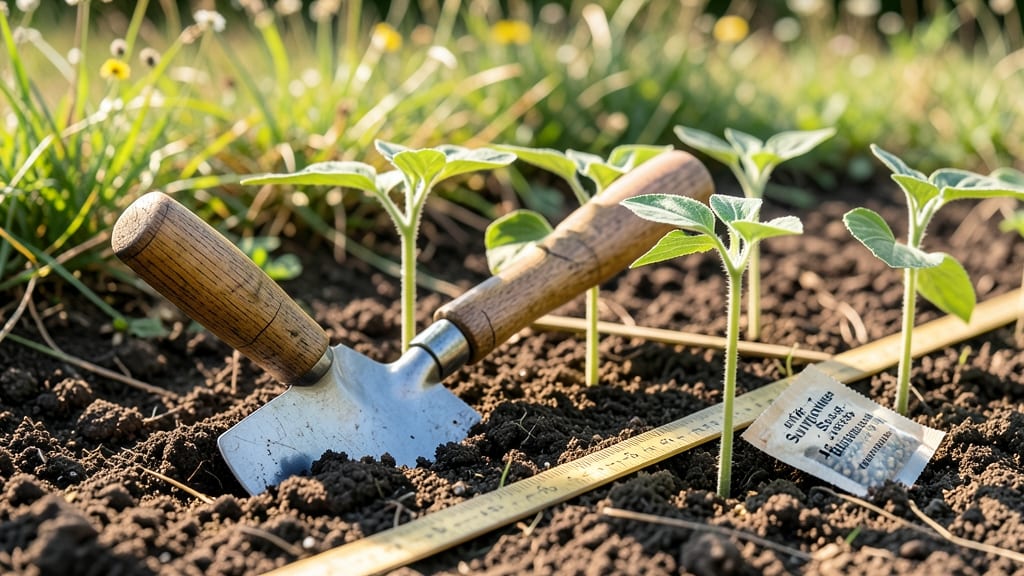
Proper sunflower seed spacing is the foundation of towering, healthy blooms that turn heads in your garden 🌻 — and skipping this step means stunted growth or floppy stems.
Picture this: You’ve waited all spring for your sunflowers to shine, only to watch them lean like drunks at a picnic because they’re crammed too close together. That’s not just a missed opportunity for height — it’s a recipe for weak stems, fewer blooms, and even disease.
Here’s the good news: Getting the spacing right isn’t rocket science. Whether you’re growing 6-foot giants or compact dwarf varieties, the right distance between seeds ensures strong roots, better air circulation, and the space they need to reach their full potential.
In this guide, I’ll break down the exact spacing you need by variety, how deep to plant them, and the 3 most common mistakes that sabotage sunflowers before they even bloom. Let’s get those seeds in the ground the right way.


Optimal sunflower seed spacing by variety: rows, depth, and planting distance
Sunflowers are nature’s skyscrapers, but their towering beauty starts with the right seed spacing. Whether you’re growing giant varieties like 'Mammoth' or compact dwarf sunflowers like 'Teddy Bear,' precision spacing ensures strong stems, vibrant blooms, and maximum yield.
I’ve planted sunflowers for years, and the difference between crowded rows and properly spaced plants is night and day—literally, since overcrowded sunflowers often lean or flop in heavy winds.
Most gardeners focus on sunlight and water, but planting depth and row spacing are just as critical. Sunflower seeds need room to develop deep taproots and sturdy stems. Plant them too close, and you’ll end up with weak, spindly stalks that snap under their own weight.
Too far apart, and you waste garden space. The key is balancing variety-specific needs with your garden layout. For example, giant sunflowers need 18+ inches apart to support their massive flower heads, while dwarf varieties thrive at just 12 inches apart.
The planting depth is often overlooked, but it’s just as important as spacing. Sunflower seeds should be planted 1–1.5 inches deep in loose, well-draining soil. Press them lightly into the earth to ensure good seed-to-soil contact, which helps moisture reach the seed.
If your soil is heavy clay, consider planting 0.5–1 inch deep to prevent rot. I’ve seen seeds planted too shallow fail to sprout because they dry out, while those buried too deep struggle to break through the surface.
For row spacing, aim for 24–36 inches between rows to allow airflow and easy access for
Common sunflower spacing mistakes and how to avoid them
Even with perfect sunlight and soil, sunflowers can disappoint if you ignore their spacing needs. Overcrowding steals nutrients, weakens stems, and invites diseases like powdery mildew. I’ve seen 10-foot giants topple because they lacked elbow room to grow strong roots.
Most gardeners make the same spacing mistakes: planting seeds too close together, ignoring variety differences, or cramming them into containers without adjusting. These errors lead to stunted growth, fewer blooms, and plants that struggle to support their own weight.
Here’s the truth: Spacing isn’t one-size-fits-all. Giant varieties need 18+ inches apart, while dwarf types can handle 12 inches. And if you’re growing in containers or high-altitude zones, you’ll need to tweak these rules entirely.
⚠️ Warning: Overcrowding = Disaster
Sunflowers need space to develop strong stems and healthy roots. Planting seeds 6+ inches apart is a start, but thinning to 12–18 inches as they grow prevents competition. Crowded plants:
- Develop weak stems that snap in wind
- Suffer from fungal diseases due to poor airflow
- Produce smaller blooms with fewer seeds
For container gardening, reduce spacing to 6–12 inches but use large pots (at least 12 inches wide) to prevent root binding. In high-altitude gardens, stretch spacing to 24 inches—thinner air means slower growth and more vulnerability to wind.
Windy conditions? Double-check row spacing. Plant in triangular patterns (not straight rows) to create natural windbreaks. I’ve seen 15-foot sunflowers survive storms simply by spacing them 3 feet apart in staggered lines.
Pro tip: Use a spacing template or string lines to mark planting spots before dropping seeds. This ensures consistency, especially when working with giant varieties that need extra room. A little planning now saves heartbreak later.
Remember, sunflowers are resilient, but they won’t forgive neglect. Give them space to shine—literally! With the right spacing, you’ll go from struggling seedlings to a sun-drenched spectacle that turns heads (and attracts pollinators). 🌻