
Lawn
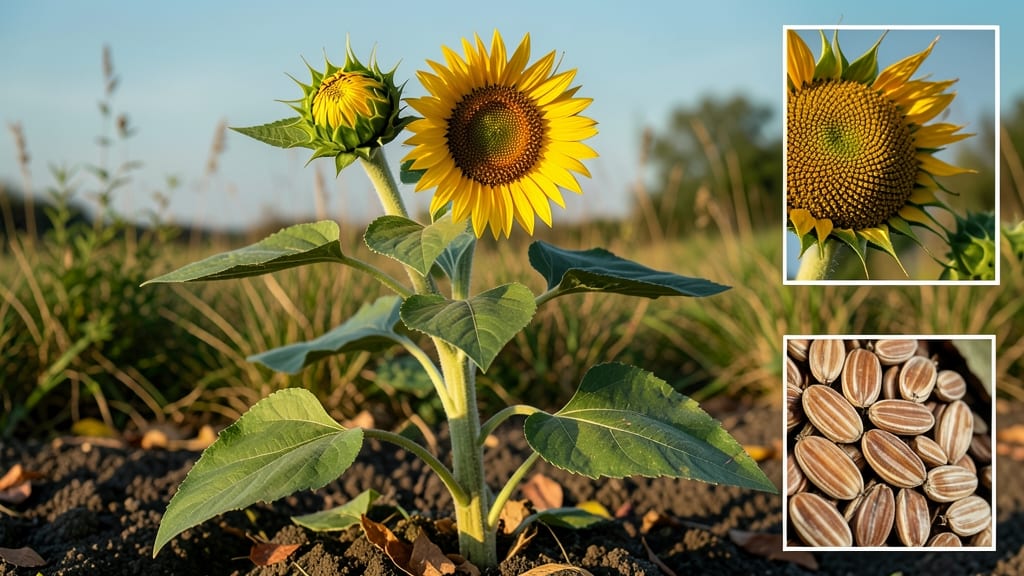
A sunflower seed identification chart isn’t just helpful—it’s essential if you want to avoid ending up with a 3-foot shrub instead of the towering 12-foot giant you envisioned. 🌻 The key is knowing whether you're looking at a Helianthus annuus (the classic giant type) or a perennial species, and whether it's an heirloom or hybrid.
I've grown both and seen the difference firsthand: heirlooms take longer to mature but produce seeds you can save, while hybrids bloom faster but cost more upfront.
Start with the basics: leaf shape tells you a lot. Annual sunflowers have broad, rough leaves that feel almost like sandpaper, while perennials like Helianthus debilis have smoother, narrower leaves.
Then check the seed packet for height ranges—dwarf varieties stay under 3 feet, while giant types can top 12 feet. Color matters too: black oil-type seeds are for birds (or snacking), while striped seeds are usually the ones you'll plant for flowers.
Here's the game-changer: hybrid seeds often say "F1" on the packet, meaning they won't come true from seed. Heirloom seeds let you save and replant, but they may take 10-12 weeks to bloom instead of 8-10. For a quick harvest, go hybrid; for long-term savings and unique colors, choose heirloom.
My best tip? Buy a mix of both and compare the results—you'll notice how hybrids grow taller but produce fewer seeds, while heirlooms spread slower but give you more to save for next year.
Once you've identified your seeds, match them to your space. Tall varieties need full sun and room to sway, while dwarf types thrive in containers or small gardens.
Pro move: plant a few of each type—you'll get to see the dramatic differences in growth habits, colors, and even how they attract pollinators. The chart you'll create next will become your go-to reference for years to come.
📚 In This Guide
- What you need
- Instructions
- Tips and common mistakes
- Wrapping up and next steps
What you need
- ● Sunflower seeds: A mix of at least 10-15 different varieties (if available) for comparison. If testing wild or unknown seeds, collect 50+ seeds to account for variability.
- ● Magnifying glass: A 10x magnification handheld lens for examining fine details like seed texture, color variations, and striations.
- ● Ruler or caliper: A precision measuring tool (0.01-inch increments) to record seed length, width, and thickness.
- ● Digital scale: A gram-scale (0.1g precision) for weighing seeds to compare sizes.
- ● Notebook or data sheet: For recording observations (include columns for seed color, size, shape, and variety traits).
- ● White or light-colored tray: A 12"x18" baking sheet or similar to arrange seeds for easy comparison.
- ● Black construction paper: For creating a high-contrast background to enhance color differentiation.
- ● Pencil with eraser: For labeling seeds during identification.
- ● Seed catalog or reference book: For cross-checking traits against known varieties.
- ● Camera or smartphone: To capture close-ups of unique seed features (use macro mode if available).
- ● Seed germination kit: If you want to verify varieties by growing them (includes small pots, soil, and labels).
- ● UV flashlight: To check for fluorescence patterns in seed coats (some varieties glow under UV light!).
- ● Printed sunflower seed chart: A pre-made identification guide (like the one you’re creating!) for side-by-side comparisons.
Quick guide to identifying sunflower seed varieties
Here's how to tell your sunflower seeds apart in seconds—no guesswork, just traits you can spot with a glance.
🌱 Step 1: Observe Flower Head Size and Shape
Sunflower varieties fall into two main categories based on their blooms: giant and dwarf. Giant varieties like 'Russian Giant' or 'Mammoth' produce heads 12-16 inches wide—big enough to block sunlight when fully open. Dwarf types such as 'Teddy Bear' or 'Sunspot' stay compact, with heads 4-8 inches across. Measure the diameter from petal tip to tip when the flower is fully mature.
Pay attention to the shape, too. Some varieties like 'Autumn Beauty' have semi-double blooms with extra petals that create a layered, almost ruffled look. Single varieties like 'ProCut' have uniform petals radiating from the center like spokes on a wheel.
🌿 Step 2: Check Petal Color and Pattern
Most sunflowers have classic yellow petals, but varieties like 'Evening Sun' or 'Italian White' break the mold with reddish or creamy hues. Look for subtle patterns—some, like 'Presto Yellow', have solid petals, while others like 'Moulin Rouge' feature deep red centers that contrast sharply with their yellow outer petals.
If you spot striped or speckled petals, you're likely dealing with a hybrid like 'Rainbow Bright' or 'Autumn Beauty'. These patterns appear only after the flower fully opens, so wait until the bloom is mature before identifying.
☀️ Step 3: Examine Seed Head and Stem Characteristics
The seed head (the brown center) gives away a lot. Giant varieties like 'American Giant' have large, dense seed heads that can weigh 2-3 pounds when dry. Dwarf types like 'Sunray' produce smaller, lightweight heads that are easier to harvest by hand. Feel the weight—if it’s heavy for its size, it’s likely a giant variety.
Stems also vary. Single-stemmed varieties like 'ProCut' grow straight and sturdy, while branching types like 'Teddy Bear' produce multiple stems from the base, creating a bushy appearance. Measure the stem diameter at the base—giant varieties often have thicker stems (1-2 inches wide), while dwarf types stay slender.
⏰ Step 4: Note Growth Habit and Maturity Time
Sunflowers mature at different speeds. Fast-maturing varieties like 'Early Bird' reach full bloom in 60-70 days, while slower growers like 'Russian Giant' take 100-120 days. Check seed packets for days-to-maturity labels, but also observe your plants—if they bolt (send up a tall stem) quickly, they’re likely early varieties.
Growth habit matters too. Tall varieties like 'Mammoth' grow 10-14 feet tall and need staking, while compact types like 'Sunspot' max out at 2-3 feet. If your sunflower leans or flops, it’s probably a tall variety without support.
✂️ Step 5: Test Seed Viability for Confirmation
Once you’ve narrowed it down, confirm your guess by testing seed viability. Cut open a dry seed head and examine the seeds. Giant varieties like 'Russian Giant' have large, plump seeds (1-1.5 inches long), while dwarf types like 'Teddy Bear' produce smaller, round seeds (0.5-0.75 inches). If the seeds are striped or speckled, they’re likely from a hybrid variety.
Real talk: Some traits overlap, so cross-reference with seed packets or local growing conditions. If your sunflower has yellow petals, a giant head, and a thick stem, it’s almost certainly a classic giant variety. But if it’s small, bushy, and blooms early, it’s probably a dwarf type.
Tips & tricks for quick sunflower seed variety identification
Here's what nobody tells you about spotting sunflower traits faster than you can say "sunflower."
Giant vs. Dwarf Tell: Measure the flower head diameter at its widest point when fully open—anything over 10 inches is likely a giant variety like 'Russian Giant,' while anything under 6 inches is probably a dwarf type. Pro tip: Use a tape measure or even a ruler for accuracy, and check the diameter from petal tip to tip, not just across the center. This simple measurement eliminates half the guesswork right away.
Petal Pattern Payoff: The petal arrangement is your secret weapon. Semi-double varieties like 'Autumn Beauty' have that ruffled, layered look that makes them stand out. For single varieties like 'ProCut,' count the petals—most have between 15-25 uniform petals radiating evenly. If you're unsure, wait until the flower is fully mature before making your call, as patterns become more distinct over time.
Seed Head Weight Test: Giant varieties like 'American Giant' produce seed heads that can weigh up to 3 pounds when dry—so heavy you'll feel it when you pick it up. Dwarf types like 'Sunray' produce lightweight heads that feel almost feather-light in comparison. This is one of those "feel it to know it" traits that eliminates confusion about size categories in seconds.
Stem Diameter Shortcut: Measure the stem diameter at the base using a ruler or caliper. Giant varieties typically have stems between 1-2 inches wide, while dwarf types stay under 1 inch. This is especially helpful when you're comparing plants side by side—just wrap your fingers around the stem to get a quick sense of the difference. Thick stems usually mean giant varieties, while slender stems indicate dwarfs.
Pro Tips for Sunflower Seed Identification Chart
- Here's what nobody tells you about spotting sunflower traits faster than you can say "sunflower."
- Giant vs.
- Petal Pattern Payoff: The petal arrangement is your secret weapon.
Frequently asked questions
Got questions about sunflower seed identification? You’re not alone! Here are some of the most common queries—and their answers—to help you navigate your garden or snack stash with confidence.
How do I tell the difference between edible and birdseed sunflower varieties?
Edible sunflower seeds (like Helianthus annuus) have large, striped kernels and thick shells, while birdseed varieties (often black oil or striped) are smaller, with thinner shells. Check your chart: edible types are usually labeled for human consumption, while birdseed is often sold in bulk for feeders.
When is the best time to harvest sunflower seeds for identification?
Harvest seeds when the back of the flower head turns yellow and the petals drop (usually late summer to early fall). For identification, you can pick a few seeds early, but wait until they’re fully mature for accurate chart comparisons. Pro tip: Use a moisture meter—seeds should be below 10% moisture to avoid mold.
Can I use a sunflower seed identification chart for wild sunflowers?
Most charts focus on cultivated varieties, but you can still use them as a starting point! Wild sunflowers (like Helianthus debilis) may lack the bold stripes or uniform size of hybrids. For tricky cases, note leaf shape, stem hairiness, and seed arrangement—wild types often have smaller, irregular seeds.
Where can I find a reliable sunflower seed identification chart?
Check these trusted sources:
- University extensions: Many state agricultural programs (e.g., UMN Extension) offer free PDF charts.
- Seed companies: Brands like Baker Creek or Seed Savers Exchange include variety guides.
- Apps: Try PlantNet or iNaturalist for photo-based ID help.
Why do my sunflower seeds look different from the chart?
Variations happen! Factors like cross-pollination, soil nutrients, or disease can alter seed size/color. If seeds are shrunken or discolored, check for pests (e.g., sunflower moths) or fungal issues. Fix it: Isolate affected plants next season and test soil pH.
Wrapping up and next steps
Mastering sunflower seed identification opens doors to vibrant gardens, healthier snacks, and even sustainable landscapes! Whether you’re a gardener, bird enthusiast, or simply curious, recognizing varieties like Helianthus annuus or Helianthus debilis makes your outdoor adventures richer. 🌻
Ready to put your new knowledge to use? Start by planting a few varieties in your garden or sharing your chart with fellow plant lovers. Every seed sown is a step toward greener, more beautiful spaces—you’ve got this!