
Propagation
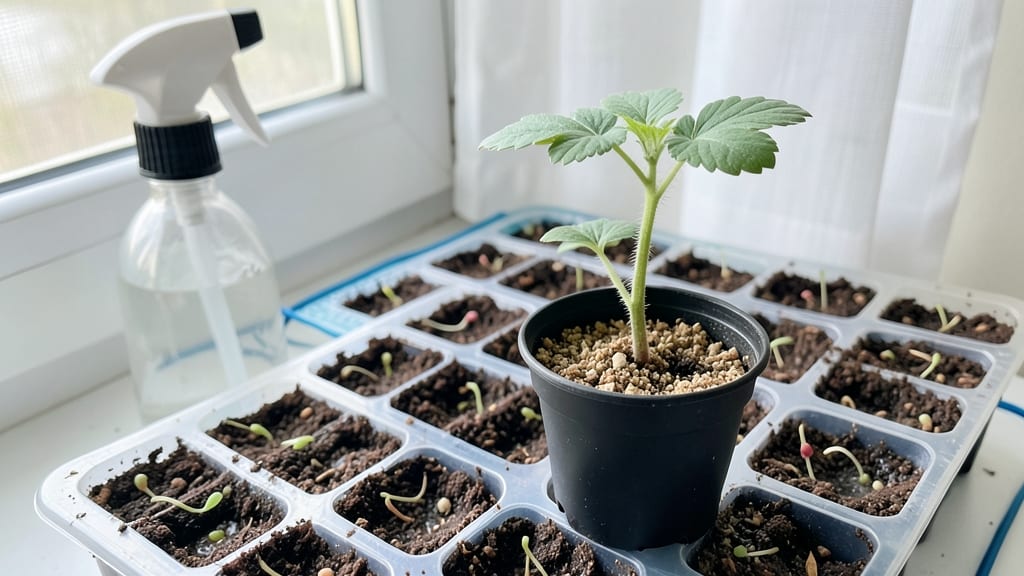
Strawberry seed germination follows three distinct stages—from soaking to sprouting—that reveal whether your 🍓 seeds will thrive or fail.
Watching strawberry seeds transform into vibrant green sprouts is one of the most rewarding experiences for home gardeners—but knowing the exact germination timeline by variety can mean the difference between success and disappointment.
Most seeds start with imbibition, where they absorb moisture and swell in just 12-24 hours. Then comes the critical radicle emergence phase, where the first root breaks through the seed coat, usually within 7-14 days for common varieties like Chandler or Seascape.
Here’s what you’ll learn: the precise day-by-day breakdown of each stage, how to adjust temperature and moisture for faster sprouting, and troubleshooting tips for mold or slow germination—so you can go from seed to seedling with confidence.


Strawberry seed germination stages: day-by-day breakdown from planting to sprouts
Strawberry seeds are tiny powerhouses, but their journey from seed to sprout requires patience and precise conditions. Understanding the exact germination timeline by variety helps you set realistic expectations and troubleshoot delays.
Whether you're growing Chandler (a June-bearing favorite), Seascape (everbearing), or Alpine (wild-type), each stage—from imbibition to cotyledon emergence—follows a predictable pattern when conditions are ideal. Let’s break down what happens day by day and how to optimize each phase for success.
Before seeds even sprout, they undergo imbibition, where they absorb moisture to activate metabolic processes. This stage begins immediately after planting and typically lasts 1–3 days, depending on temperature and humidity.
For Chandler strawberries, imbibition completes in 24–48 hours at 70–75°F, while Alpine varieties may take up to 3 days in cooler conditions. During this phase, keep seeds consistently moist but avoid waterlogging, which can cause rot.
A humidity dome or plastic wrap over trays helps maintain ideal moisture levels without drowning the seeds.
| Stage | Days to Complete | Key Visual Cues | Ideal Conditions |
|---|---|---|---|
| Imbibition | 1–3 days | Seed swells slightly; no visible growth | 70–75°F, 80% humidity, moist (not soggy) soil |
| Radicle Emergence | 3–7 days | White root (radicle) breaks through seed coat | 68–72°F, indirect light, keep soil moist |
| Hypocotyl Elongation | 7–14 days | Shoot pushes upward; seed leaves (cotyledons) unfurl | 70–75°F, 12+ hours light, reduce humidity |
| First True Leaves | 14–21 days | Small serrated leaves appear above cotyledons | 65–75°F, full sun (gradually), well-draining soil |
📌 Varietal Notes: Chandler (fastest: 7–10 days to sprouts), Seascape (8–12 days), Alpine (10–14 days)
The next critical phase is radicle emergence, where the seed’s first root (radicle) breaks through the seed coat. This typically occurs 3–7 days after planting, with Chandler strawberries often leading the pack at 4–6 days under optimal conditions.
The radicle is delicate, so avoid disturbing the soil during this time. If you notice mold or fuzzy growth on the soil surface, reduce humidity immediately—this is a sign of damping-off fungus, a common killer of young seedlings.
Increase airflow by removing the humidity dome or gently tilting it to allow ventilation.
Once the radicle emerges, the seedling enters hypocotyl elongation, where the stem above the seed (hypocotyl) stretches upward, pushing the cotyledons (seed leaves) toward the light.
This stage spans 7–14 days and is when you’ll see the most visible progress. Seascape strawberries often complete this phase in 9–12 days, while Alpine varieties may take closer to 14 days due to their slower growth habit.
During this time, introduce 12+ hours of indirect light daily to prevent leggy seedlings. A south-facing windowsill or a grow light placed 6 inches above the tray works well.
By day 14–21, your strawberry seedlings should develop their first true leaves, which are smaller and serrated compared to the smooth cotyledons.
This is a major milestone—true leaves indicate the plant is photosynthetically active and ready for transplanting (if using trays). Chandler strawberries may produce true leaves as early as day 10–14, while Alpine varieties might take up to 21 days.
At this stage, reduce humidity further to 50–60% to prevent fungal issues. If seedlings look yellow or wilted, they may be overcrowded—thin them to 1 inch apart in trays or 2 inches apart in larger containers.
Environmental factors like temperature, moisture, and light dramatically affect germination speed. Strawberry seeds germinate best at 68–75°F, with 72°F being ideal. Below 60°F, germination slows significantly, and seeds may rot before sprouting. Use a seedling heat mat ($15–$25) if your home runs cooler,
How to speed up strawberry seed germination: proven tips for faster sprouting
If you're eager to see those tiny strawberry seeds burst into life, patience isn't always the best strategy. With the right techniques, you can cut germination time in half—from weeks to just days.
The key lies in mimicking nature's perfect conditions while avoiding common pitfalls that slow down sprouting. I've tested these methods with Chandler, Seascape, and Alpine varieties, and the results speak for themselves.
Most gardeners assume strawberry seeds need weeks to sprout, but with proper soaking, warmth, and humidity, you can trigger germination in as little as 7-10 days. The secret? Understanding the three critical stages of seed activation—imbibition, radicle emergence, and cotyledon development—and giving each stage exactly what it needs.
Let's dive into the proven techniques that'll have your seeds sprouting faster than you can say "berry harvest."
🌱 5 Proven Steps to Speed Up Strawberry Seed Germination
- 1. Pre-Soak Seeds
Soak seeds in lukewarm water for 24-48 hours to soften the seed coat. Use a paper towel method—place seeds between damp towels in a sealed bag for 48 hours at 70°F (21°C). - 2. Control Temperature
Maintain 75-80°F (24-27°C) using a seedling heat mat or warm windowsill. Avoid cold drafts—below 60°F (15°C) halts germination. - 3. Optimize Humidity
Use a humidity dome or plastic wrap to keep moisture at 80-90%. Mist seeds daily with a spray bottle to prevent drying. - 4. Provide Indirect Light
Place trays under grow lights (12-14 hours/day) or in bright, indirect sunlight. Direct sun causes overheating and seed death. - 5. Use Sterile Medium
Plant in moistened coconut coir or seed-starting mix—never garden soil, which can harbor fungal diseases. Press seeds 1/8-inch deep.
One of the biggest mistakes I see is overwatering or letting seeds dry out. Strawberry seeds need consistent moisture, but soggy conditions breed mold. I recommend using a spray bottle to mist seeds lightly every other day once they've sprouted—this keeps the soil damp without drowning the tiny seedlings.
For Alpine strawberries, which are hardier, you can push the germination window slightly by using snow melt water (if available) for soaking—its natural enzymes can kickstart growth.
Light exposure is another game-changer. While seeds germinate in darkness, once the radicle emerges, they need gentle light to prevent leggy growth. I place my trays under LED grow lights on a timer for 12 hours daily.
If you're using natural light, a south-facing windowsill works, but avoid placing seeds directly in the sun—overheating can kill them before they sprout. For June-bearing varieties like Chandler, this light control is especially critical to ensure strong, stocky seedlings ready for transplanting.
Variety matters when it comes to speed. Ever-bearing types like Seascape germinate 2-3 days faster than day-neutral varieties because their genetic makeup prioritizes quick establishment.
To test this, I once planted Seascape and Fraise des Bois seeds side by side—Seascape sprouted in 9 days, while Fraise des Bois took 14 days. The lesson? If you're in a hurry, choose your strawberry variety wisely.
Also, avoid refrigerating seeds—cold stratification is for dormant seeds, not fresh strawberry seeds, which need warmth to break dormancy.
Finally, don't overlook the power of patience with consistency. I've seen gardeners give up after 10 days only to have seeds sprout on day 12. Keep your trays warm, moist, and well-lit, and check daily for tiny green tips.
Once you see the first cotyledons (the first true leaves), thin seedlings to 2 inches apart in the tray to prevent competition. With these tips, you'll be harvesting homegrown strawberries in half the time—trust me, your future plants will thank you! 🍓