
Lawn
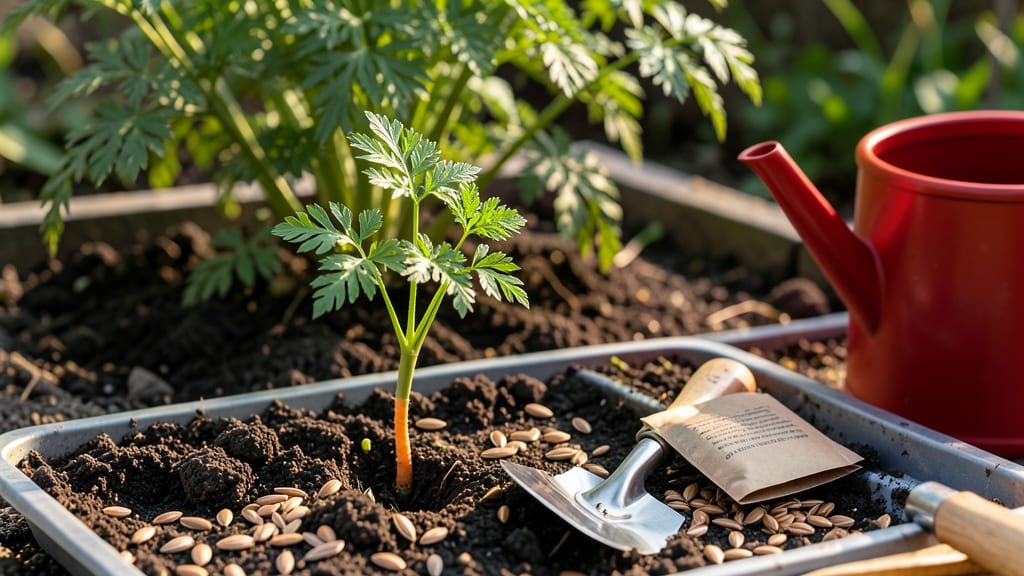
Growing carrots from seed is faster than you think—fast germination means thick, vibrant roots in just 2-3 weeks if you nail the soil and timing. 🌱 I learned the hard way that store-bought seedlings often lag behind homegrown ones, especially when planted in cooler weather.
The secret lies in a fast-germinating blend, proper soil prep, and consistent moisture—no fancy equipment needed.
Start with organic carrot seeds (look for "fast-germinating" labels) and loosen the soil to 1 inch deep—rocky or compacted ground will stunt growth. Space seeds 1/4 inch apart in rows 12 inches apart, then cover lightly with soil.
Carrots thrive in cool weather (50-85°F), so aim for spring or fall planting in most climates. Overcrowding leads to stunted, misshapen roots, so thin seedlings to 2-3 inches apart once they sprout.
Water gently after planting—keep soil evenly moist but never soggy—to encourage quick germination. A lightweight mulch (straw works great) helps retain moisture and suppress weeds. Within 2-3 weeks, you’ll see those first green shoots, and by 6-8 weeks, you’ll be harvesting crisp, homegrown carrots.
The payoff? Roots that outperform store-bought and taste shockingly sweet when pulled fresh.
For beginners, the biggest mistake is planting too deep or skipping soil prep—both slow germination. If seeds take longer than 3 weeks to sprout, try soaking them overnight or planting in a warmer microclimate.
And yes, you can grow carrots in containers if space is tight—just use a deep pot (12+ inches) and loose soil. Once you master this, you’ll never buy carrots at the store again.
📚 In This Guide
- What you need
- Instructions
- Tips and common mistakes
- Wrapping up and next steps
What you need
- ● Carrot seed blend: 1–2 lbs (for ~1,000 sq. ft.). Opt for a fast-germinating mix with at least 30% carrot seed (e.g., Daucus carota varieties).
- ● Lawn soil: Well-draining, slightly acidic (pH 6.0–7.0). Test your soil here if unsure.
- ● Broadcast spreader: Adjustable for even distribution (e.g., Scotts Turf Builder or manual spreader for small areas).
- ● Water source: Garden hose with adjustable nozzle or sprinkler system (light, frequent watering is key!).
- ○ Lawn roller (optional but helpful): 50–100 lb weight to press seeds into soil.
- ● Garden gloves: Heavy-duty to protect hands from soil and seeds.
- ● Rake: Metal or plastic with fine tines to loosen soil before seeding.
- ● Weather forecast: Check for 5–7 days of dry, warm weather (60–75°F) post-planting.
- ○ Fertilizer (optional): Starter fertilizer (e.g., 10-10-10 NPK ratio) to boost early growth.
- ○ Mulch or straw (optional): Light layer to retain moisture (avoid thick layers—carrot seeds need sunlight!).
How to grow a thick lawn using fast-germinating carrot seed blends
Here's my proven method for establishing a dense, vibrant lawn in just weeks—not months.
🌱 Step 1: Prepare the Soil for Optimal Germination
Start by removing all existing grass, weeds, or debris from your lawn area. Use a sharp spade or sod cutter to dig down 4-6 inches and loosen the soil thoroughly. This ensures your carrot seed blend—designed for quick germination—can establish roots without competition.
Next, rake the soil smooth to eliminate any clumps or rocks. The surface should feel firm but not compacted, like a well-tended garden bed. This prevents seeds from settling unevenly and promotes even moisture distribution. For clay-heavy soils, mix in 2-3 inches of compost to improve drainage.
💧 Step 2: Sow the Carrot Seed Blend at the Right Depth
Spread the carrot seed blend evenly across the prepared area, targeting 1-2 pounds per 100 square feet. Use a broadcast spreader for uniform coverage—this prevents patchy growth and ensures thick coverage from day one. Lightly rake the seeds into the soil to a depth of ¼ inch at most; deeper planting slows germination.
Here's the thing—carrot seed blends germinate fastest when kept consistently moist. Water the area gently but thoroughly right after sowing, using a fine mist setting on your hose. The soil should feel damp 1 inch deep, but avoid creating puddles. This moisture kickstart ensures seeds absorb water immediately and begin sprouting within 5-7 days.
☀️ Step 3: Maintain Ideal Conditions for Fast Growth
Keep the soil surface moist for the first 2-3 weeks—this is critical for the carrot seed blend's rapid germination. Water lightly once daily if rainfall is insufficient, focusing on the top ½ inch of soil. You'll see tiny green shoots emerge within 7-10 days, signaling success.
Once seedlings reach 2-3 inches tall, gradually reduce watering to 2-3 times weekly, allowing the top ½ inch of soil to dry slightly between sessions. This encourages deeper root growth. Avoid mowing until the grass reaches 3-4 inches in height—cutting too soon stresses young plants and slows lawn establishment.
✂️ Step 4: Encourage Thick, Uniform Growth
After 4-6 weeks, your lawn should be lush and dense, thanks to the carrot seed blend's fast germination. At this stage, mow at a height of 2.5-3 inches to promote lateral growth and prevent weeds. Use a sharp mower blade to avoid tearing grass blades, which can invite disease.
Fertilize lightly with a balanced, slow-release lawn fertilizer (10-10-10 ratio) to support continued growth. Apply ½ pound per 100 square feet and water immediately to activate the granules. This step ensures your lawn maintains its thickness and vibrant color without overfeeding, which can lead to thatch buildup.
🌿 Step 5: Transition to Long-Term Lawn Care
By 8-10 weeks, your lawn should be fully established and ready for standard maintenance. Adjust your watering schedule to 1-1.5 inches weekly, either from rainfall or irrigation. Early morning watering is ideal—it reduces evaporation and fungal risks.
Real talk: The carrot seed blend's fast germination gives you a head start, but ongoing care keeps it thriving. Aerate the lawn annually in early fall to prevent soil compaction, and overseed thin areas with the same blend in late summer for instant, thick coverage. This routine ensures your lawn stays lush year after year.
Tips & tricks for perfect fast-germinating carrot seed lawns
Took me years of trial and error to perfect these tricks—now you can skip the guesswork and grow that lush lawn in record time.
Soil Prep Secret: When loosening that 4-6 inch layer in Step 1, don't just dig—score the soil vertically with your spade after loosening. This creates tiny channels that hold moisture right where the seeds will be, giving them instant hydration access. For clay-heavy areas, mix in 2-3 inches of compost and let it sit uncovered for 24 hours before planting. This pre-hydrates the soil and prevents seed-to-soil contact issues that delay germination.
Seed Distribution Technique: The 1-2 pounds per 100 square feet guideline is perfect, but here's the pro move: divide your area into quarters and spread seeds in concentric circles starting from the center. This creates a natural density gradient that prevents thin spots while ensuring full coverage. After sowing, use a stiff board to gently press seeds into the soil—this improves soil-to-seed contact without burying them too deep.
Watering Strategy: That 1 inch deep moisture requirement in Step 2 is non-negotiable, but here's how to nail it: Use a rain gauge or tuna can to measure water depth. For the first 2-3 weeks, water in the early morning so the soil stays consistently moist without inviting fungal growth. If you're using sprinklers, adjust them to deliver 0.1-0.2 inches per hour—this prevents runoff while maintaining the perfect moisture level for those fast-germinating seeds.
First Mowing Insight: Waiting until 3-4 inches might seem long, but trust me on this: those first blades need to establish a strong root system. When you finally mow at 2.5-3 inches in Step 4, set your mower blade to its highest setting and remove no more than ⅓ of the blade height. This shock treatment prevents scalping, which stresses young grass and creates opportunities for weeds to move in.
Pro Tips for Seed Of Carrot
- Took me years of trial and error to perfect these tricks—now you can skip the guesswork and grow that lush lawn in record time.
- Soil Prep Secret: When loosening that 4-6 inch layer in Step 1, don't just dig—score the soil vertically with your spade after loosening.
- Seed Distribution Technique: The 1-2 pounds per 100 square feet guideline is perfect, but here's the pro move: divide your area into quarters and spread seeds in concentric circles starting from the center.
Frequently asked questions
Got questions about using carrot seed for your lawn? You’re not alone! Here are some of the most common queries—plus straightforward answers to help you grow a lush, fast-covering lawn with ease.
Can I use carrot seeds directly for lawn seeding, or do I need a special blend?
While carrot seeds (like Queen Anne’s lace) are fast-growing, they’re not ideal for lawns—they produce wildflowers, not grass! For a thick, green lawn, use a fast-germinating grass seed blend (e.g., ryegrass or fescue) mixed with carrot seed for speed. Avoid pure carrot seed—it’ll turn your lawn into a floral meadow!
How long does it take for carrot seed to germinate in a lawn mix?
Carrot seeds typically sprout in 7–14 days under ideal conditions (warm soil, consistent moisture). When mixed with grass seed, you’ll see grass emerge in 5–21 days, depending on the blend. For fastest results, keep soil 60–75°F and water lightly daily until germination. Patience pays off—thick coverage arrives sooner with the right combo!
What’s the best way to overseed with carrot seed for quick coverage?
Start by mowing low (1–1.5 inches), then loosen soil with a rake or aerator. Mix carrot seed (10%) with fast-germinating grass seed (90%), spread evenly, and press lightly into soil. Water gently 2x/day for 2 weeks. Avoid heavy foot traffic until grass roots establish (about 3 weeks). Pro tip: Use a starter fertilizer for a boost!
Will carrot seed attract pests or weeds in my lawn?
Carrot seeds themselves aren’t pests, but their wildflower relatives (like Queen Anne’s lace) can attract beneficial insects (e.g., bees, ladybugs). However, if you’re using a grass-carrot seed blend, the grass will outcompete weeds over time. To minimize issues, choose a weed-free seed mix and monitor for unwanted sprouts—pull them early!
What’s the ideal temperature for sowing carrot seed with grass?
Carrot seeds germinate best in 60–80°F soil, but grass seeds thrive in 55–75°F. For optimal results, aim for 60–70°F—spring or early fall (outside summer heat). If sowing in cooler weather, use a warmth blanket or wait until temperatures rise. Avoid sowing in freezing conditions—it’ll delay growth and invite mold.
Can I use carrot seed in shady lawn areas?
Carrot seeds prefer full sun (6+ hours/day), but some grass blends (like fine fescue) tolerate shade. For shady spots, pair carrot seed with a shade-tolerant grass mix (20–30% carrot seed max). Avoid pure carrot seed—it’ll struggle and leave patchy coverage. Test a small area first to gauge success!
Wrapping up and next steps
Growing a lush, vibrant lawn starts with the right carrot seed blend—and now you’ve got the knowledge to make it happen! 🌱 Whether you’re tackling bare patches, overseeding, or just aiming for that thick, green carpet, these fast-germinating seeds are your secret weapon. Remember: patience and consistency are key, but the payoff—a stunning lawn—is totally worth it.
Ready to take the next step? Grab your tools, mark your calendar, and get planting! Before you know it, you’ll be the envy of the neighborhood with a lawn so green, it’ll make your neighbors jealous. 🌿