
Planting
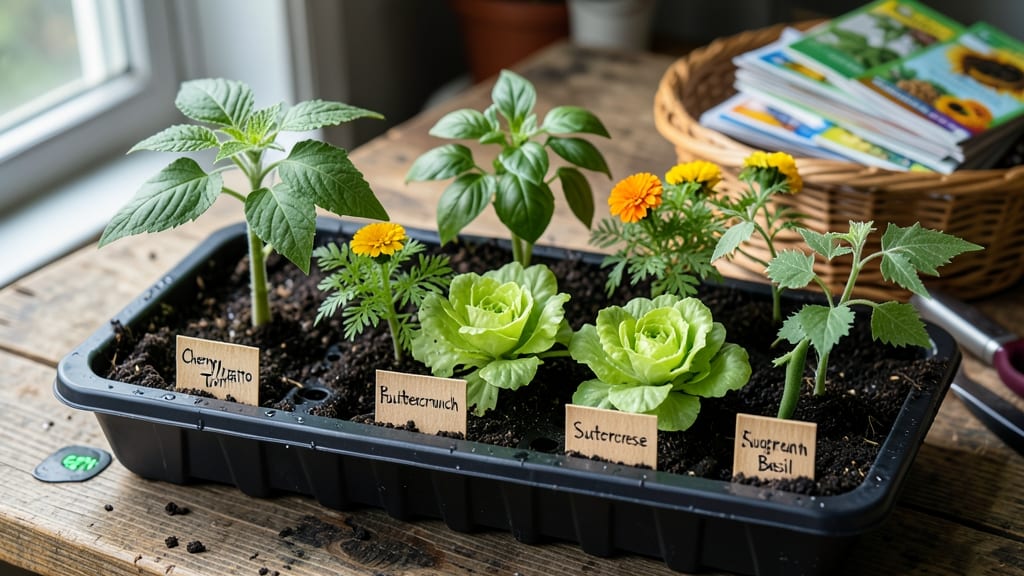
That mystery seed packet in your drawer holds the key to your next garden adventure—but the plant seed identifier is what turns guesswork into a green-thumb victory. 🌱 I’ve spent years digging through seed catalogs and plant databases to crack the code on identifying unknown seeds—whether they’re heirloom treasures, random finds, or last year’s forgotten stash.
The right visual clues can turn a guessing game into a confident planting plan.
Start with the basics: leaf shape, seed size, and growth habit. A round seed might be a pea, while a flat, winged one could be a maple—though obviously not for your garden! Apps like Seed Savers Exchange or PlantNet let you upload photos and match them to known species.
Cross-reference with regional plant guides to narrow down options, especially if you’re dealing with native wildflowers or regional favorites.
You’ll avoid the heartbreak of planting the wrong seeds (like mistaking sweet peas for snapdragons) and instead grow what you actually want. Proper identification means better spacing, watering, and sunlight—leading to healthier plants and a more productive garden. Confidence grows when you know exactly what you’re cultivating.
This method works for seed packets, cuttings, or even wild seeds you’ve collected. Whether you’re a seasoned gardener or just starting, these visual cues will save you time, money, and frustration. Let’s turn those unknowns into known garden stars!
📚 In This Guide
- What you need
- Instructions
- Tips and common mistakes
- Wrapping up and next steps
What you need
- ● Smartphone or tablet (with a decent camera—at least 12MP for clarity)
- ● Plant seed identifier app (e.g., PictureThis, PlantNet, or Google Lens—free or premium versions work)
- ○ Magnifying glass (10x magnification, optional but helpful for tiny details 🔍)
- ● Notebook & pen (to jot down observations like leaf shape, seed size, or growth habits)
- ● Ruler or measuring tape (for recording seed/leaf dimensions in inches or centimeters)
- ● Gloves (gardening or nitrile—protects from prickly plants or soil)
- ● Small trowel or tweezers (for gently handling seeds or delicate specimens)
- ● Grow lights or sunlight access (if testing seeds indoors—12+ hours of light/day)
- ● Seed-starting trays & soil (for germinating unknown seeds to observe growth patterns)
- ● Field guidebook (e.g., National Audubon Society Field Guide to North American Wildflowers)
- ● Wi-Fi or mobile data (for real-time app updates or offline database access)
- ● Camera tripod or stabilizer (to avoid blurry photos of fast-moving plants 📸)
How to identify unknown seeds using visual clues
Unlock the mystery of your garden's hidden seeds with these proven visual techniques.
🔍 Step 1: Examine Seed Shape and Size
Begin by sorting seeds into three basic shape categories: round, oval, or elongated. Round seeds like peas or beans typically indicate legumes, while oval seeds often belong to squash or melons. Elongated seeds—think sunflower or corn—usually signal grasses or grains. Hold each seed between your thumb and forefinger to feel its texture: smooth seeds often belong to vegetables, while rough or ridged seeds frequently indicate herbs or flowers.
Size matters too. Tiny seeds under 1/8 inch are likely fine-leaved plants like lettuce or parsley, while larger seeds over 1/4 inch often grow into heartier plants such as tomatoes or beans. Compare your seeds to a standard ruler for precise measurements—this helps narrow down possibilities dramatically.
🌱 Step 2: Study Seed Coat and Color Patterns
Observe the seed coat's color and any visible markings. Brightly colored seeds—like red or black—often belong to flowers or herbs (think poppies or basil). Mottled or striped seeds frequently indicate vegetables (like striped cucumber seeds). White or light-colored seeds often grow into plants with broad leaves, such as cabbage or kale.
Pay attention to surface details: shiny seeds usually come from plants that thrive in moist conditions, while matte seeds often indicate drought-tolerant species. For example, sunflower seeds are typically striped and matte, while tomato seeds are smooth and pale. Sketch or photograph your seeds to compare against reference guides later.
📏 Step 3: Compare to Known Seed Databases
Use a seed identification app or website to input your observations. Most databases require three key inputs: seed shape, size, and color. Start with broad categories—like "vegetable," "flower," or "herb"—then narrow down by region or growing season. I recommend apps like "Seed Identifier" or "PlantNet," which allow you to upload photos for cross-referencing.
If you're working with a collection of seeds, group them by visual similarities first. This reduces the number of comparisons you need to make. For example, all seeds under 1/4 inch with a rough texture might belong to the same family—like the Brassicaceae (mustard family)—which simplifies identification.
💡 Step 4: Test Germination for Confirmation
Plant a small batch of unidentified seeds in separate 2-inch pots with moist potting mix. Label each pot with the seed's visual characteristics (e.g., "small, black, oval"). Place them in a warm, sunny spot and monitor for 5-10 days. The first leaves (cotyledons) often reveal the plant family—broad leaves suggest vegetables, while narrow leaves indicate herbs or flowers.
Document the growth stages with photos. If seedlings develop quickly, research their leaf shape and arrangement. For example, round cotyledons followed by serrated leaves likely mean you've grown a tomato or pepper. If seedlings fail to sprout within 14 days, the seeds may be non-viable or require stratification (cold treatment) to germinate.
✂️ Step 5: Cross-Reference with Local Flora
Compare your findings to native plants in your region. Many gardeners overlook the fact that seeds often belong to local wildflowers or weeds. For instance, a small, brown, elongated seed might be a native milkweed or clover—both of which support pollinators. Check local gardening forums or university extension services for regional seed guides.
If you're still unsure, consider consulting a local botanist or posting photos in gardening communities. Include details like seed size, color, and germination progress to get accurate feedback. Real talk: some seeds defy easy identification, but cross-referencing with regional experts often uncovers the mystery.
Tips & tricks for mastering seed identification
These visual techniques will transform your seed-sleuthing from guesswork to confidence.
Texture and Touch: In Step 1, when examining seed texture, don't just look—actually feel them between your thumb and forefinger. Smooth seeds often indicate vegetables like tomatoes, while ridged seeds frequently belong to herbs. I learned this the hard way after misidentifying a batch of rough, elongated seeds as corn when they turned out to be wild sunflowers. The texture clue alone saved me from planting the wrong crop!
Color Pattern Precision: When studying seed coats in Step 2, focus on subtle details like striations or glossiness. A matte finish often signals drought-resistant plants, while shiny seeds typically thrive in moist conditions. For example, striped cucumber seeds are unmistakable once you know what to look for. Pro tip: Use a magnifying glass for seeds under 1/8 inch—it reveals surface details that change everything.
Database Cross-Referencing: In Step 3, when comparing to seed databases, start broad then narrow down. For instance, if your seed is 1/4 inch with a rough texture, begin with the Brassicaceae family before zooming in on specific plants. I recommend saving screenshots of your seed's characteristics—this creates a visual reference library you can build over time. The more seeds you identify, the more your "seed memory" sharpens.
Germination Experiment: For Step 4's germination test, use separate 2-inch pots and label them with three key details: size, color, and texture. This organized approach prevents mix-ups when seedlings emerge. Confession: I once planted three different seed types in one pot and spent weeks trying to untangle the mystery sprouts. Labeling saves sanity—and your garden space!
Pro Tips for Plant Seed Identifier
- These visual techniques will transform your seed-sleuthing from guesswork to confidence.
- Texture and Touch: In Step 1, when examining seed texture, don't just look—actually feel them between your thumb and forefinger.
- Color Pattern Precision: When studying seed coats in Step 2, focus on subtle details like striations or glossiness.
Frequently asked questions
Got questions about using a plant seed identifier?
You’re not alone! Here are some of the most common queries—plus quick, actionable answers to help you navigate seed identification like a pro.
How accurate are plant seed identifiers compared to a botanist’s expertise?
A plant seed identifier tool is highly accurate for common seeds (90%+ success rate for widely cultivated varieties), but rare or hybrid seeds may pose challenges. For tricky cases, cross-check with seed databases like SeedIdentify or consult local gardening forums. Think of it as a smart starting point—not a replacement for a botanist’s eye!
Can I use a seed identifier if my seeds are already sprouting?
If you’ve got tiny seedlings (not full-grown plants), focus on leaf shape, vein patterns, and growth habits. For seeds that’ve just sprouted, compare the cotyledons (first leaves) to reference images. Pro tip: Snap a photo of the seedling’s underside—vein structures are often the giveaway!
Are there free alternatives to paid seed identifier apps?
Yes! Try these free tools first:
- Garden.org’s Seed ID Guide (crowdsourced database)
- USDA PLANTS Database (U.S.-focused, but useful for natives)
- iNaturalist (community-driven, great for wild seeds)
What if the identifier keeps giving me wrong results for my seeds?
Try these fixes:
- Check lighting: Use natural light or a bright lamp—shadows distort colors.
- Zoom in: Focus on distinctive features (e.g., seed texture, hilum shape).
- Compare multiple angles: Some seeds (like tomato vs. eggplant) look similar from one side.
- Test a sample: Plant one seed and observe the first true leaves—they’re far more reliable for ID.
Will a seed identifier work for seeds I found in the wild?
Wild seeds can be trickier, but it’s doable! Start by noting your region/climate zone—many wild seeds are native to specific areas. Use Wildflower.org or Invasive Species databases to rule out non-natives. Caution: Avoid planting invasive species—always research first!
Wrapping up and next steps
Identifying plant seeds doesn’t have to be a mystery—with the right tools and knowledge, you’re just a few clicks or observations away from unlocking your garden’s full potential! 🌱 Whether you’re using a plant seed identifier app, comparing seed traits, or consulting expert databases, you now have the confidence to turn uncertainty into growth.
Ready to take the next step? Start by collecting a few seed samples from your garden or local area, then put your new skills to the test!
Who knows? You might just discover a hidden gem that transforms your green space into a thriving oasis. Happy planting! 🌿