
Propagation
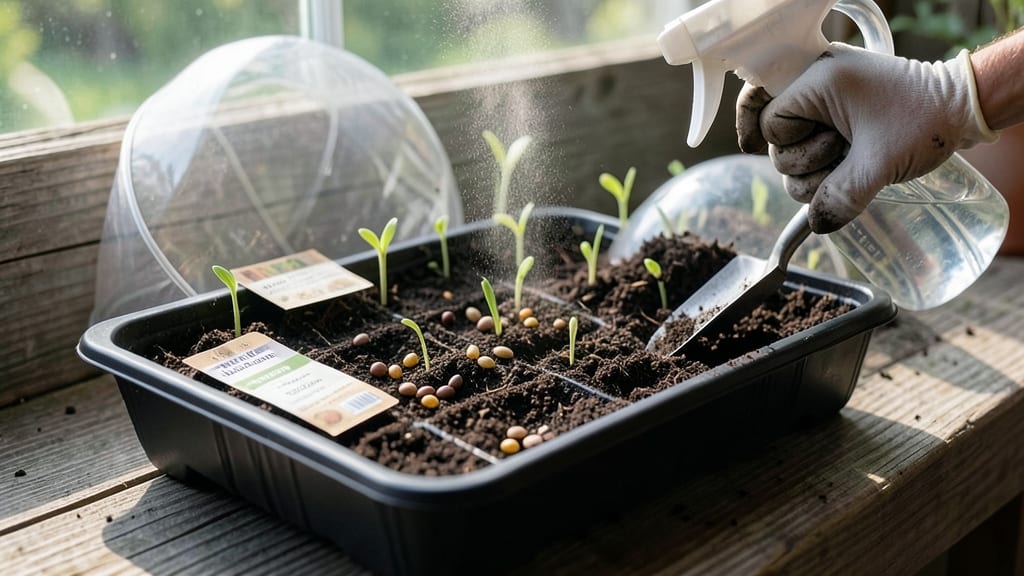
Wildflower seed germination time varies wildly—some sprout in 10 days, others take 6 months—and the trick is matching their timing to your climate. 🌸 I’ve learned that cold stratification (mimicking winter) is the secret weapon for breaking dormancy, especially in zones 4-7 where seeds often need 6-12 weeks of chilly treatment before they’ll even think about germinating.
The best time to plant depends on your zone: fall for zones 5-8 (nature handles stratification) or early spring after cold-moist treatment for zones 3-4.
Soil temps below 40°F trigger germination for most wildflowers, but some native species (like bluebonnets) won’t budge until spring’s first warm rains—3-4 weeks after last frost. The key is consistency: keep soil evenly moist but never soggy during that critical window.
What you’ll end up with is a meadow bursting with color 6-12 weeks after sprouts appear—if you’ve done the stratification right. The first flush of leaves might look scraggly, but those roots are diving deep, and by season’s end, you’ll have plants tough enough to outlast drought and deer.
The payoff? A garden that thrives on zero maintenance once established.
For zones 8+, skip stratification and plant in late fall—winter rains do the work for you. And if your seeds are taking longer than expected? Check moisture levels first (dry soil = stalled germination), then consider a second cold treatment for stubborn varieties. Patience really is a virtue here.
📚 In This Guide
- What you need
- Instructions
- Tips and common mistakes
- Wrapping up and next steps
What you need
- ● Wildflower seeds – Choose native seeds suited to your USDA hardiness zone (e.g., Black-eyed Susan, Coneflower, or Milkweed). Aim for 1–2 pounds per 1,000 sq. ft. for a vibrant meadow.
- ● Germination medium – 1–2 inches of potting soil (sterile, well-draining mix) or coco coir for moisture retention.
- ● Cold stratification setup – A refrigerator (34–40°F) with a sealed container (e.g., ziplock bag or plastic tub) or a cold frame outdoors (if temperatures naturally drop below 40°F).
- ● Misting spray bottle – To keep seeds moist but not soggy during stratification.
- ● Planting trays or pots – 4–6 inch deep, with drainage holes (e.g., biodegradable peat pots or plastic cell trays).
- ● Labeling tags – Waterproof markers or toothpicks + permanent marker to track seed types and stratification start dates.
- ○ Humidity dome or plastic wrap – Helps maintain moisture during early germination (optional for seeds in trays).
- ● Grow lights or sunny windowsill – For post-stratification sprouting (if starting indoors before last frost).
- ● Garden gloves – Protects hands from soil and tiny seeds.
- ● pH test kit – Ensures soil pH is 6.0–7.0 (most wildflowers thrive in neutral soil).
- ○ Seedling heat mat (optional) – Speeds up germination for slow starters (e.g., Lupine or Penstemon).
Precision cold stratification timeline for wildflower seed germination
Cold stratification unlocks wildflower seeds—here's how to time it perfectly for your hardiness zone.
🌱 Step 1: Identify Your Wildflower Seed Type and Zone Requirements
Wildflower seed packets often list stratification needs, but if they don’t, research your specific species. Most native wildflowers fall into one of three categories: non-stratified (immediate planting), cold-moist (4-8 weeks at 33-41°F), or cold-dry (4-12 weeks at 33-41°F with minimal moisture). For example, black-eyed Susans thrive with 6-8 weeks of cold-moist treatment, while coreopsis needs only 4-6 weeks cold-dry.
Check your USDA hardiness zone—seeds from zones 3-5 often need longer stratification (up to 12 weeks) than those from zones 6-9. I always verify with local native plant databases, as regional microclimates can shift requirements by 2-4 weeks. Note whether your seeds are fresh or aged—older seeds may need extra time to break dormancy.
❄️ Step 2: Prepare the Stratification Medium
Use a 50/50 mix of moistened peat moss and perlite (or sand) for cold-moist stratification, or dry sand for cold-dry methods. Fill a sealed plastic bag or container with the mix—never use garden soil, as it compacts and traps too much moisture, causing rot. For 4 servings (about 1 quart of seeds), use 2 gallons of medium to ensure proper airflow.
Moisten the cold-moist mix until it feels like a wrung-out sponge—damp but not dripping. For cold-dry, leave the sand completely dry. I like to use ziplock bags with small air holes (punctured with a needle) for cold-moist, as they’re easy to monitor. Label each bag with the seed type, date, and stratification method—by week 6, you’ll forget which is which.
⏰ Step 3: Store Seeds at the Correct Temperature
Place your sealed containers in a refrigerator (set to 33-41°F) for the required duration. Avoid the crispier drawer—it’s often too cold (below 33°F), which can damage seeds. For longer stratification (8+ weeks), I move bags to a garage or unheated shed during winter months to mimic natural outdoor conditions. Check seeds weekly for mold—if you see fuzzy growth, discard the batch and restart with fresh seeds.
Cold-moist seeds should remain evenly damp but not soggy. Cold-dry seeds need zero moisture—condensation inside the bag is a red flag. I place a small handful of rice in the bag as a moisture indicator; if it sticks together, the mix is too wet. After half the required time, gently mix the seeds to prevent clumping and ensure uniform exposure to cold.
🌿 Step 4: Test for Germination Readiness
After the stratification period, do not rush—wait 1-2 weeks before planting, even if seeds look dry. Some species (like lupines) need an additional 2-4 weeks of warm stratification (65-75°F) to complete dormancy. To test readiness, place a small sample of seeds in a warm, moist paper towel for 48 hours. If 50% or more show tiny root hairs (radicles), they’re ready to plant.
If germination is slow, extend stratification by 1-2 weeks. I’ve had goldenrod seeds take 14 weeks of cold-moist treatment before breaking dormancy—patience is key. Once seeds pass the towel test, plant immediately in well-drained soil and keep the area consistently moist (not soggy) until sprouts appear, which typically takes 7-21 days depending on the species.
☀️ Step 5: Transition to Outdoor Conditions
Harden off stratified seeds by placing them in a shaded outdoor spot for 3-5 days before full exposure. Wildflowers are tough but appreciate gradual light acclimation. Direct sun too soon causes seed desiccation or leaf scorch in delicate species like columbine. I start with 2 hours of morning sun, then increase by 1 hour daily until they’re in full sun.
After planting, do not disturb the soil—wildflower seeds are often light-dependent germinators and need consistent moisture but minimal soil movement. Mulch lightly with straw (not wood chips) to retain moisture and deter weeds. Germination success hinges on soil temperature—wait until soil reaches 55-65°F before planting, even if stratification is complete.
Tips & tricks for perfect wildflower seed stratification
Precision timing and conditions make all the difference when breaking wildflower seed dormancy.
Zone-Specific Adjustments: The 4-12 week stratification range accounts for regional differences, but I've found seeds from zones 3-5 often need the full 12 weeks while zones 6-9 can sometimes succeed with just 8 weeks. For borderline species, I recommend starting with the longer duration—you can always plant earlier if germination tests positive after 8 weeks. The key is matching your local winter conditions rather than blindly following packet instructions.
Medium Moisture Balance: When preparing your 50/50 peat moss and perlite mix for cold-moist stratification, aim for the consistency of a wrung-out sponge. Too much moisture causes rot, while too little prevents proper hydration. I've learned this the hard way—after losing three batches to mold, I now use a small handful of rice in each bag as a moisture indicator. If the rice sticks together after 24 hours, your mix is too wet. For cold-dry methods, completely dry sand is essential—any condensation will trigger mold growth within days.
Temperature Consistency: Maintaining 33-41°F is critical, but refrigerator placement matters. The crispier drawer often drops below 33°F, which can damage seeds. For longer stratifications (8+ weeks), I move bags to an unheated garage during winter months to mimic natural outdoor conditions. This works particularly well for seeds needing 12 weeks—your garage will naturally hover around 35-40°F during cold months without requiring precise thermostat control.
Germination Testing: The 48-hour warm towel test is your best indicator of readiness, but I've found some species like lupines need an additional 2-4 weeks of warm stratification (65-75°F) after cold treatment. If your seeds don't show radicles after the initial test, try extending the warm period. Remember that goldenrod seeds can take up to 14 weeks of cold-moist treatment—patience truly is key here. Once seeds pass the test, plant immediately to avoid dormancy resetting.
Pro Tips for Wildflower Seed Germination Time
- Precision timing and conditions make all the difference when breaking wildflower seed dormancy.
- Zone-Specific Adjustments: The 4-12 week stratification range accounts for regional differences, but I've found seeds from zones 3-5 often need the full 12 weeks while zones 6-9 can sometimes succeed with just 8 weeks.
- Medium Moisture Balance: When preparing your 50/50 peat moss and perlite mix for cold-moist stratification, aim for the consistency of a wrung-out sponge.
Frequently asked questions
Got questions about wildflower seed germination? You’re not alone! Here are some of the most common concerns—and their answers—to help you grow a thriving meadow.
How long does it take for wildflower seeds to germinate?
Germination time varies by species, but most wildflowers sprout within 7–30 days after stratification (if done correctly). Cool-season varieties like bluebonnets may take up to 60 days in ideal conditions. Patience is key—some seeds lie dormant for months before popping!
Do all wildflower seeds need cold stratification?
Not all! Native wildflowers (especially perennials) usually require cold treatment to break dormancy, but many annuals (like cosmos or zinnias) germinate quickly without it. Always check the seed packet—if it says “needs stratification,” follow the instructions to avoid disappointment.
What if my seeds don’t germinate after stratification?
Try these fixes:
- Check moisture: Keep soil consistently damp (not soggy) during germination.
- Verify depth: Most wildflower seeds need light exposure—plant them ¼ inch deep or less.
- Test viability: Soak a few seeds in water overnight. If they sink, they’re likely viable.
- Adjust timing: Some seeds need two winters of stratification—try again next year!
Can I plant wildflower seeds in fall or spring?
Both work, but fall planting is ideal—seeds undergo natural stratification over winter. Spring planting requires manual cold treatment (6–8 weeks in the fridge). For best results, aim for 6–8 weeks before your first frost in your zone.
What’s the fastest way to germinate wildflower seeds?
Combine these pro tips for quicker sprouts:
- Use a heat mat (70–75°F) to speed up germination.
- Pre-soak seeds (except those prone to rot, like milkweed).
- Monitor soil temps: Most wildflowers germinate best at 60–70°F.
- Thin seedlings early to reduce competition.
Still stumped? Drop your wildflower species in the comments—we’re happy to help troubleshoot!
Wrapping up and next steps
Understanding the wildflower seed germination time and mastering the art of cold stratification is your ticket to a vibrant, thriving garden! 🌱 Whether you're in Zone 3 or Zone 10, patience and precision will pay off as you watch tiny seeds transform into stunning blooms.
Start small—experiment with a few seed trays this season—and soon, you’ll be a wildflower propagation pro.
Ready to take the next step? Grab your seeds, set up your stratification station, and dive in! Your future garden (and pollinators!) will thank you.