
Plants
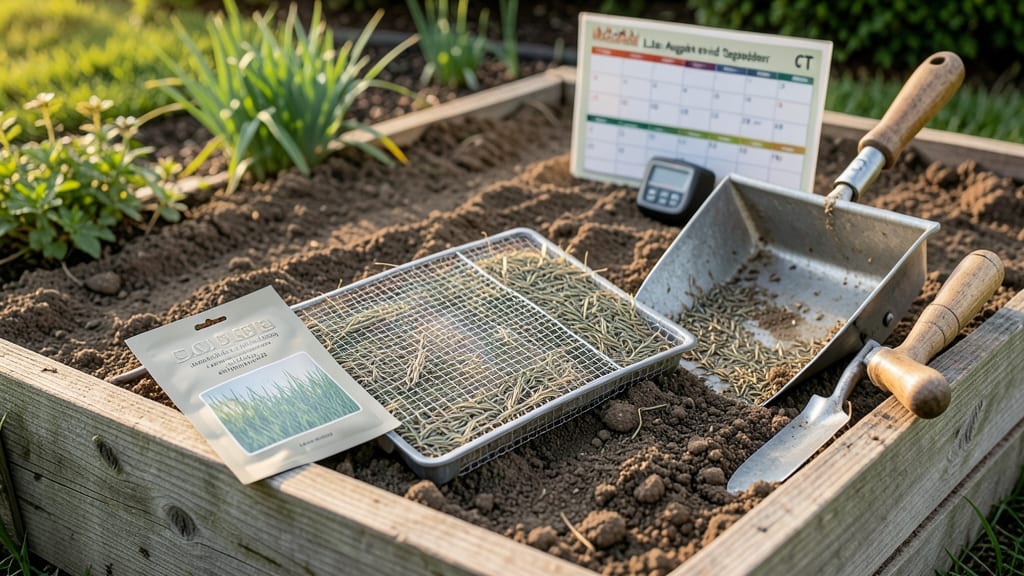
Planting grass seed in Connecticut means timing it right to beat frost and heat stress—soil temps must stay above 50°F for 7+ days before you even consider spreading seed 🌱.
Picture this: you’ve spent hours prepping your soil, only to watch your new grass seedlings freeze in a late April frost or wilt under a scorching July sun. That’s why spring and fall are your only safe bets, and even then, your USDA zone matters.
Connecticut’s climate varies wildly—coastal areas like New Haven can plant 2 weeks earlier than inland spots near Hartford. This guide breaks down the exact frost-free windows for your zone, plus the best grass types to choose for your yard’s sun or shade.
Skip the guesswork and learn how to plant 4-6 weeks before last frost (or 6-8 weeks before first frost for fall), with soil prep tips that actually work in CT’s rocky soil.
Connecticut grass planting timeline by zone: frost dates and soil temperature rules
Connecticut’s diverse climate—from coastal Zone 6a to inland Zone 7a—means your grass planting window can shift by weeks depending on location. Cool-season grasses like Kentucky Bluegrass thrive in spring and fall, while warm-season types like Bermuda need summer heat.
The key? Soil temperatures must stay between 50–65°F for germination, and planting too early risks frost damage, while late planting stresses seedlings. Let’s break down your exact planting windows by zone.
Most of Connecticut falls into USDA Zones 5b–7a, with average last frost dates ranging from April 15 (coastal areas) to May 1 (inland). For cool-season grasses, aim to plant 4–6 weeks before the last frost, while warm-season grasses need soil temps above 65°F—typically mid-May to early June.
Fall planting for cool-season grasses should happen 6–8 weeks before the first frost (usually late September to early October).
Here’s your zone-by-zone planting timeline, including soil temperature rules and recommended grass types to ensure a thick, healthy lawn:
For Zone 5b (like coastal New London), cool-season grasses like Kentucky Bluegrass can start as early as mid-March, but wait until soil temps hit 50°F consistently.
In Zone 7a (e.g., Danbury), warm-season grasses like Zoysia can be planted as late as early June, but only when soil temps exceed 65°F. Use a soil thermometer to check—planting too soon in cooler zones risks frost kill, while late planting in warm zones stresses seedlings.
Pro tip: If your lawn has bare patches, over-seeding in fall (September–October) gives grass roots time to establish before winter. For new lawns, spring planting offers a head start, but fall planting often yields thicker growth due to cooler temps and consistent moisture.
Always water newly seeded areas daily for 2 weeks to keep soil moist but not soggy—this is critical for germination.
One common mistake? Planting warm-season grasses like Bermuda in spring before soil warms up. These grasses won’t germinate until temps hit 65°F+, so hold off until late May or June in most of Connecticut.
Conversely, cool-season grasses planted in summer often fail due to heat stress—stick to spring or fall for best results. Use a moisture meter to ensure soil stays hydrated during germination.
Connecticut’s microclimates mean your neighbor’s perfect timing might not work for you. Check local frost dates from the CT Agricultural Experiment Station or use a frost calendar app to adjust your planting window.
For example, Stamford (Zone 6b) might see frost until April 25, while Norwich (Zone 6a) could have frost until April 20. Plan accordingly to avoid disappointment.
Finally, prepare your soil 2–4 weeks before planting by removing weeds, tilling to a depth of 4–6 inches, and adding compost or peat moss for drainage. A soil test (available through UConn Extension) will tell you if you need to adjust pH—most grasses prefer 6.0–7.0.
With the right timing and prep, your Connecticut lawn will be the envy of the neighborhood by next summer.
🌱
5 Critical signs your Connecticut soil is ready for grass seed (and 3 mistakes to avoid)
Timing your grass seed planting in Connecticut isn’t just about the calendar—it’s about soil conditions. Cool-season grasses like Kentucky Bluegrass thrive when soil temperatures hover between 50–65°F, while warm-season types need 65°F+.
But before you scatter seeds, check these 5 key signs your soil is ready, or risk slow germination or seedling failure.
Many Connecticut gardeners make 3 costly mistakes when planting grass seed: rushing too early (risking frost damage), waiting too late (summer drought stress), or ignoring soil prep (poor drainage). Let’s fix that with a clear checklist and actionable tips to avoid these pitfalls.
- 1 Soil temperature stays above 50°F for 7+ days – Use a soil thermometer (morning checks are best). In Connecticut, this typically means late April to early May for spring planting.
- 2 No frost risk within 2 weeks – Check your USDA zone (5b–7a in CT). Planting 4–6 weeks before the last frost date (usually April 15 in Hartford) ensures seedlings aren’t nipped.
- 3 Drainage test passes – Dig a 6-inch hole, fill with water, and time drainage. If water sits longer than 6 hours, amend with compost or sand to improve airflow.
- 4 Warm-season grasses need soil >65°F – Types like Bermuda or Zoysia wait for late May to June in CT’s inland zones (e.g., New Haven or Waterbury).
- 5 Fall overseeding requires specific timing – Aim for 6–8 weeks before first frost (usually September 15–October 15 in CT). Soil should still be warm enough for root growth but cooling for dormancy.
Now, let’s tackle the 3 biggest mistakes Connecticut gardeners make—and how to avoid them. First, planting too early (before soil warms to 50°F) can leave seedlings vulnerable to late frosts.
I’ve seen this happen in March plantings along the coast, where temperatures can dip back into the 30s. Always wait for consistent warmth.
Second, ignoring summer drought risks is a trap for late plantings. If you sow warm-season grass in June or July, seedlings may struggle to establish before August heat sets in. Mulch with straw to retain moisture and water deeply in the morning to reduce evaporation.
Finally, skipping soil prep—like tilling or removing weeds—leads to poor seed-to-soil contact. I recommend double-digging 6 inches deep, mixing in compost, and raking for a fine, crumbly texture. This step alone can boost germination rates by 30–50%.
For a foolproof timeline, align your planting with Connecticut’s frost-free window. Spring: March 15–April 30 (cool-season grasses). Fall: September 1–October 15 (overseeding). Warm-season grasses? Wait until May 15–June 15 when soil hits 65°F+.
With these signs and timing tips, your Connecticut lawn will sprout uniformly and strong. Avoid the mistakes, and you’ll skip the frustration of patchy growth or wasted seed. Happy planting! 🌱