
Plants
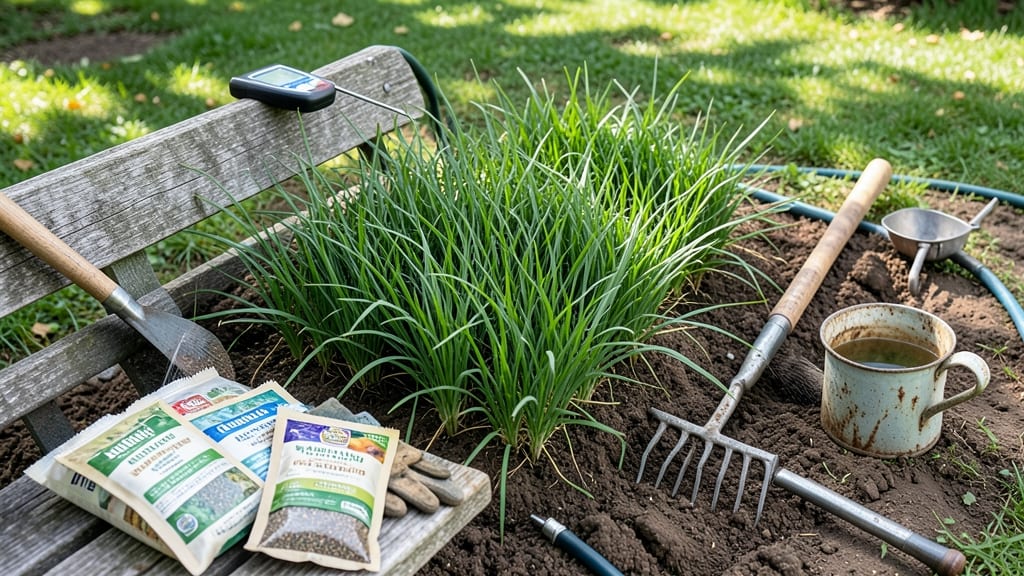
The best time to plant grass seed in Utah depends on elevation and soil temperatures—aim for early spring or late summer to avoid frost or drought stress.
Picture this: you’ve spent hours spreading grass seed 🌱, only for a late frost to wipe out your progress or scorching summer heat to dry it out before it takes root. Utah’s diverse climate means the wrong timing can turn your lawn dreams into a costly mistake.
Northern Utah’s cooler zones (5-6) have a shorter window—typically between March and April—while Central and Southern Utah (6-8) can stretch planting into August or early September. The key? Soil temps must stay above 50°F for cool-season grasses or 65°F for warm-season types.
Below, I break down exact deadlines by elevation, soil prep tips to lock in success, and how Utah’s monsoon season can shift your timeline. No more guessing—just a lush lawn on schedule.
Utah grass seed planting deadlines by elevation Zone (soil temp guide)
Utah’s dramatic elevation shifts—from the Wasatch Front at 4,200 ft to mountain meadows at 10,000 ft—create wildly different soil temperature conditions. Cool-season grasses like Kentucky Bluegrass thrive when soil hits 50°F, while warm-season Bermuda grass needs 65°F+.
Get the timing wrong, and your seed either rots in cold soil or bakes in summer heat. Here’s how to map your planting window by elevation zone.
First, identify your USDA zone and elevation range—Utah spans Zones 5-8, with Northern Utah (5-6) facing earlier frosts than Southern Utah (6-8). Soil temperature lags air temperature by 1-2 weeks, so use a soil thermometer (or a moisture meter) to confirm readiness.
Pro tip: Morning soil temps are your best gauge—aim for 50-65°F for cool-season grasses.
Below is your elevation-based planting deadline guide, including last frost dates, ideal soil temps, and cutoff windows for spring/fall. Bookmark this for your 2024 planting season—Utah’s frost dates shift yearly due to climate variability.
For 4,000–5,000 ft elevations (e.g., Salt Lake Valley), your spring planting window runs from mid-March to late April, but don’t rush—soil at 4,200 ft often stays below 50°F until mid-April.
Use a soil thermometer to confirm: if temps dip below 45°F, delay until after April 15 to avoid frost damage. Fall planting is safer here, with August–September offering cooler soils and 60% less drought stress than summer.
At 5,000–6,500 ft (e.g., Park City, Heber Valley), your window narrows due to earlier frosts.
Plant cool-season grasses between March 1 and April 15, but warm-season grasses like Bermuda must wait until soil hits 65°F+—typically late May. Fall planting shifts to August 1–September 15 to beat the first frost, which arrives as early as October 1 in these zones.
High-elevation zones (6,500–10,000 ft, e.g., Ogden Valley, Logan Canyon) have the shortest windows. Spring planting starts no earlier than May 1—soil at 8,000 ft
5 Critical factors that determine your planting timeline (beyond elevation)
Utah’s monsoon season and high-desert climate create unique challenges for grass seed planting. Unlike coastal regions, Utah’s rainfall patterns shift dramatically between summer storms and winter droughts. This means your planting window isn’t just about frost dates—it’s also about soil moisture and seed type compatibility with Utah’s dry spells.
For example, cool-season grasses like Kentucky Bluegrass thrive in Utah’s spring and fall, but warm-season grasses such as Bermuda grass need the monsoon’s late-summer moisture to germinate. Ignoring these factors can leave your lawn struggling or inviting weeds to take over.
- 🌧️ Monsoon Timing: Plant Bermuda or Buffalo grass in late July-August to capitalize on Utah’s summer rainfall (avg. 0.5–1.5 inches per storm). Delaying past mid-August risks drought stress.
- ❄️ Frost Dates: Northern Utah’s first frost (Oct 15) limits fall planting to early September for cool-season grasses. Southern Utah (USDA Zone 7) can extend planting to mid-October.
- 💧 Soil Moisture: Test soil moisture 2–3 inches deep—plant only when moisture reaches 30–40%. Utah’s alkaline soils dry faster; mulch after planting to retain humidity.
- 🌱 Grass Seed Type: Cool-season mixes (Fescue, Bluegrass) need 50–60°F soil temps (spring/fall). Warm-season (Bermuda, Zoysia) require 70–80°F soil temps (late summer).
- 🌡️ Heat Tolerance: Avoid planting when daytime temps exceed 90°F—seedlings won’t germinate and risk heat shock. Early morning planting (before 10 AM) helps.
Your local rainfall history is the wild card. For instance, St. George’s (Zone 8) monsoon season peaks in early August, while Salt Lake City’s (Zone 6) storms arrive 2–3 weeks later.
Check your USDA climate data or local agricultural extension office for 10-year averages—this tells you when to expect that critical 0.5-inch rainfall needed for germination.
Pro tip: Use a soil thermometer to confirm 50°F+ for cool-season or 70°F+ for warm-season grasses. Utah’s diurnal temperature swings (hot days, cold nights) can fool you—morning temps may feel ideal, but afternoon heat can stress seedlings.
Finally, adjust for your lawn’s microclimate. Shady areas stay cooler and moister longer, while south-facing slopes dry out faster. If your yard has patchy sunlight, plant shade-tolerant fescue in cooler microclimates and heat-resistant Bermuda in sun-drenched spots.
By aligning these five factors—monsoon timing, frost dates, soil moisture, seed type, and heat tolerance—you’ll avoid the #1 mistake Utah gardeners make: planting at the wrong time and watching their investment wither before it begins. 🌱