
Plants
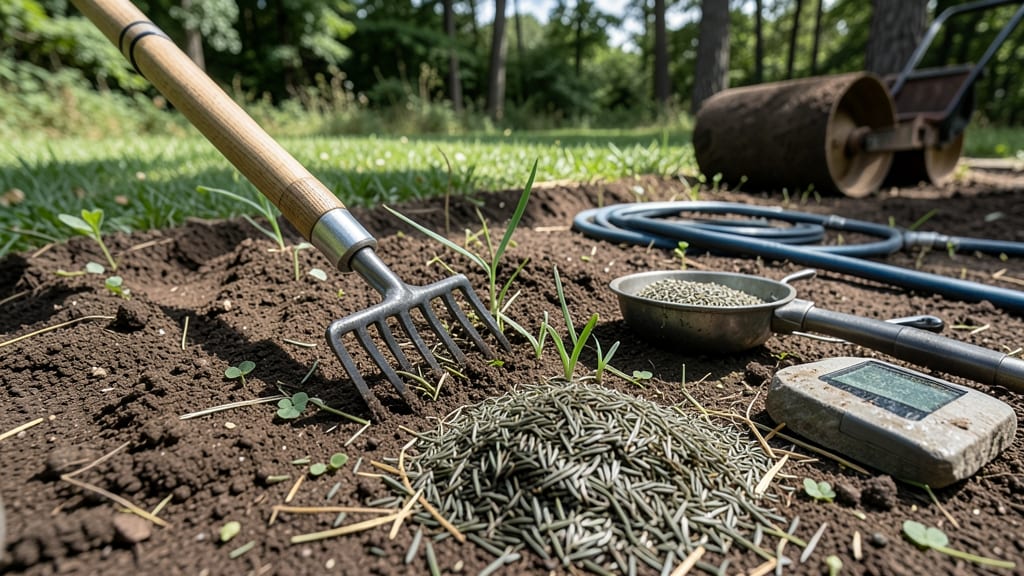
The best time to plant Grass Seed (Turfgrass) in New Jersey is early fall or spring, when soil temperatures and moisture align perfectly for germination.
New Jersey’s unpredictable spring and fall weather can make or break your lawn—planting Grass Seed (🌱) at the wrong time means thin grass, stubborn weeds, and wasted effort. But timing it right guarantees a lush, weed-resistant lawn that stays green year-round.
For 6a-7b zones, early fall (September–October) is ideal because cooler temps reduce stress on seedlings, while spring (March–April) works if you act fast before summer heat arrives. Missing these windows risks drought, frost damage, or slow establishment.
Below, I break down the exact steps for soil prep, seed selection, and watering schedules—plus how to troubleshoot common NJ pitfalls like compacted soil or weed competition.
New Jersey’s ideal grass-seeding window: fall vs. spring timing explained
New Jersey’s cool-season grasses thrive when planted during their optimal growth window, which aligns perfectly with fall and early spring. But here’s the catch: fall (September-October) is the golden window for most NJ lawns, while spring (March-April) offers a secondary chance—each with unique advantages and risks.
Let’s break down why timing matters so much for your New Jersey lawn.
Cool-season grasses like tall fescue and Kentucky bluegrass (the staples of NJ lawns) grow best when soil temperatures hover between 60°F and 75°F. In fall, daytime temps drop gradually, giving seeds time to germinate and establish roots before winter dormancy.
Spring, however, brings unpredictable frost risks and drought stress—two enemies of new grass. Coastal areas (like Cape May) may have milder microclimates, while inland zones (like Morris County) face sharper temperature swings.
Here’s the key difference: Fall seeding lets grass grow 6-8 weeks before winter, creating a deep root system that survives frost. Spring seeding races against summer heat, often leading to thin, weak patches if not timed perfectly.
Let’s compare the two seasons side-by-side to help you decide which works best for your NJ yard.
Fall’s cooler temps and higher humidity create perfect conditions for grass seed germination. The soil stays moist longer, reducing the need for frequent watering, and weeds are less aggressive because they’re still dormant.
In contrast, spring’s warmer soil speeds up germination—but it also wakes up crabgrass and other weeds, which can outcompete your new grass if not controlled early.
For coastal NJ (e.g., Atlantic City), aim for late September to mid-October to avoid early frosts. Inland areas (like Trenton or Newark) should seed by mid-October to ensure roots establish before winter.
Spring planting? Stick to early March—after the last frost (typically April 15)—but be ready to water daily until germination occurs.
One critical mistake NJ gardeners make is waiting until late fall or early spring when soil is too cold or dry. Always check soil temperature (use a soil thermometer)—it should be above 50°F for spring and below 75°F for fall.
If you miss the window, overseeding in early fall is your next best bet.
Pro tip: Use a seed-to-soil contact tool like a slit seeder or broadcast spreader to ensure even distribution. After seeding, lightly rake the soil to bury seeds ¼-inch deep, then water gently to keep the surface moist.
Avoid heavy foot traffic for 4–6 weeks—this is when roots are most vulnerable.
Remember, fall seeding gives your grass a head start for next spring, while spring seeding is a gamble against summer’s heat. For the best results in New Jersey, fall is your champion—but spring can work if you’re prepared for extra care.
Choose wisely, and your lawn will thank you year-round.
Step-by-step grass-seeding prep for New Jersey’s climate: soil, seed, and weather checklist
New Jersey’s cool-season grasses thrive when planted during the 4–6 week germination window before winter dormancy or summer heat stress. Unlike warm-season grasses, tall fescue and Kentucky bluegrass need 60–70°F soil temps—perfect in September–October or March–April.
But before you seed, prep your site like a pro to avoid thin patches and weed competition.
Start with a soil pH test—New Jersey’s clay-heavy soils often skew acidic. Aim for a pH of 6.0–7.0 by amending with lime (for pH < 6.0) or sulfur (for pH > 7.0). Skip this step, and your seed may struggle to establish roots despite perfect weather.
Next, choose a seed blend tailored to your yard’s use. For high-traffic areas, opt for tall fescue mixes (drought-tolerant). Shady spots? Fine fescue or Kentucky bluegrass blends work best. Mow high (3–4 inches) once established to crowd out weeds naturally.
- Test soil pH (use a DIY kit or send to NJ Agricultural Experiment Station for accuracy). Adjust with lime or sulfur 4–6 weeks before seeding.
- Clear debris—remove rocks, weeds, and old grass clippings. Use a raking motion to loosen the top 1–2 inches of soil.
- Aerate compacted soil (rent a core aerator for clay-heavy NJ yards). This ensures water and oxygen reach seed.
- Spread seed evenly—use a broadcast spreader for large areas. Target 5–8 lbs per 1,000 sqft (check seed bag rates).
- Lightly rake to bury seed ¼ inch deep. Press seeds into soil with a lawn roller (fill with water or sand).
- Water deeply—keep soil consistently moist (not soggy) for 4–6 weeks. Aim for ½ inch per week (morning watering only).
- Monitor weather—avoid seeding if rainfall < 1 inch/week or temps > 85°F. Check NJ State Climate Office forecasts weekly.
Don’t overlook weed control—apply a pre-emergent herbicide (like corn gluten meal) 2 weeks before seeding to block crabgrass. For post-seeding, hand-pull weeds once grass reaches 3 inches tall. Mulch with straw (not wood chips) to retain moisture and protect seed from bird foraging.
After germination (typically 7–21 days), mow when grass hits 3–4 inches. Use a sharp mower blade to avoid tearing blades. Fertilize lightly with a starter blend (10-0-10 NPK) 4 weeks post-seeding to boost root growth before winter.
Pro tip: Overseed in spring (March–April) if you missed fall, but expect slower establishment due to summer heat stress. NJ’s coastal regions (like Cape May) can seed slightly later (October–November) thanks to milder microclimates. Monitor your yard’s microclimate—shady spots stay cooler longer.