
Lawn
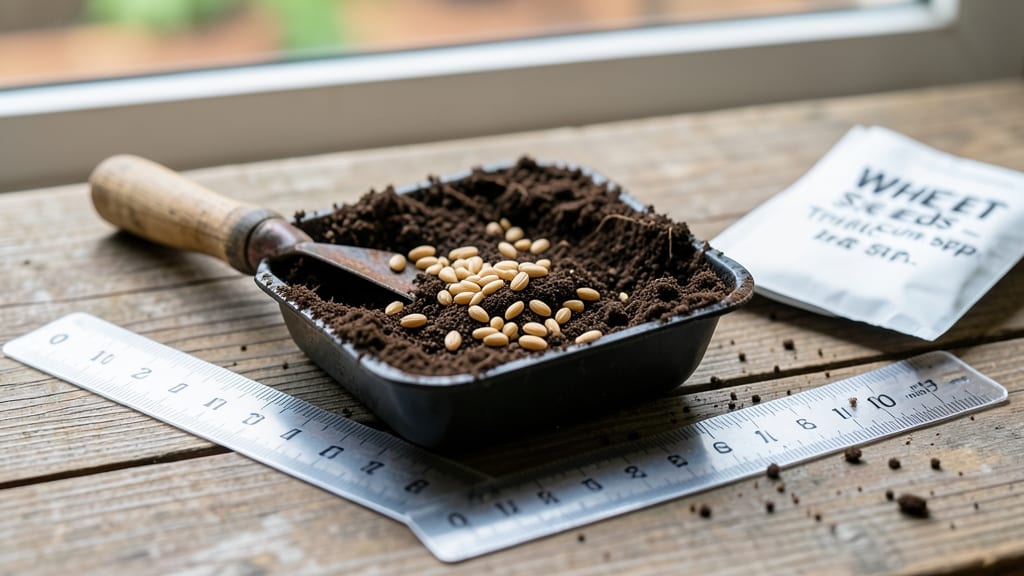
Planting wheat seeds at a depth of 1.5 to 2 inches is the golden rule for strong germination and healthy growth—yet even experienced gardeners get this wrong.
That extra half-inch matters more than you think. Too shallow, and your seeds dry out before sprouting. Too deep, and they struggle to break through the soil, wasting your time and resources.
The right depth ensures your 🌾 wheat gets the moisture, oxygen, and warmth it needs to thrive from the start.
Whether you're a home gardener or a small-scale farmer, getting this detail right can mean the difference between a bountiful harvest and a failed crop.
Below, I’ll break down the science behind the 1.5- to 2-inch rule, how to adjust for your soil type and climate, and the tools that make planting at the perfect depth a breeze.
You’ll also learn how to spot common mistakes—like uneven planting or overcrowding—and how to fix them before they derail your wheat’s growth. Let’s dig in!


Why 1.5 to 2 inches is the ideal wheat seed depth for germination
When planting wheat seeds, the 1.5- to 2-inch depth isn't just a random recommendation—it's rooted in science. This depth balances three critical factors: moisture retention, soil temperature, and oxygen availability. Too shallow, and seeds dry out or bake in sunlight.
Too deep, and they struggle to break through the soil, leading to stunted growth or rot. The 1.5- to 2-inch rule ensures seeds have the best chance to sprout strong roots while staying hydrated and protected.
Wheat seeds need consistent moisture to germinate, but planting too shallow risks exposure to drying winds and surface evaporation. At 1.5–2 inches deep, seeds stay in the moisture-rich zone just below the soil surface.
This depth also aligns with the optimal soil temperature for germination, typically between 45–65°F. Deeper planting can delay germination because cooler, denser soil slows metabolic activity, while shallower planting risks overheating in sunny conditions.
The 1.5- to 2-inch depth also supports root development by providing enough space for the radicle (the first root) to emerge without obstruction. Shallow planting can lead to weak root systems, making plants more susceptible to disease and wind damage.
Meanwhile, deeper planting forces seeds to expend more energy breaking through compacted soil, which can exhaust their reserves before germination even begins.
Another key factor is oxygen exchange. Seeds require oxygen to activate enzymes that break down stored nutrients for growth. Planting too deep reduces oxygen availability, leading to anaerobic conditions that can cause seed rot or failed germination.
The 1.5- to 2-inch depth strikes the perfect balance, allowing roots to access oxygen while staying protected from extreme temperatures and pests.
From a practical standpoint, the 1.5- to 2-inch rule also minimizes seedling competition. When seeds are planted too close to the surface, they may germinate unevenly, leading to overcrowding and weaker stalks.
Conversely, deeper planting can cause uneven emergence, where some seeds sprout later and struggle to compete for sunlight and nutrients. The ideal depth ensures uniform germination, leading to a stronger, more uniform crop.
In disease-prone environments, the 1.5- to 2-inch depth acts as a natural defense. Seeds planted too shallow are more vulnerable to soil-borne pathogens and fungal infections like Fusarium or Rhizoctonia. The extra soil coverage provides a protective barrier, reducing direct contact with contaminated surface soil.
This is especially important in humid climates or areas with poor drainage, where shallow planting can exacerbate fungal growth.
If you're planting wheat in cooler climates, you might lean toward the upper end of the range (1.5–2 inches) to retain heat near the seeds. In warmer regions, slightly shallower planting (1.5 inches) can help prevent overheating.
Always adjust based on your local soil type—sandy soils may require slightly deeper planting to retain moisture, while clay soils can be planted closer to 1.5 inches to avoid waterlogging.
For home gardeners and small-scale farmers, consistency is key. Use a seed depth gauge or even a pencil to mark the 1.5- to 2-inch depth before planting. This ensures every seed gets the same conditions for germination.
Over time, you’ll notice healthier seedlings, fewer failed sprouts, and a more productive harvest—all thanks to mastering this simple yet critical detail.
Remember, the 1.5- to 2-inch rule isn’t arbitrary. It’s the result of decades of agricultural research designed to maximize germination rates, root strength, and disease resistance.
Whether you're growing wheat for flour, feed, or just the joy of watching it thrive, nailing this depth will set your crop up for success from day one. 🌾
How to adjust wheat seed depth for different soil types and climates
Your soil type and climate play a bigger role in wheat seed depth than you might think. The standard 1.5- to 2-inch rule is a great starting point, but sandy soils dry out faster, while clay holds moisture longer.
Even your local humidity or rainfall patterns can signal whether to plant slightly shallower or deeper. Let’s break down how to fine-tune your planting depth for the best results.
For example, in sandy soils, wheat seeds need to stay moist longer during germination. Planting them at the upper end of the range (1.75 to 2 inches) helps them access deeper moisture reserves.
Conversely, in clay soils, where water pools near the surface, you can safely plant at 1.25 to 1.5 inches to avoid waterlogging the seeds.
Climate also matters. In dry, arid regions, deeper planting (closer to 2 inches) helps seeds reach moisture deeper in the soil. In humid climates, shallower planting (around 1.25 inches) reduces the risk of fungal diseases that thrive in overly moist soil.
Organic farmers may also adjust depth slightly to accommodate looser, compost-rich soil that holds moisture differently than conventional plots.
⚠️ Common Mistakes That Waste Your Seeds
Overcrowding happens when seeds are planted too closely, leading to weak, competition-prone seedlings. Uneven depth (some seeds too shallow, others too deep) creates inconsistent germination rates. Planting too deep in cold soils can delay sprouting until the soil warms, while shallow planting in dry conditions risks seeds drying out before roots establish.
To troubleshoot, check your soil’s moisture level before planting. Stick your finger 2 inches deep—if it’s bone-dry, plant deeper (up to 2.5 inches in extreme cases). If it’s soggy, shallow out to 1 inch and improve drainage.
For organic farming, consider adding compost to sandy soils to retain moisture, allowing you to plant closer to the standard 1.5-inch depth.
Another trick is to use a seed depth gauge or even a pencil to mark consistent rows. This ensures every seed gets planted at the same depth, reducing variability.
In humid climates, I’ve found success with a shallow furrow method: create a 1-inch trench, drop seeds in, then cover lightly with soil. This keeps seeds just deep enough to germinate while minimizing fungal risks.
Finally, monitor your seedlings’ first few weeks. If you see uneven emergence or yellowing leaves, it’s often a sign of inconsistent depth or moisture issues.
Adjust your technique for the next planting based on what you observe—this is how you fine-tune wheat seed depth over time for your specific conditions.
Remember, the goal is consistency. Whether you’re adjusting for clay vs. sand or dry vs. humid conditions, small tweaks to the standard depth can make a big difference in your wheat’s success. Start with these adjustments, and watch your germination rates—and harvests—improve.