
Lawn
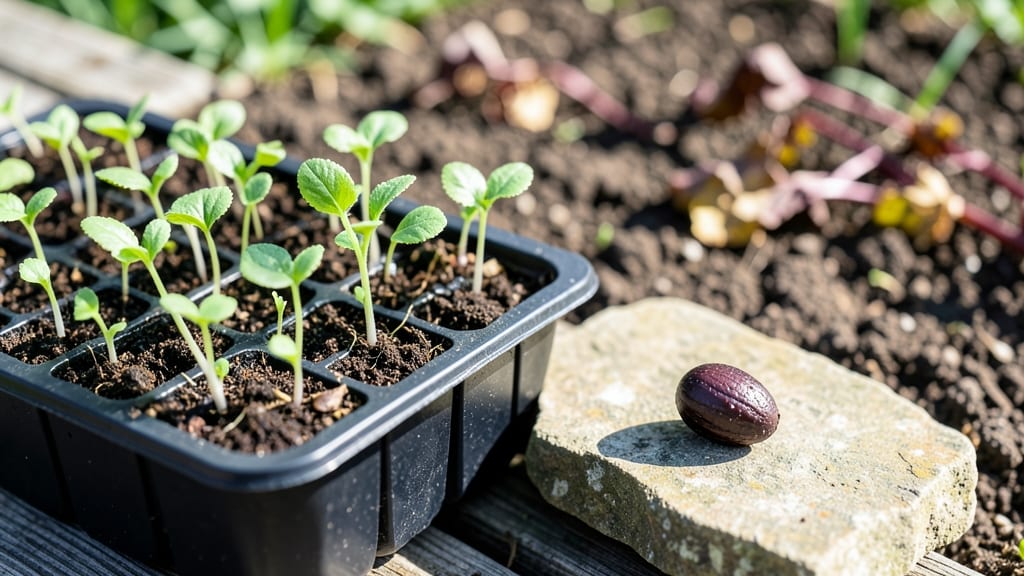
A beet seed looks like tiny, flat oval disks about 2-3mm wide, with a glossy dark brown or black shell and a delicate papery covering. These seeds often come in color-coded packets to help identify different beet varieties.
A beet seed's distinctive appearance sets it apart from other garden seeds. 🌱 These miniature disks pack a surprising amount of information about the plant they'll grow into—like the color-coded packets that often indicate heirloom varieties or disease resistance.
The papery membrane isn't just protective; it helps regulate moisture during germination, while the glossy exterior reflects sunlight to maintain consistent temperatures.
Most seed packets contain clusters of 2-5 seeds that formed from a single beet flower, which explains why they arrive in small groups rather than individually like tomato seeds.
What's particularly helpful about these seeds is their uniformity—each variety maintains consistent size and shape, making identification straightforward. 💡 For gardeners, this means you can quickly spot your striped Chioggia seeds from your golden Detroit types just by looking at the packet labels.
The dark exterior also contains natural oils that support early root development, while the flat shape helps them stay stable in soil until sprouting begins.
💡 In This Article
- Beet Seed Anatomy: Structure and Key Features
- How to Identify Beet Seed Varieties by Color and Shape
Beet seed anatomy: structure and key features
Beet seeds are tiny botanical marvels with a precise structure that serves multiple survival functions. Their flat, oval shape—typically measuring 2-3 millimeters in width—maximizes surface area for moisture absorption while minimizing exposure to drying winds.
The glossy, dark brown to black exterior isn't just for show; it contains natural oils that help regulate moisture and provide energy during germination. This outer shell also reflects sunlight, creating a microclimate that maintains consistent temperatures around the seed.
The papery membrane you'll notice when handling beet seeds serves as a protective barrier that regulates water intake. This membrane, called the testa, allows only controlled hydration to prevent premature sprouting—a critical adaptation since beet seeds can remain dormant for years.
Unlike round seeds like tomato or cucumber, beet seeds stay flat because they develop from the ovary walls of beet flowers, which press them into this distinctive shape. The clusters you often see (usually 2-5 seeds) form from a single flower's ovary, explaining their natural grouping.
What makes beet seeds visually unique is their contrast between the dark exterior and the pale, almost translucent inner membrane. This contrast isn't accidental—it helps gardeners quickly identify seed varieties through color-coding.
The dark exterior also contains compounds that deter pests, while the flat shape helps seeds stay stable in loose soil until germination begins. This combination of features explains why beet seeds have a 90%+ germination rate when properly stored, outperforming many other vegetable seeds.
When comparing beet seeds to other garden seeds, their flat shape and dark color set them apart. For example, carrot seeds are much smaller (1mm) and more irregular, while tomato seeds are round and lack the protective papery membrane.
The glossy finish of beet seeds also makes them easier to handle during planting, as they don't stick together like some fine seeds do. This physical design reflects their evolutionary adaptation to thrive in temperate climates where moisture levels fluctuate.
The seed's internal structure is equally fascinating. Inside that papery membrane lies the actual seed embryo, surrounded by nutrient-rich endosperm that provides energy for the first critical growth stages.
This internal organization explains why beet seeds can remain viable for 3-5 years when stored properly—far longer than many other vegetable seeds. The combination of protective layers and built-in nutrition makes beet seeds remarkably resilient in the garden.
For gardeners, understanding this anatomy means you can handle seeds more effectively. The flat shape allows for precise planting at ½ inch depth, while the papery membrane helps maintain moisture until sprouts appear.
This design also explains why beet seeds should never be soaked before planting—unlike some seeds, they don't need pre-treatment to break dormancy. Their natural protective features make them one of the easiest vegetable seeds to grow successfully.