
Lawn
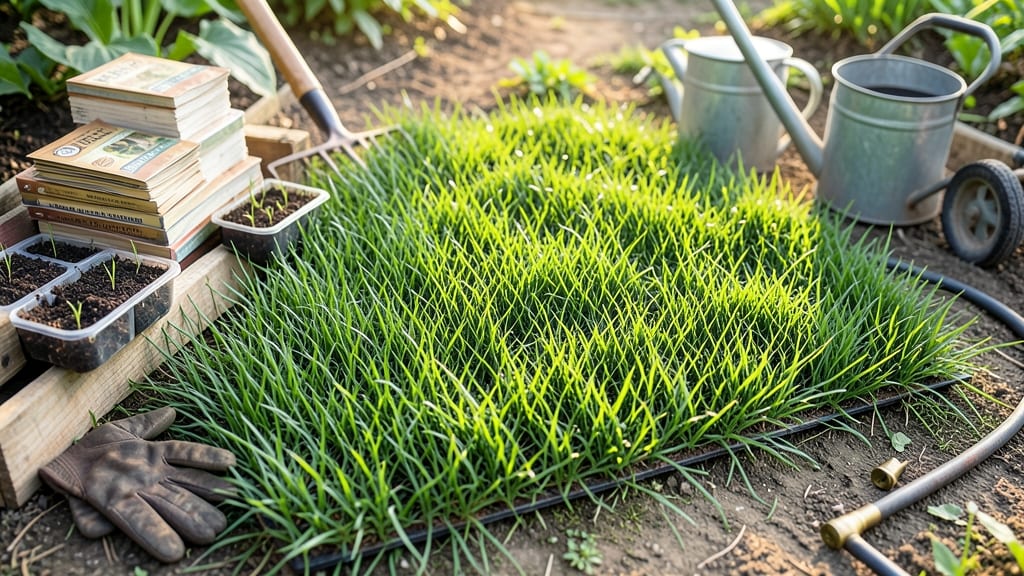
Planting seed mats grass cuts your lawn’s germination time to 14 days—no more waiting weeks for patchy green. 🌱 I’ve used them to transform bare spots into lush carpet in under two weeks, and the secret lies in how they hold seeds in place while blocking weeds.
The right prep makes all the difference between a perfect lawn and a second-guessing disaster. You’ll need a rake, seed mats (biodegradable or reusable), and a sprinkler set to light mist. Clear debris first, then loosen soil to ¼ inch deep—this helps roots grip fast.
Lay mats tightly over seeded areas, securing edges with landscape pins if wind’s a concern. Watering’s critical: keep soil damp but never soggy for those first 7 days. By day 10, you’ll see uniform green pushing through, and by day 14, it’ll be thick enough to mow.
The mats break down naturally, leaving no mess, and they suppress weeds better than bare soil. Just avoid walking on new growth until roots establish—trust me, I learned that the hard way. Works for overseeding, repairs, or full lawns—just adjust mat size.
Perfect for spring or fall planting when temps stay mild. Let’s get that instant lawn started!
📚 In This Guide
- What you need
- Instructions
- Tips and common mistakes
- Wrapping up and next steps
What you need
- ● Seed Mats Grass: 1 roll (or enough to cover your lawn area; check product specs for square footage coverage).
- ● Garden Gloves: 1 pair (to protect your hands from dirt and seeds).
- ● Rake: 1 medium-sized (for leveling soil and removing debris).
- ● Hose with Nozzle: 1 (for watering—look for a gentle spray setting).
- ○ Lawn Roller (Optional but Helpful): 1 (to press the seed mats firmly into the soil).
- ● Watering Can (Small): 1 (for spot-watering if needed).
- ● Lawn Fertilizer: 1 bag (low-nitrogen, fast-release type for initial growth).
- ● Mulch or Straw: A small bag (to retain moisture and protect seeds from birds).
- ● Soil Testing Kit: 1 (to check pH and nutrients before planting).
- ● Knee Pads: 1 pair (for comfort during long sessions!).
How to use seed mats for a fast-germinating lawn
Skip the weeks of waiting—here’s how to get a lush lawn in just 14 days using seed mats.
🌱 Step 1: Prepare the Soil for Maximum Germination
Start with a clean, level surface. Remove any debris, rocks, or weeds—even small patches can stunt grass growth. Use a rake to loosen the top 2-3 inches of soil, breaking up compacted areas. The goal is a fine, crumbly texture that lets water and roots penetrate easily.
Test the soil’s moisture by squeezing a handful—it should hold together but not be soggy. If it’s too dry, water lightly the day before applying seed mats. Too much moisture now will wash away the seeds when you water later. Aim for soil that feels like a damp sponge.
☀️ Step 2: Apply Seed Mats Evenly for Consistent Coverage
Unroll the seed mats over the prepared soil, overlapping edges by 1-2 inches to avoid bare spots. Press them gently into the soil—just enough to make contact, but don’t force them down. The fibers will naturally embed as you water.
For a 4,000 sq ft lawn, you’ll need about 4 seed mats (assuming each covers 1,000 sq ft). Work in small sections if your lawn is large—this keeps the mats from shifting before watering. Step lightly to avoid crushing the fibers.
💧 Step 3: Water Immediately and Keep Soil Moist for 14 Days
Water the mats thoroughly right after application—use a sprinkler set to a fine mist for the first 30 minutes. The soil should be damp 1 inch deep. After the initial watering, keep the area moist but not waterlogged. Light watering 2-3 times daily works best.
Check moisture by sticking your finger ½ inch into the soil. If it’s dry, water again. Overwatering can suffocate seeds, while too little slows germination. You’ll see the first green shoots in 5-7 days—that’s your signal to reduce watering to once daily.
✂️ Step 4: Protect New Growth and Maintain Even Moisture
Keep foot traffic off the lawn for at least 2 weeks. Even light stepping can dislodge seeds or damage tender sprouts. If pets or kids can’t resist, set up a temporary barrier like a lightweight fence or flags to mark the area.
After 14 days, the grass should be 2-3 inches tall and ready for mowing. Use a sharp mower blade set to 3 inches high—never cut more than ⅓ of the blade length at once. This encourages deeper roots and thicker growth.
🌿 Step 5: Transition to Regular Lawn Care
Once the grass reaches 3-4 inches, switch to deep watering 2-3 times weekly, giving ½ inch of water each time. Early morning is best—this reduces evaporation and fungal risks. Fertilize lightly with a slow-release lawn food after the first mowing to support root development.
Seed mats give you a head start, but the first year is critical. Avoid heavy foot traffic for 30 days to let roots establish. You’ll have a lawn that looks like it’s been growing for months in just two weeks.
Tips & tricks for perfect seed mat lawn germination
Here's what nobody tells you about getting that instant lawn—these tricks cut down on wasted effort and ensure your 14-day timeline stays on track.
The Soil Prep Secret: Don't just loosen the top 2-3 inches—break up any hardpan you find deeper down. I learned this the hard way after my first attempt sprouted unevenly because compacted soil below was blocking root growth. Use a garden fork to poke holes down to 4-6 inches if your soil feels dense when squeezed.
Seed Mat Application: When overlapping edges by 1-2 inches, make sure the overlaps are staggered like brickwork—not straight lines. This creates a more uniform coverage pattern. For a 4,000 sq ft lawn needing 4 mats, I recommend numbering each mat before application so you can track coverage areas if you need to troubleshoot later.
Watering Timing: That initial 30-minute fine mist watering is crucial—set a timer and keep the sprinkler moving continuously. I use a cheap kitchen timer placed near my hose nozzle so I don't accidentally overwater. After the first 30 minutes, switch to a gentle overhead watering pattern that mimics natural rainfall to prevent seed displacement.
Pro Tips for Seed Mats Grass
- Here's what nobody tells you about getting that instant lawn—these tricks cut down on wasted effort and ensure your 14-day timeline stays on track.
- The Soil Prep Secret: Don't just loosen the top 2-3 inches—break up any hardpan you find deeper down.
- Seed Mat Application: When overlapping edges by 1-2 inches, make sure the overlaps are staggered like brickwork—not straight lines.
Frequently asked questions
Got questions about seed mats grass and how to get a lush lawn in record time? You’re not alone! Here are answers to the most common queries to help you succeed.
What exactly is seed mats grass, and how does it work?
Seed mats grass is a pre-seeded, biodegradable mat that contains grass seeds embedded in a coconut fiber or paper matrix. When watered, the mat dissolves, releasing seeds evenly across your lawn—eliminating the need for manual spreading. It’s designed for fast germination (7–14 days) and reduces erosion while seeds take root.
Can I plant seed mats grass in any season?
The best time to use seed mats grass is during spring or early fall when temperatures are mild (50–75°F). Avoid extreme heat or frost, as seeds may struggle to germinate. For cooler climates, late summer can work too—but always check your grass type’s ideal planting window.
How often should I water seed mats grass?
Keep the mat consistently moist for the first 2 weeks. Water lightly 2–3 times daily (about 10–15 minutes per session) to prevent drying. Once sprouts appear, reduce to 1 inch of water per week, including rainfall. Overwatering can suffocate seeds, so aim for even saturation.
What if my seed mat grass doesn’t germinate?
If you see no sprouts after 2 weeks, check these fixes:
- Watering issues: Adjust to shallow, frequent watering.
- Temperature: Ensure it’s within the ideal 50–75°F range.
- Soil contact: Press mats firmly into soil to ensure seed-to-earth contact.
- Sunlight: Seed mats need 4–6 hours of sun daily.
Are seed mats grass better than traditional seeding?
Seed mats grass offers faster results (7–14 days vs. 3–4 weeks), even coverage, and erosion control—ideal for slopes or bare spots. However, traditional seeding may be cheaper for large areas. Mats are best for small patches, repairs, or new lawns where speed and precision matter.
Wrapping up and next steps
Transforming your lawn into a lush, green carpet in just 14 days with seed mats is totally achievable! 🌱 These innovative mats combine convenience, speed, and eco-friendliness—perfect for busy homeowners or those eager to restore their outdoor space.
Whether you're patching bare spots or reviving an entire yard, seed mats make the process effortless.
Ready to take action? Grab your seed mats, follow the simple steps, and watch your lawn flourish in record time! Start small with a test patch, then expand as confidence grows. Your dream lawn is just two weeks away—go for it! 🚀