
Lawn
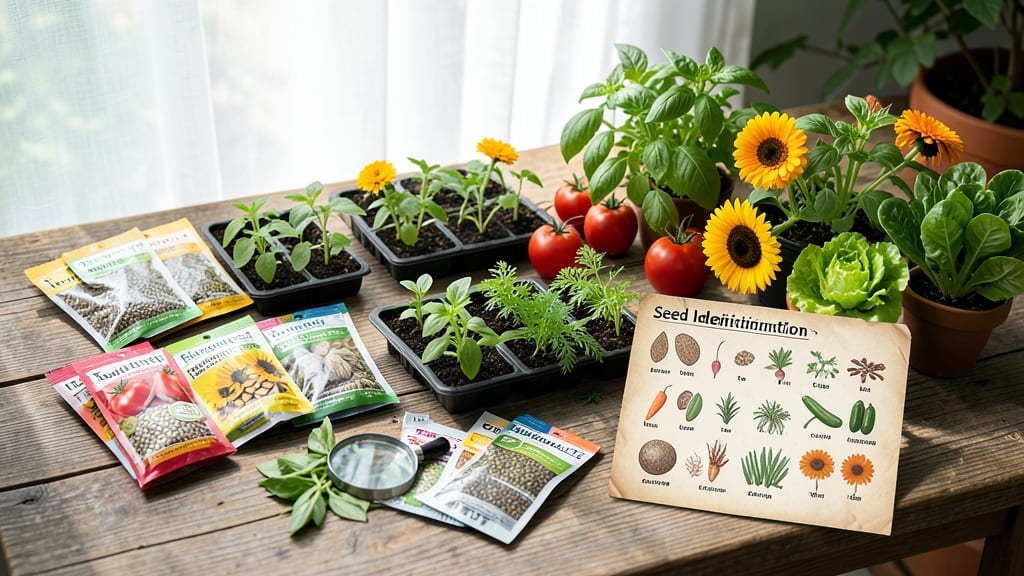
A seed identification guide starts with knowing what you're looking at—because a single seed can tell you everything about what grows from it. 🌱 I've spent years sorting through seed catalogs and lawn samples, and the key differences often come down to size, shape, and texture.
A tiny round seed might be a clover, while a long, slender one could be a grass or weed—getting this right means you'll plant the right thing the first time.
The most reliable method is comparing your seeds to a visual guide, whether it's a printed chart, a seed packet reference, or a trusted app. I keep a small magnifying glass handy because some seeds, like those from dandelions or crabgrass, look nearly identical until you zoom in.
Even experienced gardeners mix up similar seeds—like annual bluegrass and perennial ryegrass—until they learn the subtle differences in seed head shape and color.
Once you master this skill, you'll save time, avoid costly mistakes, and even spot weeds before they take over.
A quick glance at a seed's texture or color can tell you if it's a desirable grass or an invasive weed, helping you make smarter decisions about what stays and what goes. This is how you turn guesswork into confidence in your lawn or garden.
Start with just a few common seeds—like Kentucky bluegrass or crabgrass—and build your knowledge from there. The more you practice, the easier it gets, and soon you'll be identifying seeds at a glance. Here's where to begin with your first comparisons!
📚 In This Guide
- What you need
- Instructions
- Tips and common mistakes
- Wrapping up and next steps
What you need
- ● Hand Lens (Magnifier): 10x magnification (for examining fine details like seed texture and structure).
- ● Ruler or Measuring Tape: 12-inch or metric (to measure seed size and spacing).
- ● Field Guide or Printed ID Chart: Laminated or waterproof (for quick reference in the field).
- ● Notebook & Pen: Waterproof or weather-resistant (to log observations and sketches).
- ○ Gloves (Optional): Nitrile or latex-free (for handling prickly seeds or allergens).
- ● Seed Collection Tools: Small trowel or spoon (for digging seeds without damaging roots).
- ● Paper bags or envelopes (for storing samples).
- ● Digital Camera or Smartphone: With macro mode (for capturing high-res images of seeds).
- ● Seed Identification App: (e.g., iNaturalist or PlantNet for AI-assisted ID).
- ● Moisture Meter: (to check soil conditions affecting seed viability).
- ● Reference Plants: Potted samples of common grasses/weeds for side-by-side comparison.
How to identify common lawn seeds using a visual key
Here's how I quickly tell apart grass seeds from weeds—no lab needed.
🔍 Step 1: Examine Seed Shape and Size
Start by holding the seed against a white piece of paper or your palm. Grass seeds typically measure between 1/8 to 1/4 inch long and have smooth, elongated shapes. Weed seeds often appear more irregular—some are round, others spiky, and a few even have wings or fuzzy attachments.
Look for distinct features like ridges, points, or hairs. For example, crabgrass seeds have a distinctive three-sided shape with a tiny tuft at one end, while Kentucky bluegrass seeds are small, oval, and have a smooth, hairless surface. If you see seeds with feathery plumes, those are likely dandelion or milkweed—common lawn weeds.
🌱 Step 2: Check for Distinctive Surface Textures
Use a magnifying glass (or even a phone camera with zoom) to inspect the seed's surface. Grass seeds often have a smooth or slightly ribbed texture, while weed seeds may have bumps, grooves, or even tiny barbs. For instance, clover seeds have a round, dimpled surface, while chickweed seeds look like tiny, wrinkled beads.
Run your fingernail lightly over the seed. If it feels rough or gritty, it’s likely a weed seed. Smooth seeds that glide easily under your nail are usually grass. Pay attention to color too—grass seeds often appear tan, brown, or light green, while weed seeds can be black, white, or even purple.
☀️ Step 3: Look for Attached Structures or Seed Pods
Some seeds don’t travel alone—they come attached to pods, stems, or even tiny parachutes. If you spot a seed still connected to a dry, papery pod, it’s probably a weed like lamb’s quarters or pigweed. Grass seeds usually detach cleanly from their parent plant.
Check for feathery or hair-like structures—these are classic signs of weed seeds like milkweed or thistle. If the seed has a single, long, thin tail, it’s likely a maple samara. Grass seeds rarely have these extra parts; they’re usually solitary and compact.
📏 Step 4: Compare to a Reference Chart or App
Once you’ve noted the shape, texture, and any attached parts, pull out a seed identification chart or use a gardening app. I keep a laminated guide in my tool shed for quick reference. Apps like "PlantNet" or "Seed ID" let you upload photos for instant matches.
Focus on the key features you’ve observed—shape, size, texture, and color—and match them to the closest image. If a seed doesn’t fit neatly into any category, it might be a hybrid or a less common variety. In that case, take a photo and research it later.
⏰ Step 5: Test Germination (Optional but Helpful)
For tricky seeds, try a simple germination test. Place a few seeds on a damp paper towel in a sealed bag and keep them in a warm, sunny spot for 3-7 days. Grass seeds will sprout quickly, often within 24-48 hours, while many weed seeds take longer or may not germinate at all.
If the seed sprouts into a long, thin grass-like blade, it’s likely a grass seed. If it grows into a broadleaf plant with multiple leaves, it’s a weed. This step is especially useful for seeds that look similar but behave differently once they start growing.
Tips & tricks for mastering seed identification
Here's what I've learned after years of sorting through lawn samples—these little details make all the difference.
Lighting Matters: Always examine seeds under natural daylight or a bright LED light. Artificial lighting can distort colors and make textures harder to distinguish. I keep a small desk lamp with a daylight bulb right next to my seed tray for consistent results. The difference in clarity between good lighting and shadows is night and day—especially when comparing subtle color differences between grass and weed seeds.
Handle with Care: Use tweezers or a soft paintbrush when moving seeds to avoid damaging delicate structures. I've ruined many samples by crushing them with my fingers, which can flatten important identifying features like ridges or tufts. For very small seeds, I even use a fine-tip makeup brush to gently position them on my reference chart. This attention to detail prevents misidentification from physical damage.
Reference Collection: Build a small reference collection of known seeds in clear, labeled containers. I keep a few examples of common crabgrass, Kentucky bluegrass, and dandelion seeds in tiny vials with their names written on masking tape. Having physical samples to compare against your unknown seeds cuts down on guesswork and builds your visual library over time. This tactile approach helps me remember those tricky cases that don't fit neatly into charts.
Seasonal Considerations: Remember that seed characteristics can vary slightly by season. Seeds collected in late summer might appear slightly darker or drier than spring samples. I always note the collection date with each sample because this context can explain small variations in texture or color that might otherwise confuse you. For example, a seed that seems unusually rough might just be a dry summer specimen rather than a different species entirely.
Pro Tips for Seed Identification Guide
- Here's what I've learned after years of sorting through lawn samples—these little details make all the difference.
- Lighting Matters: Always examine seeds under natural daylight or a bright LED light.
- Handle with Care: Use tweezers or a soft paintbrush when moving seeds to avoid damaging delicate structures.
Frequently asked questions
Got questions about identifying seeds in your lawn? You’re not alone! Here are some of the most common queries—plus quick, practical answers to help you tackle seed ID like a pro.
How do I tell the difference between grass seeds and weed seeds?
Grass seeds (like Kentucky bluegrass or fescue) are usually small, oval, and smooth, often with a slight sheen. Weed seeds, however, come in all shapes—spiky (like crabgrass), winged (dandelion), or hard-shelled (chickweed). Check the seed’s texture, size, and any distinguishing features (e.g., hairs, ridges) in your seed identification guide.
When is the best time to collect seeds for identification?
The ideal time is late summer to early fall, when most grass and weed seeds are mature but haven’t yet germinated. Avoid collecting after rain (seeds may sprout prematurely) or in extreme heat (they can dry out). Early morning is perfect—seeds are hydrated, and you’ll spot them clearly on stems or in seed heads.
What tools do I need if I don’t have a microscope?
No microscope? No problem! A hand lens (10x magnification) or even a smartphone with a macro app (like PlantNet) works wonders. For texture details, rub the seed gently on sandpaper—gritty seeds (like foxtail) will leave a distinct mark. A white tray or sheet of paper helps contrast colors too!
Why does my seed look nothing like the pictures in the guide?
Seeds change over time! If yours look shriveled, discolored, or hollow, they might be dormant or damaged. Compare fresh seeds from healthy plants in your guide. Mold or insect holes? That’s a sign of poor storage—keep seeds in a cool, dry place (like a sealed container with silica gel) for future ID.
Can I use a seed ID app instead of a visual guide?
Apps like PictureThis or iNaturalist are great for on-the-go ID, but they rely on photos of the whole plant—not always ideal for tiny seeds. For accuracy, cross-check with a printed guide (like this one!) and note details like seed attachment (e.g., in spikes, pods, or loose clusters).
Wrapping up and next steps
Mastering seed identification is your first step toward a healthier, more vibrant lawn! 🌱 Whether you’re tackling weeds or nurturing your favorite grasses, recognizing seeds gives you the power to make informed choices.
Now that you’ve got your visual key, put it to work—grab a sample, compare it to your guide, and take action with confidence!
Ready to dive deeper? Test your skills with real-world samples or explore seed-saving techniques to grow your own lawn staples. Every expert started where you are now—keep learning, stay curious, and watch your green space thrive!