
Propagation
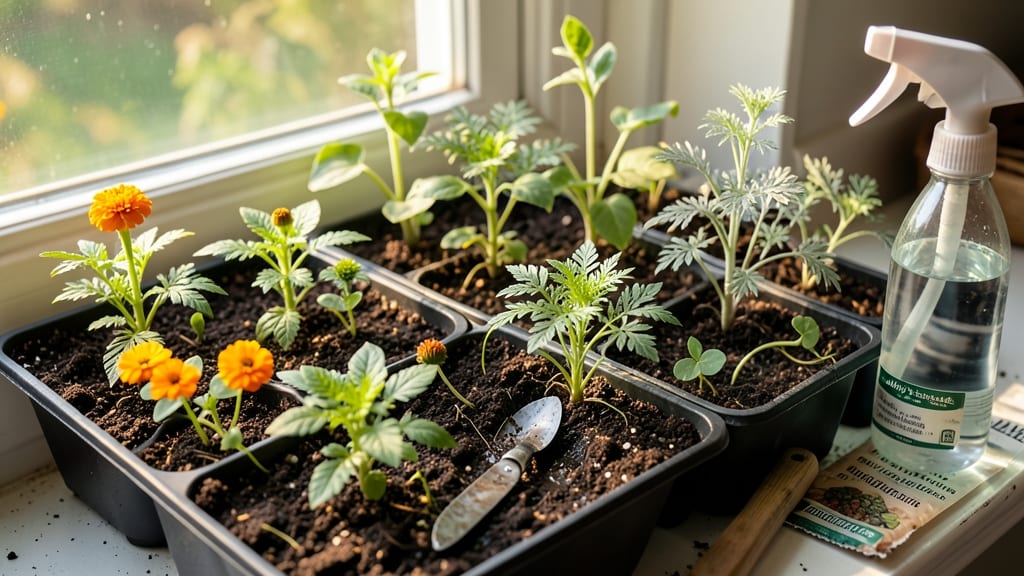
Your frost-date aligned planting timeline starts with just 5 minutes on Johnny’s Selected Seeds calculator—no more guessing when to start seeds indoors. 🌱 Last spring, I wasted weeks starting tomatoes too early, only to have leggy seedlings while my garden still had snow.
This tool fixes that by matching your local frost dates to each plant’s needs, so you never over- or under-plant again.
The calculator asks for your last frost date (find it online for your ZIP code) and your target transplant date, then spits out the perfect indoor starting window for every seed type.
It accounts for seed maturity, seedling growth speed, and even your local climate quirks—like my zone 5’s unpredictable springs. Beginners love how it breaks down the process into clear steps, while pros use it to fine-tune their schedules for specific varieties.
By following the timeline, you’ll avoid the heartbreak of bolting lettuce or stunted peppers. I’ve used it for everything from delicate basil to hardy kale, and my transplant shock rate dropped to zero.
The key is adjusting for your specific growing conditions—like adding extra time if you’re using grow lights instead of natural sunlight.
Whether you’re a first-timer or a seasoned gardener tweaking your rotation, this tool saves time, reduces waste, and helps you plan a garden that actually produces. Let’s dive into how to use it—and what to watch out for along the way.
📚 In This Guide
- What you need
- Instructions
- Tips and common mistakes
- Wrapping up and next steps
What you need
- ● Seeds: Johnny Seeds starter mix (quantity depends on your garden size—check the calculator for recommendations).
- ● Seed trays or pots: Biodegradable or plastic trays (1020-cell trays are ideal for small seeds) or 4-inch pots (for larger plants).
- ● Growing medium: High-quality seed-starting mix (sterile and well-draining). Pro tip: Avoid garden soil—it can compact and harbor diseases! 🌡️
- ● Watering can or spray bottle: With a fine mist nozzle to avoid disturbing seeds.
- ● Grow lights or sunny windowsill: A full-spectrum LED grow light (12-16 hours/day) or a south-facing window with ample sunlight.
- ○ Heat mat (optional but helpful): For seeds needing warmth (e.g., peppers, tomatoes) to germinate faster.
- ● Labels and markers: To track plant varieties and transplant dates.
- ● Humidity dome or plastic wrap: To retain moisture during germination.
- ● Fertilizer: A balanced, water-soluble starter fertilizer (e.g., 5-5-5 NPK ratio).
- ● Seedling heat mat: For consistent warmth in cooler climates.
- ● pH testing kit: To monitor soil acidity (ideal range: 6.0–7.0 for most seeds).
- ● Pruning shears or scissors: For trimming leggy seedlings.
- ● Thermometer/hygrometer: To monitor temperature and humidity levels.
How to use johnny seeds' seed starting calculator for perfect timing
Here's the straightforward method I rely on to avoid rushed seedlings and wasted effort.
📅 Step 1: Input Your Last Frost Date
Find your local last frost date using Johnny Seeds' calculator—this is your starting point. I always double-check with my county extension office's records, since microclimates can shift dates by 1-2 weeks. The calculator uses this to determine how many weeks before planting you should start seeds indoors.
For example, if your last frost is May 15th and you're growing tomatoes (which need 8-10 weeks indoors), the calculator will tell you to start seeds by March 1st. This ensures seedlings mature just as soil warms. I mark this date on my calendar with a bright sticker so I don't accidentally start too early or late.
🌱 Step 2: Select Your Plant Varieties
The calculator lets you choose specific Johnny Seeds varieties, which is key because different plants have wildly different germination times and growth rates. I always select 2-3 varieties per category to compare growth habits—some like basil sprout in 5-7 days, while tomatoes take 7-14 days.
Pay attention to the "Days to Maturity" column for each variety. This tells you how long from seed to harvest you can expect. For instance, a 60-day lettuce needs to start 6 weeks before transplanting, while a 120-day tomato needs 10 weeks indoors. The calculator handles these calculations automatically, but I still review them to catch any outliers.
☀️ Step 3: Adjust for Your Growing Conditions
Tell the calculator about your indoor setup: whether you use grow lights, natural light, or a combination. This adjusts the recommended start dates because seedlings need 14-16 hours of light daily to grow strong. If you're using weak natural light, the calculator will push start dates earlier to compensate for slower growth.
I also input my average indoor temperature range—most seed packets assume 65-75°F, but cooler homes may need adjustments. For example, if my basement stays at 60°F, the calculator will recommend starting heat-loving peppers 2 weeks earlier to ensure proper germination. This prevents the "waiting forever" frustration that kills beginner gardeners.
⏰ Step 4: Generate and Review Your Timeline
The calculator spits out a clear timeline showing when to start seeds, transplant outdoors, and expect harvests. I print this out and tape it to my seed storage bin—it's my roadmap for the season. The timeline includes key milestones like "transplant date" and "harvest window," which helps me plan my garden layout in advance.
Here's the thing—I always check the "Notes" section for each plant. Sometimes Johnny Seeds includes critical details like "needs vernalization" (a cold period) for biennials or "avoid transplant shock" warnings for delicate seedlings. These notes prevent common mistakes that derail even well-planned gardens.
📝 Step 5: Set Reminders and Prepare Supplies
Once you've generated your timeline, set calendar reminders for each key date. I use color-coding: red for start dates, yellow for transplant dates, and green for harvest windows. This visual system helps me spot conflicts—like realizing I can't grow both tomatoes and winter squash in the same season with my space constraints.
While you're waiting for your start date, gather supplies: seed trays, potting mix, and grow lights if needed. I like to pre-mix my seed-starting soil with a bit of worm castings for extra nutrients. The calculator's timeline gives you perfect prep time—no last-minute scrambling for supplies when seedlings are ready to pop!
Tips & tricks for perfect johnny seeds seed starting timing
Avoid the common pitfalls that turn seed starting into a guessing game. These simple strategies will help you nail your planting schedule every time.
Microclimate Matters: The calculator's default frost date might not match your actual last frost—especially if you live in a valley, near water, or on a hill. I always verify with my local extension office or check the USDA Plant Hardiness Zone Map. A 1-2 week shift can mean the difference between healthy seedlings and leggy, weak plants that struggle to survive transplant. Double-checking this step saves me from starting too early and dealing with overgrown seedlings.
Variety-Specific Start Dates: Don't assume all plants follow the same timeline. The calculator automatically adjusts for different varieties, but I still review the "Days to Maturity" column for each plant. For example, fast-growing basil (5-7 days to sprout) needs a completely different start date than slow-germinating peppers (7-14 days). I highlight these differences in my printed timeline so I don't accidentally start everything at once.
Lighting is Non-Negotiable: Seedlings need those 14-16 hours of daily light to grow strong, but most homes don't get enough natural light. If you're using grow lights, position them just 2-4 inches above seedlings and keep them on a timer. I use LED grow lights because they're energy-efficient and don't generate much heat. For weak natural light setups, the calculator will automatically adjust your start dates earlier to compensate for slower growth.
Temperature Troubleshooting: Most seed packets assume your indoor space stays between 65-75°F, but many basements and garages run cooler. If your space stays around 60°F, the calculator will recommend starting heat-loving plants like peppers 2 weeks earlier. I keep a small heat mat under my seed trays during germination to maintain consistent warmth—this prevents the "waiting forever" frustration that kills beginner gardeners.
Pro Tips for Johnny Seeds Seed Starting Calculator
- Avoid the common pitfalls that turn seed starting into a guessing game.
- Microclimate Matters: The calculator's default frost date might not match your actual last frost—especially if you live in a valley, near water, or on a hill.
- Variety-Specific Start Dates: Don't assume all plants follow the same timeline.
Frequently asked questions
Got questions about using the Johnny Seeds Seed Starting Calculator? You’re not alone!
Whether you’re a first-time gardener or a seasoned pro, timing and planning can feel tricky. Below, we tackle the most common queries to help you grow with confidence.
How does the calculator determine frost dates?
The calculator uses USDA Plant Hardiness Zone data combined with your location’s historical frost dates (from the National Oceanic and Atmospheric Administration (NOAA)). It then adjusts seed-starting windows based on Johnny Seeds’ recommended days to maturity for each plant type. For accuracy, always double-check your local frost dates—urban areas can vary!
Can I start seeds too early or too late?
Yes, but timing is key! Starting too early risks leggy, weak seedlings (they’ll outgrow their containers), while too late may leave you scrambling when frost hits. The calculator accounts for this by suggesting indoor start dates and outdoor transplant windows. Pro tip: Use grow lights if your space lacks sunlight to delay early stretching.
What if my seed packets don’t match the calculator’s recommendations?
No worries! The calculator prioritizes Johnny Seeds’ data, but you can override it by manually entering your seed packet’s days to germination and days to transplant. Look for phrases like “Start indoors 6-8 weeks before last frost” on the packet. If unsure, err on the side of starting earlier—you can always move seedlings outside sooner with row covers!
How do I adjust for container gardening vs. in-ground planting?
Container gardens warm up faster than soil, so the calculator automatically shifts transplant dates 1-2 weeks earlier if you select “containers.” For in-ground planting, stick to the default settings. Bonus: Containers also let you start heat-loving crops (like peppers) indoors 4-6 weeks earlier than soil-based timelines.
What if my seedlings look sick or stunted after following the calculator?
Common culprits include overwatering (root rot), underlighting (leggy stems), or temperature swings (below 60°F at night). Troubleshoot with these fixes:
Leggy seedlings? Move them under grow lights (12-16 hours/day).
Yellow leaves? Check for overwatering—let the top inch of soil dry out.
Slow growth? Boost humidity with a clear plastic dome or misting.
If issues persist, the calculator’s “Seedling Care Tips” section (linked in results) has plant-specific advice!Does the calculator work for non-U.S. gardeners?
Currently, it’s optimized for U.S. locations, but you can manually input frost dates for other regions. Use your country’s agricultural extension service (e.g., UK’s DEFRA or Australia’s FarmOnline) to find local frost data. For metric conversions, the calculator supports both imperial and metric units.
Wrapping up and next steps
Mastering your seed-starting timeline with Johnny Seeds’ calculator takes the guesswork out of growing a thriving garden—no more missed deadlines or frost surprises! 🌱 By aligning your plantings with local frost dates, you’ll maximize yields and nurture healthier seedlings with confidence.
Now that you’re armed with the right tools and know-how, it’s time to get your hands dirty—start calculating, grab those seeds, and watch your garden dreams take root!
🚀 Next Steps:
- Download the Johnny Seeds calculator and input your frost dates.
- Gather supplies and follow your personalized planting guide.
- Share your progress with fellow gardeners—we love seeing your green thumbs in action! 🌿