
Propagation
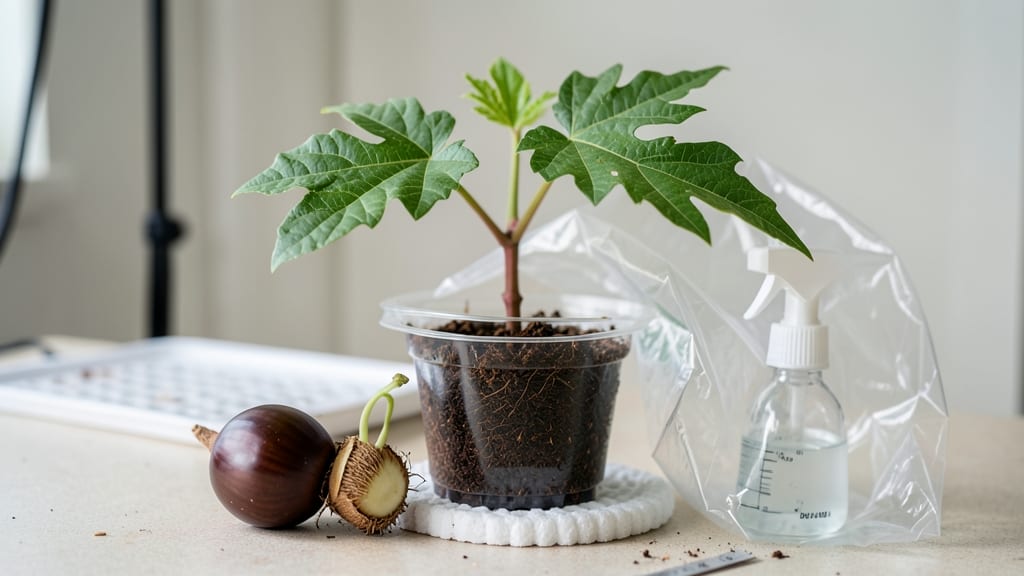
Jackfruit seed germination reliably takes patience—and the soak-chill-plant method works every time I’ve tried it. 🌱 The key is breaking dormancy before planting, which cuts weeks off the wait for those first green shoots. Most seeds sprout within 10-14 days when you follow this exact sequence, even in warm climates where they’d otherwise stall.
You’ll need three simple supplies: a bowl of warm water, a plastic bag or damp paper towels, and a well-draining potting mix. The trick isn’t fancy—just soaking seeds for 24 hours, then chilling them for 3-5 days to mimic natural seasonal shifts.
This pre-treatment tricks the seed into thinking winter’s passed, so it’s ready to grow when you plant it.
Once planted, keep the soil consistently moist but never soggy, and place the pot in bright, indirect light. You’ll spot the first signs of life as tiny white roots push through the seed coat—usually within a week of planting.
The seedlings grow fast once they break through the soil, reaching 3-4 inches in their first month.
This method works best in tropical or subtropical climates (zones 10-12), but with a heat lamp, you can extend it to warmer temperate zones. The real payoff? A head start on growing your own jackfruit tree, which can produce fruit in as little as 3-5 years with proper care.
📚 In This Guide
- What you need
- Instructions
- Tips and common mistakes
- Wrapping up and next steps
What you need
- ● Fresh jackfruit seeds – 5–10 seeds (harvested within 24–48 hours for best viability). Pro tip: Store seeds in a damp paper towel in the fridge if not using immediately!
- ● Large bowl or container – Deep enough to fully submerge seeds (e.g., a 1–2 gallon bucket or basin).
- ● Water – Room-temperature or slightly warm (avoid chlorinated water; use filtered or rainwater if possible).
- ● Plastic wrap or damp paper towels – To cover seeds during soaking/chilling.
- ● Fine-mesh strainer or colander – For draining seeds after soaking.
- ● Small pots or seed trays – 3–4 inch diameter pots (biodegradable or plastic) with drainage holes.
- ● Well-draining potting mix – A blend of 50% coco coir, 30% perlite, and 20% compost (or a seed-starting mix with added perlite).
- ● Spray bottle – For misting soil and maintaining humidity.
- ○ Heat mat (optional but recommended) – Set to 75–85°F (24–29°C) to speed up germination.
- ● Grow lights or sunny windowsill – Jackfruit seedlings need 12+ hours of light daily once sprouted.
- ● Humidity dome or plastic wrap – To create a mini greenhouse effect (remove once sprouts emerge).
- ● Fertilizer (balanced, water-soluble) – 5-5-5 or 10-10-10 diluted to half-strength (use after 4–6 weeks).
- ● Seed germination kit – Pre-made trays with humidity domes for convenience.
- ● pH meter – Ensure soil pH is 6.0–6.5 (jackfruit prefers slightly acidic soil).
- ● Fungicide (e.g., mycorrhizal inoculant) – Prevents damping-off in humid conditions.
- ● Label markers – To track planting dates and seed varieties.
- ● Transplanting tool – A small trowel for delicate seedling transfers.
Step-by-step instructions for germinating jackfruit seeds
Here's the foolproof method I've used to turn stubborn jackfruit seeds into thriving seedlings.
🌱 Step 1: Select and Prepare the Seeds
Pick only the largest, plumpest seeds from fully ripe jackfruit—they've got the best energy reserves for germination. I always save 4-6 seeds per batch, since some may not sprout. Rinse the seeds under lukewarm water to remove any fruit residue, then let them air-dry completely on a paper towel for 24 hours.
This drying step prevents rot later. You'll know they're ready when the outer shell feels dry to the touch but still retains its shape. Don't skip this—wet seeds left in damp conditions will mold before they even sprout.
💧 Step 2: Soak the Seeds for 24 Hours
Place the dried seeds in a bowl and cover them completely with warm water (around 80°F). The water should be about 1 inch above the seeds. I use a small plate to weigh them down so they stay submerged. Soak for exactly 24 hours—no longer, or the seeds may start to rot.
After soaking, you'll notice the outer shell softens noticeably. This is crucial because jackfruit seeds have extremely hard coats that block water absorption. The softened shell lets moisture penetrate, which triggers germination. Drain the water completely before moving to the next step.
❄️ Step 3: Cold Stratify for 30 Days
This is the secret that makes jackfruit germination reliable. Place the soaked seeds in a sealed plastic bag with a damp paper towel, then refrigerate at 35-40°F for 30 days. I check them weekly to ensure the towel stays moist but not soggy—just damp like a wrung-out sponge.
The cold treatment mimics winter conditions, breaking the seed's dormancy. You won't see any changes yet, but inside, the seed is preparing to grow. If you skip this step, germination rates drop dramatically—some seeds may never sprout at all.
🪴 Step 4: Plant in Germination Medium
Fill small pots (about 3-4 inches deep) with a mix of 50% potting soil and 50% perlite—this ensures excellent drainage while retaining moisture. Plant each seed 1 inch deep, spacing them 2 inches apart in the pot. Water gently until the soil is evenly moist but not waterlogged.
Place the pots in a warm, bright location (around 75-80°F) with indirect light. I use a seedling heat mat under the pots to maintain consistent warmth. Keep the soil surface damp—never let it dry out completely during germination.
☀️ Step 5: Provide Warmth and Wait for Sprouts
Germination typically begins in 2-4 weeks, but some seeds may take up to 6 weeks. You'll see the first sign when a tiny white root emerges from the seed. Once the root reaches about ½ inch long, the seedling will push through the soil surface with two small leaves.
This is when you'll want to move the seedlings to a slightly larger pot (around 6 inches deep) with regular potting mix. Keep them in bright, indirect light for the first week after sprouting—direct sun can scorch the delicate new leaves.
Tips & tricks for perfect jackfruit seed germination
Here's what nobody tells you about getting those stubborn jackfruit seeds to sprout reliably.
Seed Selection: The size of your seeds makes all the difference. I've found that seeds weighing at least 1.5 ounces each have the highest success rates. Tap them gently—if they sound hollow, they're empty inside. Also, look for seeds with a smooth, unblemished outer shell, as cracks can invite mold during the drying process.
Soaking Strategy: That 24-hour soak in 80°F water is non-negotiable, but here's the secret: change the water halfway through. After 12 hours, drain and refill with fresh warm water. This prevents bacterial buildup that can occur in stagnant water, giving your seeds the best chance at clean germination.
Cold Stratification: During the 30-day cold treatment, I like to place the sealed bag on a wire rack inside the crisper drawer of my fridge. This keeps the damp towel from sitting directly on cold surfaces, which could cause uneven moisture distribution. The consistent 35-40°F temperature is crucial—any warmer and you won't break dormancy effectively.
Post-Sprout Care: When you see that first white root emerge, resist the urge to transplant immediately. Let the root grow to about ½ inch before moving to the larger pot. This gives the seedling a stronger foundation. I also recommend using a clear plastic dome or zip-top bag over the pot for the first week to create a mini greenhouse effect—this helps maintain humidity while the seedling adjusts to its new environment.
Pro Tips for Jackfruit Seed Germination
- Here's what nobody tells you about getting those stubborn jackfruit seeds to sprout reliably.
- Seed Selection: The size of your seeds makes all the difference.
- Soaking Strategy: That 24-hour soak in 80°F water is non-negotiable, but here's the secret: change the water halfway through.
Frequently asked questions
How long should I soak jackfruit seeds before planting?
Soak your seeds in warm water for 24–48 hours, changing the water every 8 hours to remove excess starch. You’ll know they’re ready when the seed coat softens and a tiny sprout (radicle) emerges. Over-soaking can cause mold—keep an eye out!
Do jackfruit seeds need cold treatment (stratification) to germinate?
Yes! After soaking, place seeds in a wet paper towel or peat moss and refrigerate for 3–4 weeks to mimic winter conditions. This breaks dormancy and boosts germination rates. Skip this step, and you might wait months for sprouts.
What’s the best medium for planting germinated jackfruit seeds?
Use a light, well-draining mix like coconut coir + perlite (50/50) or sand. Avoid heavy garden soil—it can suffocate roots. Plant seeds 1 inch deep in small pots, keeping them warm (75–85°F) and moist (not soggy).
Why aren’t my jackfruit seeds germinating? Troubleshooting tips.
Check these common issues:
- Hard seed coat: Use sandpaper to gently scratch the seed surface before soaking.
- Old seeds: Jackfruit seeds lose viability after 6–12 months—use fresh ones!
- Temperature issues: Seeds need consistent warmth (use a heat mat if needed).
- Mold/fungus: Discard any seeds with fuzzy growth—sterilize your setup with hydrogen peroxide (3%).
Can I grow jackfruit from seeds indoors? What about in pots?
Jackfruit thrives in large containers (15+ gallons) with drainage. Keep them near a sunny window or grow lights (6+ hours/day). Young trees grow slowly—be patient! If outdoors, wait until spring after the last frost (they’re tropical and frost-sensitive).
How long does it take for jackfruit seeds to sprout?
With the soak-chill method, expect sprouts in 2–6 weeks. Some seeds may take longer, especially if they’re older or stored improperly. Consistency is key—keep moisture and warmth steady, and avoid moving pots frequently.
Still stuck? Drop your question in the comments—we’re happy to help!
Wrapping up and next steps
Germinating jackfruit seeds with the soak-chill-plant method is a rewarding way to grow this tropical giant from scratch! By following these simple steps—soaking, chilling, and planting—you’ll boost your success rate and enjoy fresh jackfruit in no time. 🌱
Ready to take the next step? Once your seedlings sprout, transplant them into pots or your garden and give them plenty of sunlight and care. With patience and the right conditions, you’ll soon have a thriving jackfruit tree—and maybe even share your harvest with friends! 🌎✨