
Propagation
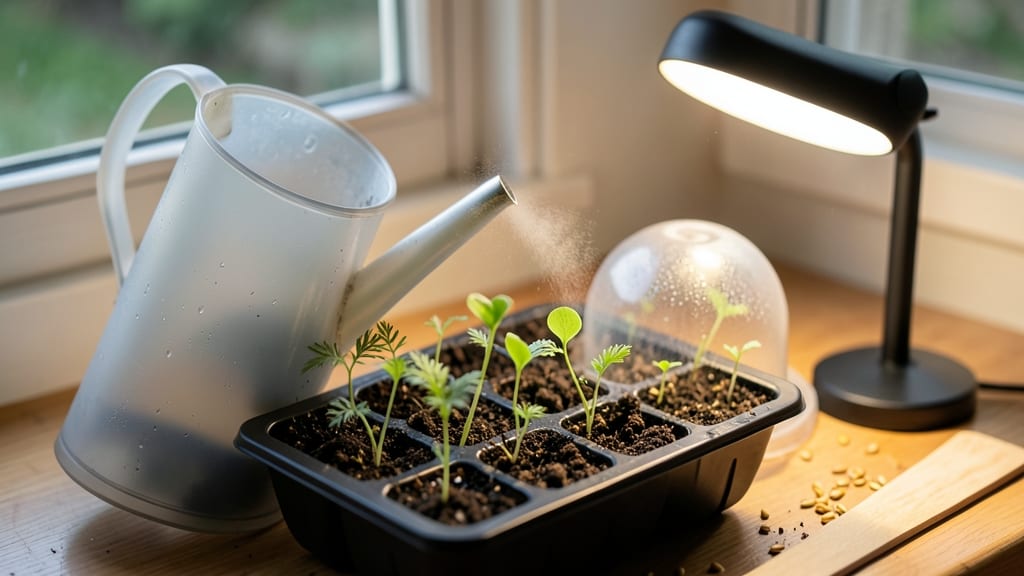
Growing poppies from seed indoors skips the cold stratification struggle—here’s how to get them sprouting in just 7-14 days. 🌱 I’ve battled slow germination with these delicate blooms, and the secret lies in warmth, moisture, and the right soil mix.
Poppies reward patience with their bold, papery blooms, but they won’t tolerate soggy soil or drafts. You’ll need a shallow tray, well-draining potting mix, and a heat mat (or sunny windowsill) to keep temps between 65-75°F.
Plant seeds ¼-inch deep—they need light to germinate, so don’t bury them too far. Keep the soil consistently moist (not wet) and cover the tray with plastic wrap until sprouts appear. Once they germinate, watch for leggy seedlings—this happens when they stretch toward weak light.
Move them to a bright grow light immediately, and thin to 2 inches apart to prevent competition. By late spring, you’ll be transplanting sturdy seedlings outdoors, where they’ll reward you with 3-foot-tall stems by summer. The key to success? Consistency.
Poppies hate disturbances, so avoid moving them once they sprout. If germination stalls after 2 weeks, try a light misting and extra warmth—these seeds need encouragement but deliver stunning results when you get it right.
📚 In This Guide
- What you need
- Instructions
- Tips and common mistakes
- Wrapping up and next steps
What you need
- ● Poppy seeds – Choose Papaver species (e.g., California poppy, opium poppy, or Shirley poppies). Buy from a reputable seed supplier for freshness (avoid seeds older than 1 year).
- ● Seed-starting trays or pots – 4-6" deep containers with drainage holes (or a seed-starting kit with cell packs).
- ● High-quality seed-starting mix – Lightweight, sterile, and well-draining (avoid garden soil).
- ● Grow lights or a sunny windowsill – Poppies need 12-16 hours of light daily. LED grow lights work well if natural light is limited.
- ● Spray bottle with water – For gentle hydration (avoid overwatering!).
- ● Plastic wrap or humidity dome – To retain moisture during germination.
- ● Heating mat – Speeds up germination (70-75°F is ideal).
- ● Fertilizer (low-dose) – A balanced, water-soluble fertilizer (5-5-5 or 10-10-10) for seedlings after sprouting.
- ● Tweezers or toothpick – For careful seed placement.
- ● Transplanting pots – 3-4" pots for seedlings before outdoor transfer.
Step-by-step instructions for growing poppies indoors
Here's how to bypass cold stratification and get those delicate blooms thriving in weeks.
🌱 Step 1: Prepare the Seed Starting Mix and Containers
Poppies need loose, airy soil to germinate quickly. Mix 1 part perlite with 3 parts seed-starting mix to create a fast-draining medium that prevents damping-off. I use small, shallow containers—2-3 inch deep—because poppy seeds germinate best when barely covered. Fill each container to 1 inch below the rim and moisten the mix until it feels like a wrung-out sponge.
Press the soil down lightly with your fingers to remove air pockets, but don't compact it. The goal is a fluffy texture that lets moisture reach the tiny seeds without suffocating them. I like to tap the container gently on the table to settle everything evenly. This ensures consistent contact between seeds and soil, which speeds up germination.
🌱 Step 2: Sow Seeds at the Correct Depth and Spacing
Poppy seeds are tiny and delicate, so I use a toothpick to place them individually. Scatter seeds ¼ inch deep—any deeper and they'll struggle to reach the surface. Space them ½ inch apart in rows 1 inch apart to prevent overcrowding later. You'll see 4 plants per container at this spacing, which matches your serving size.
Cover the seeds lightly with a fine mist from a spray bottle until the soil surface looks uniformly damp. Avoid watering from above after this point—it can wash seeds together or bury them too deep. Once planted, place the containers in a warm spot (70-75°F) where they won't dry out. A seedling heat mat helps maintain consistent warmth, which is critical for fast germination.
💧 Step 3: Maintain Moisture and Light for Germination
The key to fast germination is keeping the soil evenly moist but not soggy. Check daily and water from the bottom by placing containers in ½ inch of water for 10-15 minutes. This prevents disturbing the seeds while ensuring roots stay hydrated. You'll see the first sprouts in 7-14 days—watch for tiny green leaves pushing through the soil.
As soon as germination begins, move the containers to a bright, indirect light source. Poppies need 12-14 hours of light daily to prevent leggy growth. A south-facing window works, but I supplement with a grow light kept 4 inches above the seedlings. Raise it as they grow to maintain that distance. Leggy seedlings (thin, pale stems) mean your light isn't intense enough.
☀️ Step 4: Harden Off and Transplant Seedlings
When seedlings have 2-3 sets of true leaves (about 4-6 weeks after sowing), they're ready for hardening. Start by placing them outside in a shaded, sheltered spot for 1 hour daily. Gradually increase exposure over 7-10 days, ending with full sun for 4-6 hours. This toughens stems and leaves for outdoor conditions.
Transplant outdoors after the last frost when soil temperatures reach 50°F. Poppies hate root disturbance, so I dig a hole twice as wide as the container and gently slide the seedling out, keeping the root ball intact. Space plants 12-18 inches apart in full sun. Water deeply at the base after transplanting to encourage root establishment. You'll see new growth within 7-10 days, signaling successful transition.
✂️ Step 5: Support and Maintain for Blooms
Poppies grow tall and top-heavy, so I install 6-inch tall stakes at planting and tie stems loosely with soft twine as they grow. This prevents flopping, which can snap stems in wind or rain. Deadhead spent blooms by snipping stems ¼ inch above the lowest set of leaves to encourage continuous flowering. Avoid cutting into woody stems—poppies produce new growth from the base.
Water at the base 1-2 times weekly, letting the soil dry slightly between waterings. Overhead watering can cause mildew on leaves, so I use a watering wand to direct streams to the soil. Fertilize lightly with a balanced 10-10-10 formula every 4-6 weeks during the growing season. Poppies are light feeders—too much fertilizer produces lush foliage but fewer blooms.
Tips & tricks for growing poppies indoors
Here's what nobody tells you about speeding up those delicate poppy blooms without the usual cold treatment.
Soil Texture Secret: The 1:3 perlite-to-seed-starting mix ratio is non-negotiable for poppies. I've tried adding vermiculite, but the perlite alone creates that perfect air-to-moisture balance. After mixing, run your finger through the soil—it should feel like damp sand, not mud. If it sticks together, add more perlite. This prevents damping-off disease while keeping roots oxygenated for faster germination. The fluffy texture also lets those tiny seeds stay just barely covered, which they absolutely need.
Temperature Matters: That 70-75°F warm spot isn't just a suggestion—it's the difference between waiting weeks and seeing sprouts in days. I use a seedling heat mat under my containers and place them on top of my fridge (when it's not running) for extra warmth. Poppy seeds are dormant until they sense consistent warmth, so don't skimp here. If your home runs cooler, consider a small greenhouse or clear plastic dome to trap heat. The moment you see those first green leaves, you'll know you've got it right.
Lighting Strategy: For the 12-14 hours of daily light, I've found that a simple LED grow light on a timer works better than natural windows alone. Position it 4 inches above seedlings and adjust as they grow. The key is preventing leggy growth—those pale, stretched stems mean your light isn't intense enough. If you notice seedlings leaning toward the light, rotate containers daily so they grow straight. South-facing windows work, but supplement with artificial light if your natural light is weak, especially in winter months.
Transplanting Wisdom: When moving seedlings outdoors after that 7-10 day hardening process, time it right with soil temperatures at 50°F. I always test with my finger—if the top inch of soil feels cool to me, it's too early. Poppies are finicky about root disturbance, so I dig holes twice as wide as the container and gently tease apart any circling roots before placing. Water deeply right after transplanting to help settle the soil around roots, which encourages faster establishment. You'll see new growth within 7-10 days if done correctly.
Pro Tips for Grow Poppies From Seed Indoors
- Here's what nobody tells you about speeding up those delicate poppy blooms without the usual cold treatment.
- Soil Texture Secret: The 1:3 perlite-to-seed-starting mix ratio is non-negotiable for poppies.
- Temperature Matters: That 70-75°F warm spot isn't just a suggestion—it's the difference between waiting weeks and seeing sprouts in days.
Frequently asked questions
Got questions about growing poppies indoors? Here are some common ones—and their answers—to help you succeed!
Do poppy seeds need cold stratification to germinate?
Not if you’re starting indoors! Many poppy varieties (like Papaver somniferum or Papaver rhoeas) skip stratification when grown in warm, moist conditions. Just plant them shallowly (¼ inch deep) in well-draining soil and keep them warm (70–75°F). For extra speed, use a heat mat!
How long does it take for poppy seeds to germinate indoors?
Poppy seeds are fast germinators! With the right warmth and moisture, you’ll see sprouts in 5–14 days. Some varieties (like California poppies) may appear in as little as 3–5 days. Keep the soil consistently damp but not soggy to avoid mold.
Can I grow poppies indoors without sunlight?
Poppies thrive on bright light, but you can grow them indoors with a grow light (12–16 hours/day). Place seedlings near a south-facing window if natural light is limited. Without enough light, they’ll grow leggy or fail to bloom. A full-spectrum LED bulb works best!
Why aren’t my poppy seeds sprouting?
Try these fixes if germination stalls:
- Check moisture: Poppy seeds need consistent dampness (not waterlogged soil). Mist the soil lightly if it’s dry.
- Test temperature: Too cold (<50°F) slows germination. Use a seedling heat mat if your home runs chilly.
- Verify freshness: Old seeds (over 1 year) may not sprout. Buy new seeds for best results.
- Soil depth: Plant seeds too deep (over ½ inch)? Poppies need light to germinate—try pressing them just below the surface.
Will indoor-grown poppies bloom?
Yes! With proper care, poppies grown indoors can produce flowers, though some varieties (like opium poppies) may need more space. Use a large container (at least 6 inches deep) and provide bright light for 12+ hours daily. Deadhead spent blooms to encourage more flowers!
Wrapping up and next steps
Growing poppies from seed indoors is a rewarding journey—no cold stratification needed! With the right setup, warmth, and patience, you’ll soon watch delicate blooms emerge, adding vibrant color to your garden. Your next step? Once seedlings sprout and grow sturdy, transplant them outdoors (or keep them indoors if space allows) and enjoy the magic of poppies thriving under your care. Happy gardening! 🌸✨