
Planting
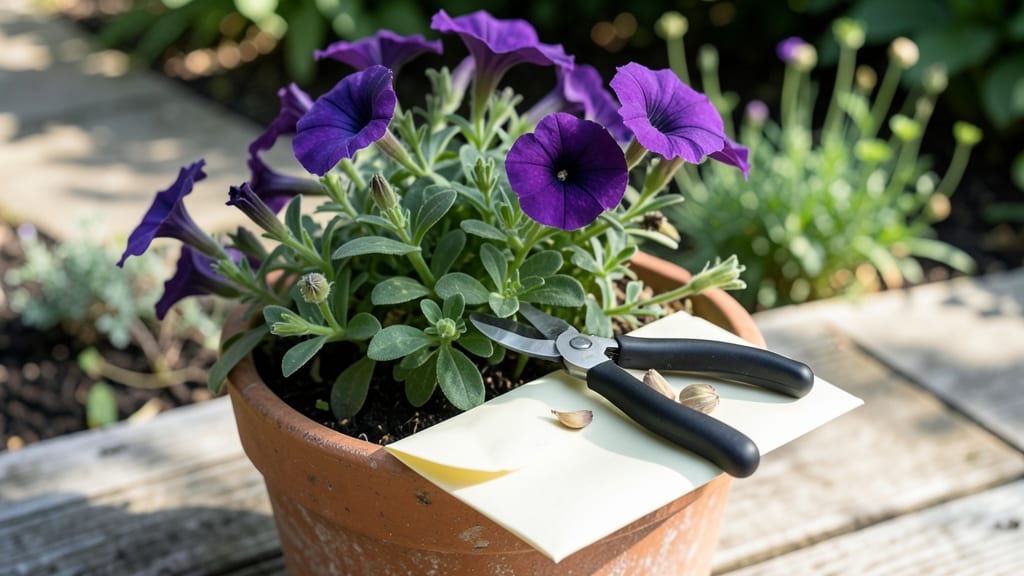
To get petunia seeds from a plant, allow faded flowers to dry on the stem, then collect the seed pods once they turn brown and papery. Gently crush the pods to release seeds, which should be stored in a cool, dry place for future planting.
Petunia flowers follow a natural cycle where the blooms eventually give way to seed pods after fertilization. Once the petals fall, you'll notice small green pods forming—these are your future seeds. 🌱 The key is patience: waiting until the pods turn completely brown and crispy ensures maximum seed viability.
I've found that harvesting too early often results in immature seeds that won't germinate properly, so timing is everything when collecting petunia seeds.
After collecting, the next critical step is proper seed storage. Place the seeds in a sealed container with a silica gel packet or rice to absorb excess moisture, then store them in a cool (35-40°F) place like a refrigerator.
This slows metabolism and preserves germination rates for up to 3 years. I always label my containers with the date to track freshness—old seeds may still sprout but often produce weaker plants.
💡 In This Article
- Identifying Mature Petunia Seed Pods
- Storing Petunia Seeds for Long-Term Viability
Identifying mature petunia seed pods
Petunia flowers undergo a fascinating transformation after pollination. Once the vibrant petals wilt and fall, the ovary at the base begins swelling into a green pod—this is where fertilization occurs.
The pods start small and round, roughly 1/4-inch in diameter, but as they mature, they elongate to about 1-inch long while turning a dull brown color. This color shift signals the seeds inside have fully developed and the pod's protective shell has dried out completely.
The texture of a mature petunia seed pod is the ultimate giveaway.
When fully ripe, it feels dry, papery, and almost brittle—like crumpling a piece of parchment paper. 🌿 If you press gently, you should hear a faint crackling sound as the pod's outer layer separates from the inner seed cavity.
Harvesting too soon (when pods are still green or slightly brown) risks collecting seeds that haven't completed their development, which can result in germination rates as low as 30% compared to the 85% you'd get from properly mature pods.
Timing your harvest is crucial because petunia seed pods don't stay viable on the plant for long. In my experience, they're at their optimal stage for 3-5 days after turning completely brown. After that window, the pods may split open naturally, scattering seeds onto the soil below.
This is nature's way of ensuring new plants grow nearby, but for seed savers, it means you need to act quickly before the pods dehisce (open spontaneously). I've learned to check my plants every 2-3 days during the seed-setting season to catch pods at their peak.
Another key visual clue is the pod's seam. Mature pods develop a noticeable vertical line down the center where the two halves will eventually separate. This seam becomes more pronounced as the pod dries out.
When harvesting, look for pods that are uniformly brown along their entire length—any green patches indicate the seeds inside aren't fully developed yet. The contrast between ripe pods (brown and dry) and unripe ones (green and firm) is striking, making it easy to identify which ones are ready for collection.
Environmental conditions also affect pod maturation. Petunias grown in cooler temperatures (60-70°F) during their seed-setting phase tend to produce pods that take slightly longer to mature compared to those in warmer climates.
In my garden, I've noticed pods mature about 10-14 days faster in summer heat than in spring or fall. This variation means you'll need to adjust your harvesting schedule based on your local climate and growing conditions.