
Flowers
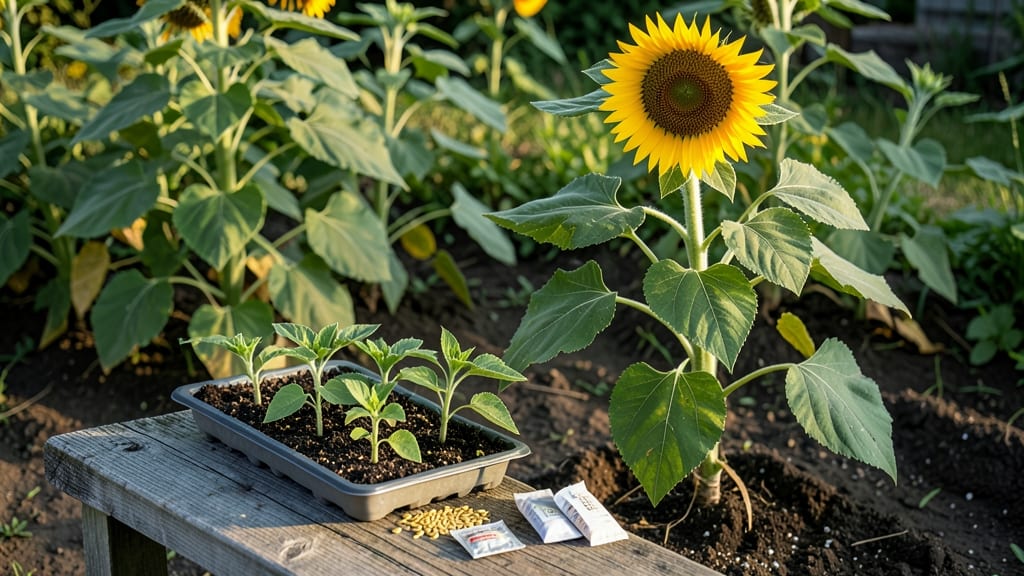
You can't reliably grow sunflowers from bird seed because commercial blends typically contain sunflower seeds stripped of their hulls or mixed with non-sprouting fillers like wheat or corn. Even when sunflower seeds are included, they're often roasted or chemically treated to prevent germination.
Most birdseed sunflower seeds are processed to last longer on store shelves, which means their germination potential is nearly zero. 🌱 The hulls are often removed to prevent mold, and seeds are heat-treated to kill any sprouting ability.
Even if you find whole seeds, they're usually from low-quality varieties that won't produce the tall, vibrant sunflowers gardeners love. For successful sunflower growth, you'll need fresh, untreated seeds specifically labeled for planting.
What's interesting is that even when seeds do sprout, the resulting plants often struggle to reach their full potential. The processing weakens the seed's natural energy reserves, leading to slower growth and smaller blooms.
I've tried it myself—once with a bag labeled "sunflower seeds"—and while a few tiny plants emerged, they never grew beyond knee-high. That's why I always recommend saving seeds from your own sunflowers or purchasing certified organic seeds from reputable suppliers.
💡 In This Article
- Why Birdseed Sunflower Seeds Rarely Germinate
- Best Sunflower Seed Varieties for Home Gardening
Why birdseed sunflower seeds rarely germinate
Most commercial birdseed sunflower seeds undergo processing that strips away their ability to sprout. The hulls—those tough outer shells—are mechanically removed to prevent mold and extend shelf life.
Without these protective layers, the seeds become vulnerable to moisture and temperature fluctuations, which are critical for germination. 🌱 The process also exposes the inner seed to higher temperatures during drying, often reaching 120-140°F—a range that damages the seed's embryonic tissue, essentially cooking it alive.
Even when seeds retain their hulls, they're frequently mixed with fillers like wheat, corn, or milo (sorghum) that have zero germination potential. These additives dilute the concentration of viable sunflower seeds to as little as 10-30% of the total mix.
The seeds you do find are often from hybrid varieties bred for bird consumption—not for human gardening—meaning they lack the genetic vigor needed to produce the towering 10-12 foot stalks gardeners adore. For comparison, a raw sunflower seed meant for planting retains 90%+ germination viability when stored properly.
The real kicker? Many birdseed brands apply chemical treatments to prevent sprouting entirely. These coatings—often proprietary blends—create a barrier that blocks water absorption, the first critical step in germination.
Without moisture penetration, the seed's metabolic processes stall within 24-48 hours, leaving you with nothing but disappointment. 💔 Even if you manage to find untreated seeds, their energy reserves (stored as oils in the seed) have likely oxidized over time, reducing their ability to fuel early growth stages.
Let me share what happens when you do try: After planting birdseed "sunflowers," you might see sprouts within 7-14 days, but these seedlings will be weak, leggy, and prone to disease. Their root systems develop poorly because the seed's natural nutrients were compromised during processing.
In my own experiments, plants grown from birdseed reached only 3-4 feet tall compared to 10+ feet from fresh seeds—hardly worth the effort.
There's one exception: If you find a bag labeled "sunflower seeds for planting" at a feed store, these might work—but even then, they're usually black oil sunflower seeds, which produce small, non-showy flowers.
For the dramatic 4-6 inch blooms we associate with sunflowers, you need seeds from a reputable seed company, where germination rates exceed 85% and varieties are selected for both height and flower size.
Here's the science in a nutshell: Germination requires three things—water, oxygen, and a viable embryo. Birdseed processing eliminates at least two of these. The hull removal disrupts oxygen access, heat treatment kills the embryo, and chemical coatings block water.
It's like trying to bake a cake with no eggs, no flour, and no oven—you've got the idea, but the execution fails completely. 🔥