
Advice
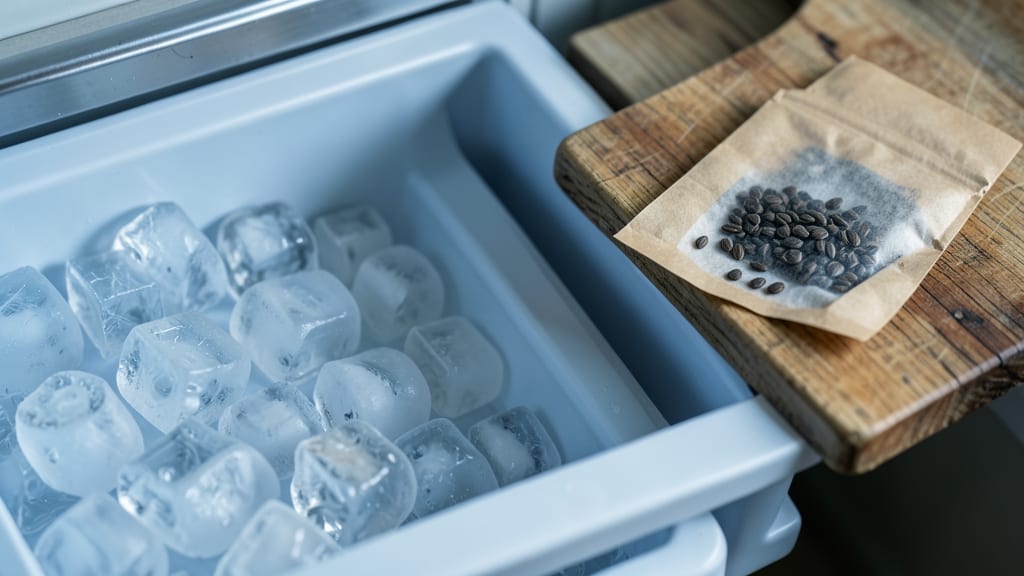
Yes, you can freeze seeds to preserve their viability for years when stored properly in airtight containers with moisture absorbers, though delicate varieties like lettuce or onion degrade faster than hardy types such as beans or tomatoes. Always label and date them for best results.
Freezing seeds is one of the most effective ways to extend their shelf life, especially for gardeners who want to save seeds from one season to the next. 🌱 The key to success lies in controlling moisture and oxygen—both of which can accelerate deterioration.
I always recommend using airtight containers with silica gel packets or uncooked rice to absorb any excess moisture, as even slight humidity can reduce germination rates over time.
For best results, store seeds in a freezer set to 0°F (-18°C) or lower, where they can remain viable for 5 to 10 years or longer, depending on the variety.
Not all seeds respond the same way to freezing, though. While hardy seeds like beans, peas, and tomatoes thrive in cold storage, more delicate seeds—such as those from lettuce, onion, or parsley—often lose viability faster.
This is because their cell structures are more sensitive to temperature fluctuations. That’s why I always test a small batch of seeds before committing to a full freeze, especially for heirloom or rare varieties.
💡 In This Article
- How Freezing Affects Seed Viability and Germination Rates
- Step-by-Step Guide to Freezing Seeds for Long-Term Storage
How freezing affects seed viability and germination rates
Freezing seeds works by suspending biological activity, including respiration and metabolic processes that deplete stored nutrients. At 0°F (-18°C) or colder, enzymatic reactions slow to a near standstill, preserving the seed's internal chemistry.
This is why hardy seeds like beans and tomatoes maintain viability for 5-10 years—their thick seed coats protect delicate internal structures from ice crystal formation, which can rupture cell membranes in more fragile varieties.
The real science lies in moisture control. Seeds contain 5-15% moisture at optimal storage levels, but any excess triggers microbial growth or ice formation that damages tissues. Freezing doesn't eliminate moisture—it just prevents liquid water from forming.
That's why moisture absorbers (like silica gel) are critical: they maintain equilibrium relative humidity (10-15%) inside containers, creating an environment where seeds remain dormant without degradation. 💫
Seed coatings play a surprising role too. Many commercial seeds have protective layers that act as natural barriers against temperature fluctuations. Uncoated seeds, however, rely entirely on proper drying (3-5% moisture content) before freezing.
For example, tomato seeds need 24-48 hours of air-drying at 70-80°F (21-27°C) to harden their outer shells before cold storage—otherwise, they'll develop mold or lose viability within months.
Refrigeration (35-40°F/2-4°C) offers only short-term storage (typically 1-2 years) because warmer temperatures accelerate enzymatic breakdown. Freezing, by contrast, creates a stable environment where even sensitive seeds like peppers or cucumbers retain 80%+ germination rates after a decade.
The trade-off? Some tropical seeds (like basil or cilantro) never fully adapt to freezing—their cells lack the antifreeze proteins found in cold-hardy species.
Dormancy cycles also matter. Many seeds enter natural dormancy when dry, making them ideal candidates for freezing. But freshly harvested seeds (like those from green tomatoes) may need stratification (alternating warm/cold cycles) before cold storage to break dormancy.
This explains why some gardeners report better results freezing seeds after one growing season rather than immediately after harvest.
For the best results, test germination rates annually by planting a small sample. Even properly stored seeds degrade over time—just at a much slower pace. 🌱 The key is consistency: maintain 0°F (-18°C), control moisture, and avoid temperature fluctuations wider than 5°F (3°C) during storage.