
Size
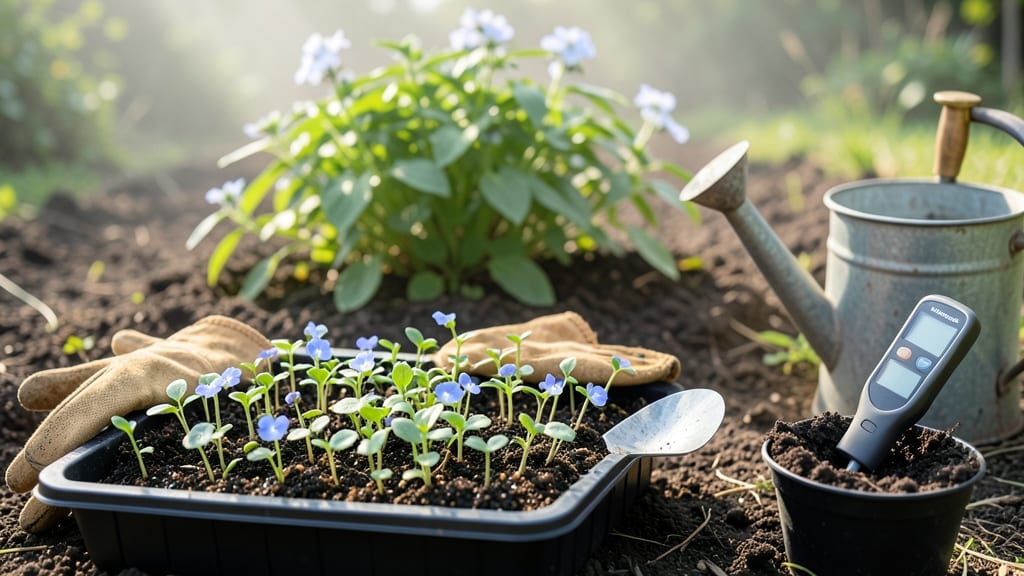
Growing a garden with blue seeds—like lupines or delphiniums—starts with the right timing for your zone, because those tiny seeds need patience and precision to break through the soil. 🌱 I’ve learned the hard way that planting too early in cold zones or too late in warm ones means waiting months for germination, if they even sprout at all.
The key is matching your local frost dates to each variety’s needs, whether you’re growing annuals like bachelor’s buttons or perennials like Russian sage.
Your first step is soil prep: loose, well-draining mix with a touch of compost works best. Blue-flowering seeds often struggle in heavy clay, so amending with sand or perlite can make all the difference.
Plant them shallow—just ¼ inch deep—and keep the soil consistently moist (not soggy) until you see those first pale green shoots. Most blue seeds take 10-30 days to germinate, depending on temperature and moisture.
Once they’re up, thin seedlings to 6-12 inches apart for strong stems and vibrant blooms. These plants love full sun (6+ hours daily) and tolerate drought once established, but regular watering in their first season keeps them from bolting too early.
With the right care, you’ll see sky-blue spikes by midsummer—perfect for cutting gardens or pollinator-friendly borders.
Pro tip: If you’re growing edible blue corn, treat it like a grain crop with deeper planting (1 inch) and richer soil. For ornamentals, deadhead spent blooms to encourage more flowers.
Whether you’re planting in spring or fall, timing is everything—so check your zone and get those seeds in the ground before the window closes.
📚 In This Guide
- What you need
- Instructions
- Tips and common mistakes
- Wrapping up and next steps
What you need
- ● Blue seed packets – Choose varieties suited to your USDA hardiness zone (e.g., Centaurea cyanus for cool climates, Borage for warm zones). Start with 1–2 packets (50–100 seeds) for small gardens or 5+ packets for larger plots.
- ● Seed-starting soil mix – 1–2 bags (1–2 cubic feet) of high-quality, sterile potting soil (e.g., Miracle-Gro Seed Starting Potting Mix). Avoid garden soil—it’s too dense for germination!
- ● Containers or seed trays – Cell packs or peat pots (72–200 cells) for indoor starts, or
- ● Biodegradable pots (2–3 inches deep) if transplanting later.
- ● Grow lights or sunny windowsill – A full-spectrum LED grow light (12–18 inches above seedlings) or a south-facing window with 6+ hours of sunlight daily.
- ● Misting bottle or spray nozzle – For gentle watering (1–2 sprays per day until soil is moist but not soggy).
- ○ Plastic wrap or humidity dome – Optional but helpful for retaining moisture during germination (1 sheet or dome per tray).
- ● Hand trowel – For transplanting seedlings (small, 4–6 inch blade).
- ● Garden gloves – Protects hands from soil and prickly seedling stems.
- ● pH testing kit – Ensures soil pH is 6.0–7.0 (ideal for most blue seeds).
- ● Fertilizer (balanced 10-10-10 or fish emulsion) – Diluted to half-strength for seedlings (apply after 2–3 true leaves emerge).
- ● Row covers or shade cloth – For outdoor plants in zones 3–7 (30–50% shade to prevent bolting).
- ● Stakes or trellis – Tall varieties like Borage may need support (3–4 foot stakes).
- ● Zone-specific timing – Check your USDA zone and last frost date (e.g., Zone 5: Start indoors 8–10 weeks before last frost; Zone 9: Direct-sow 2–3 weeks after last frost).
- ● Sunlight assessment – Ensure your garden spot gets 4–6+ hours of sunlight daily (blue seeds like Centaurea thrive in full sun).
- ● Well-draining soil – Amend heavy clay with compost or perlite (1 part per 3 parts soil) to prevent rot.
Zone-tailored timelines for reliable blue seed germination
Here's how to time your blue seed planting for success across different climates.
🌱 Step 1: Determine Your Planting Zone and Last Frost Date
First, find your USDA hardiness zone—this tells you when to start seeds indoors or plant directly outside. I check the USDA zone map online and note my zone number (for example, I'm in zone 7b). Then I look up my average last frost date for the spring and first frost date for fall.
Write these dates down—they're your planting anchors. For example, if your last frost is April 15, you'll want to start cool-season seeds indoors 6-8 weeks before that date. This ensures seedlings are ready when the ground warms up. Don't guess—check local weather records or ask your county extension office for precise dates.
⏰ Step 2: Calculate Your Indoor Seed Starting Timeline
Most blue seeds (like cornflower, bachelor's button, or morning glories) need 4-6 weeks indoors before transplanting. Start by counting backward from your last frost date. For example, if frost is April 15, I'd begin seeds around March 1-15. Write this date on your seed packet or calendar.
Here's the thing—some blue seeds germinate faster than others. Fast germinators (like sweet alyssum) can go in 3-4 weeks, while slower ones (like delphinium) need 6-8 weeks. Check each seed packet for days-to-germination info. This ensures you won't have leggy, overgrown seedlings when it's time to plant.
☀️ Step 3: Prepare for Direct Sowing in Warmer Zones
In zones 8-10, you can often sow blue seeds directly outdoors 2-4 weeks before your last frost. The soil needs to be at least 50°F—stick your finger in; if it's too cold to hold for 5 seconds, wait. I use a soil thermometer to confirm, especially for heat-loving seeds like cleome or cosmos.
For cooler zones (3-6), wait until the soil reaches 55-60°F for most blue flowers. Plant after this temperature for reliable germination. If you're unsure, cover the area with black plastic for a week to warm the soil faster—it's a gardener's secret for pushing back the season.
💧 Step 4: Time Your Transplanting Window
Seedlings need to be hardened off (acclimated to outdoor conditions) for 7-10 days before transplanting. I start this process 2 weeks before my last frost date. Move pots outside gradually—begin with 1 hour in shade, then increase daily. Watch for wilting; if leaves droop, they're not ready yet.
Transplant on a cloudy day or in late afternoon to reduce stress. Space plants according to their mature size—crowded blue flowers compete for light and nutrients. For example, delphiniums need 2 feet apart, while sweet alyssum can be planted 6 inches apart. Check seed packet spacing guidelines for exact measurements.
🌿 Step 5: Plan for Fall Planting in Mild Climates
In zones 7-10, you can often plant cool-season blue flowers in late summer for fall blooms. Start seeds indoors 8-10 weeks before your first frost date. For example, if frost hits November 15, begin seeds around September 1. This gives flowers time to establish roots before winter.
Direct sowing in fall works too—just plant 6-8 weeks before frost. Choose varieties like statice or cornflower that tolerate cooler temperatures. Mulch lightly after planting to protect young seedlings from temperature swings. Watch for slugs; they love tender new growth and will munch seedlings overnight.
Tips & tricks for perfect blue seed germination timing
Mastering these planting windows transforms guesswork into garden success—here's what I've learned after years of trial and error.
Zone-Specific Soil Prep: For zones 3-6, your soil temperature matters more than the calendar. Use a soil thermometer to confirm 55-60°F before planting—cold soil slows germination and can prevent seeds from sprouting at all. I've seen seeds take twice as long to germinate when planted in 50°F soil versus 60°F soil. For faster warming, lay black plastic over the planting area a week before your target date.
Germination Variability: The 4-6 week indoor starting window is your baseline, but don't treat all blue seeds equally. Delphinium seeds need that full 6-8 weeks—they're slow starters that reward patience with towering blue spikes. Meanwhile, sweet alyssum will germinate in just 3-4 weeks. Always check your seed packet for specific germination times, as these can vary by variety even within the same flower family.
Hardening Off Strategy: That 7-10 day hardening off period is your secret weapon against transplant shock. I start with just 1 hour in morning shade, then gradually increase exposure. Look for leaves that stay firm—not wilted—when you touch them. A pro trick: mist seedlings lightly before moving them outside to boost their moisture reserves for the transition.
Fall Planting Hack: When planning for fall blooms in zones 7-10, remember that 8-10 weeks before frost is your magic number—but don't rush! Plant 6-8 weeks before frost for direct sowing, but choose cold-hardy varieties like statice or cornflower. These tough little seeds will germinate even when nighttime temperatures dip into the 40s°F, while more tender varieties might fail.
Pro Tips for Blue Seed Grow A Garden
- Mastering these planting windows transforms guesswork into garden success—here's what I've learned after years of trial and error.
- Zone-Specific Soil Prep: For zones 3-6, your soil temperature matters more than the calendar.
- Germination Variability: The 4-6 week indoor starting window is your baseline, but don't treat all blue seeds equally.
Frequently asked questions
Got questions about growing blue seeds? You’re not alone!
Here are some of the most common queries—plus quick, actionable answers to help you cultivate a thriving garden with confidence.
What’s the best time to plant blue seeds in my hardiness zone?
Timing depends on your zone! For cool-season varieties (like blue corn or certain herbs), sow seeds 4–6 weeks before your last frost date. Warm-season seeds (e.g., blue potatoes or certain flowers) thrive when soil temps hit 60°F+—wait until after the last frost. Check your zone’s USDA Plant Hardiness Map for precision.
How deep should I plant blue seeds, and what’s the ideal spacing?
Depth and spacing vary by seed type:
- Small seeds (e.g., blue poppy or herbs): Plant ¼ inch deep, spacing 6–12 inches apart.
- Medium seeds (e.g., blue corn): Sow 1 inch deep, spacing 12–18 inches apart.
- Large seeds (e.g., blue potatoes): Bury 2–3 inches deep, spacing 18–24 inches apart.
Can I grow blue seeds indoors first, or should I direct-sow?
It depends! Delicate or slow-germinating seeds (like blue basil or some flowers) benefit from indoor starts 6–8 weeks before transplanting. Hardy varieties (e.g., blue corn or certain vegetables) can be direct-sown outdoors once soil warms up. Use grow lights if starting indoors to prevent leggy seedlings.
Why aren’t my blue seeds germinating? Troubleshooting tips!
If your seeds aren’t sprouting, check these common issues:
- Too cold/wet: Ensure soil temps meet germination requirements (e.g., 70–80°F for many warm-season seeds).
- Too dry: Keep soil consistently moist (not soggy!) with a spray bottle or gentle watering.
- Old seeds: Blue seeds lose viability over time—test with a germination test if unsure.
- Poor soil: Amend with compost or a seed-starting mix for better drainage and nutrients.
What are some easy-to-grow blue-hued plants for beginners?
Start with these beginner-friendly, blue-tinted plants:
Plant
Why It’s Great
Blue corn (maize)
Drought-tolerant, stunning purple-blue kernels, and great for cooking!
Blue potato (e.g., 'Blue Congo')
Hardy, disease-resistant, and yields vibrant purple flesh.
Blue salvia or lobelia
Low-maintenance annuals with striking blue flowers—perfect for borders.
Blue basil ('Blue Spice')
Fragrant, pest-repelling, and adds a pop of color to containers.
Wrapping up and next steps
Growing a thriving garden with blue seed varieties is all about matching your planting timeline to your USDA hardiness zone and giving those tiny seeds the right conditions to sprout.
Whether you're a first-time gardener or a seasoned green thumb, patience and preparation are your best tools—just like knowing when to start seeds indoors or when to brave the great outdoors for direct sowing. 🌱
Now that you’ve got your zone-specific roadmap, it’s time to roll up your sleeves! Start small with a few blue seed favorites, track your progress, and soon you’ll be reaping the rewards of your hard work. Happy planting—your future harvest is waiting!
- Next step: Pick your first seeds and mark your calendar with your zone’s ideal start dates!