
Container Gardens
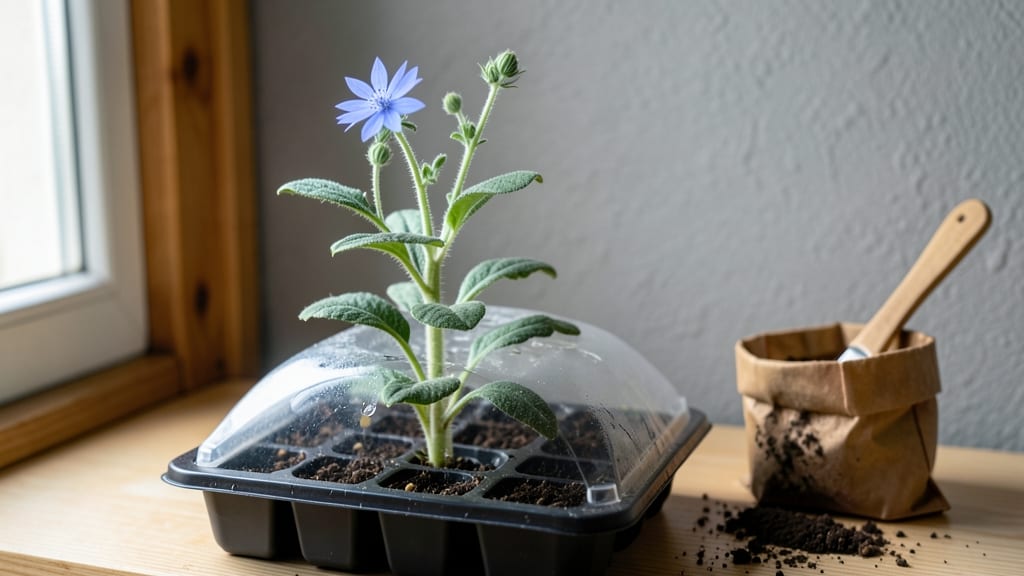
Starting borage seeds indoors 6–8 weeks before your last frost date is the secret to lush, healthy plants that thrive in your garden.
Picture this: you’ve waited all winter for those bright blue flowers to appear, only to watch your seedlings bolt before they even hit the soil. Or worse, you transplant too late, and the heat arrives before they’re ready. That’s why timing matters more than you think.
In Zone 6a, where many gardeners live, that means sowing seeds in early February for a mid-April transplant—just as the soil warms. But if you’re in a warmer zone, like 9 or 10, you’ve got a narrower window to work with.
The key? Adjusting for your local frost dates and indoor growing conditions.
Below, I’ll break down the exact timing for your zone, plus pro tips for germination and transplanting so your borage grows strong and ready to bloom by summer.
Zone-specific indoor start dates for borage seeds
Timing your borage seeds indoors is crucial for avoiding premature bolting or stunted growth. Since borage thrives in cool weather but bolts under heat stress, starting too early in warm zones can backfire.
The key is to calculate 10-12 weeks before your last frost date, adjusting for your USDA zone and local microclimate.
Coastal regions often have later frost dates than inland areas just a few miles away.
For example, Zone 7 inland might have its last frost in mid-April, while Zone 7 coastal could see frost as late as May 1st. Always check your local agricultural extension service for precise data—this makes a 3-4 week difference in your start window.
In heat-tolerant zones (9+), borage can handle warmer temperatures but still prefers cooler spring conditions. Start seeds indoors 8-10 weeks before transplanting to avoid bolting before outdoor temps drop. For Zone 10+, consider fall sowing for winter harvests when daytime temps dip below 85°F.
For Zone 3-4 gardeners, your short growing season demands early starts. Begin borage seeds indoors by March 1 to ensure transplants are ready by May 1, just as soil warms. Use grow lights to extend daylight to 14-16 hours and prevent leggy seedlings.
In Zone 5-6, you have more flexibility—start seeds between February 15 and March 1 for a late April transplant.
In Zone 7-8, where last frosts range from March 15 to April 1, aim for indoor starts between January 15 and February 15. This gives seedlings enough time to develop 4-6 true leaves before hardening off.
Coastal gardeners in these zones should push starts 2 weeks later due to delayed frost dates. For example, San Francisco (Zone 9 coastal) can start seeds as late as February 15 for a March 30 transplant.
Heat-tolerant zones like Zone 9+ require special attention. Borage bolts when daytime temps exceed 85°F, so time starts for fall transplanting when temps drop. In Zone 10+, direct sow seeds in August-September for winter harvests, or start indoors in December for early spring blooms.
Always use shade cloth during peak summer heat to protect seedlings.
Pro tip: Use a seedling heat mat to maintain 65-75°F soil temps for consistent germination. Borage seeds germinate in 7-
How to time borage seed starting for maximum yield
Timing your borage seed starting indoors is the secret to a continuous bloom season. This self-seeding annual thrives when transplanted at the right seedling age, typically between 4-6 weeks old.
If you wait too long, your plants may bolt before they establish, while starting too early risks leggy, weak seedlings that struggle to adapt outdoors.
For maximum yield, align your indoor start with your last frost date and growing season length. In short-season zones (like USDA Zone 4), aim for an early start—8-10 weeks before transplanting—to ensure a full harvest before frost.
In longer seasons (Zone 8+), you can stretch starts from late winter to early spring for staggered blooms.
- 1 Calculate your transplant date: Use your last frost date (e.g., May 1 in Zone 5) as your target.
- 2 Count backward 6-8 weeks: For Zone 5, start seeds indoors by March 15 (6 weeks before transplant).
- 3 Adjust for short seasons: In Zone 4, start 8 weeks early (by February 20) to account for cooler soils.
- 4 Hardening off at 3-4 weeks: Begin acclimating seedlings 2 weeks before transplanting to prevent shock.
- 5 Succession plant for blooms: Sow new batches every 3 weeks in spring for continuous harvests.
For succession planting, stagger your starts every 3-4 weeks from early spring until mid-summer. This ensures a steady supply of edible flowers and herb leaves without overwhelming your garden at once.
In my Zone 6 garden, I start the first batch in late February and follow with two more in March and April.
Watch for seedling maturity signs like 2-3 sets of true leaves and sturdy stems before transplanting. Overly tall or leggy seedlings may struggle outdoors, so provide 12-14 hours of light daily with grow lights if natural light is limited.
If your seedlings bolt (send up flower stalks) too early, blame inconsistent temperature control—keep them at 60-65°F for optimal growth.
In longer growing seasons (Zones 8-10), you can even try a fall start for winter harvests. Begin seeds indoors in late summer (August-September) and transplant after your first frost. Borage’s cold tolerance makes it a great winter interest plant, though blooms may slow in freezing temps.
Pro tip: Mark your calendar with transplant dates and set reminders to start new batches. With this timing strategy, you’ll enjoy vibrant blue flowers and cucumber-flavored leaves from early summer through fall—all while avoiding the common pitfalls of misjudged seedling age. 🌼