
Lawn
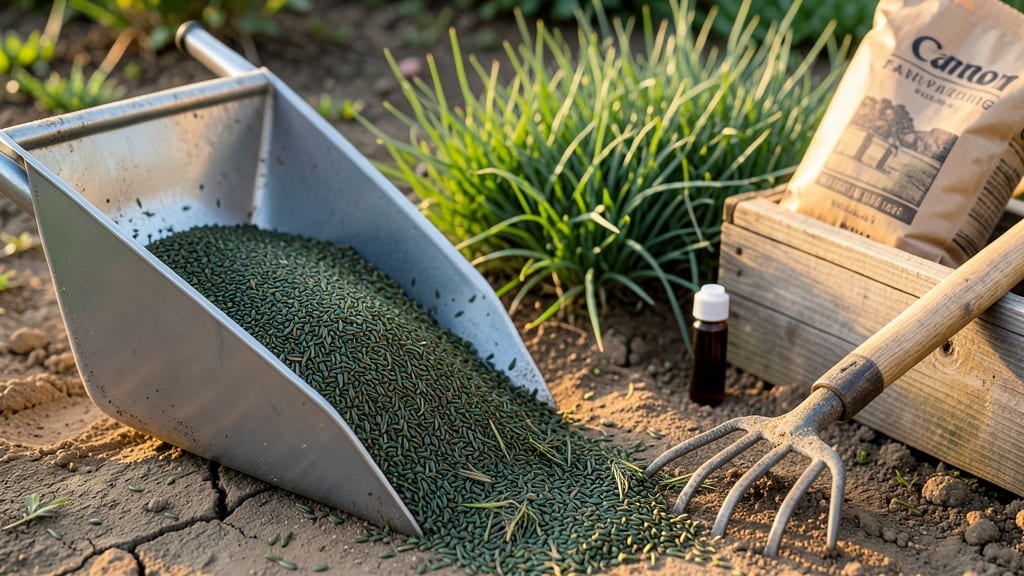
Reseeding your lawn in the fall is the best way to get thick, vibrant grass—if you catch the 4-week window when cool-season grasses thrive.
A thin, patchy lawn in fall can be transformed into lush green grass—but timing your reseed is everything. Miss the 4-week window for cool-season grasses, and you’ll waste seeds, money, and months of effort.
In USDA Zone 6, that window typically opens in late September and closes by mid-October, when soil temperatures drop into the 50–65°F range. This is when weeds slow down, moisture stays consistent, and young roots establish before winter.
Below, I’ll break down the exact timing for your region, step-by-step prep to avoid common mistakes, and how to keep your new grass thriving through the first frost.
The exact 4-Week fall reseeding window for cool-season grasses
Timing your fall lawn reseed correctly means the difference between a lush, thick lawn by spring and wasted seeds. Cool-season grasses like tall fescue and Kentucky bluegrass thrive when soil temperatures drop to their ideal range of 50-65°F.
This narrow 4-week window ensures seeds germinate before winter dormancy sets in.
Your local climate dictates the perfect timing. In northern regions (USDA zones 4-6), aim for mid-September to early October. Meanwhile, southern zones (7-9) can extend reseeding until late October or even November, thanks to milder winters. The key is planting 4-6 weeks before your first expected frost date.
To find your exact window, check your USDA hardiness zone and your area’s average first frost date. For example, in Zone 5, this typically means seeding between September 15-October 15.
In Zone 8, you might push it to October 15-November 15. Use the USDA Plant Hardiness Zone Map to pinpoint your zone and calculate your window.
Here’s the golden rule: seeds need 6-8 weeks to establish roots before winter. If you plant too early, summer heat will stress seedlings.
Too late, and cold soil slows germination. Soil temperature, not air temperature, determines success—use a soil thermometer to confirm it’s in the 50-65°F range before seeding.
Regional examples show how timing varies:
- New England (Zone 4-5): Seed from mid-September to late September
- Midwest (Zone 5-6): Target late September to mid-October
- Southeast (Zone 7-8): Extend to October 15-November 15
Why does this window matter? Cool-season grasses need consistent moisture and warm soil to germinate, but they also benefit from cooler air to reduce stress. Planting too early exposes seedlings to summer heat, while planting too late risks slow germination before winter.
Pro tip: If your area has unpredictable weather, err on the earlier side of the window. A light frost won’t kill established seedlings, but frozen soil will prevent germination. Use a seed starter fertilizer to give seeds a boost in cooler conditions.
Once you’ve nailed the timing, focus on soil prep. Loosen compacted soil, remove weeds, and add compost or starter fertilizer to give seeds the nutrients they need. Water lightly after planting to keep soil consistently moist—not soggy—for the first 2-3 weeks.
Remember, the 4-week window isn’t just about dates—it’s about soil conditions. Check your local agricultural extension office for frost date averages, and use a soil thermometer to confirm you’re in the 50-65°F range before seeding.
With the right timing, your lawn will reward you with vibrant green growth by spring.
🌱
Step-by-step fall reseeding process for maximum success
Fall is the perfect time to reseed your lawn, but success starts long before you scatter seeds. The 4-week window for cool-season grasses like tall fescue and Kentucky bluegrass demands careful prep to ensure germination and root growth. Skipping these steps means wasted seeds and a weaker lawn by spring.
Your first move? Test soil pH (aim for 6.0-7.0) and amend with compost or lime if needed. Weeds are your biggest enemy—apply a pre-emergent herbicide 2 weeks before seeding to stop crabgrass and clover from stealing nutrients.
Aerate compacted soil with a core aerator to let seeds make contact with moist, fertile soil.
🌱 Step-by-Step Fall Reseeding Guide
-
Step 1: Prep Soil
Aerate compacted areas, test pH, and add 1-2 inches of compost. Rake to create a fine, level seedbed. -
Step 2: Choose Seeds
Tall fescue (shade-tolerant), Kentucky bluegrass (spreads fast), or ryegrass (quick germination). Mix types for disease resistance. -
Step 3: Plant Depth & Spacing
Scatter seeds ¼ inch deep. For overseeding, use ½ the recommended rate to avoid competition. -
Step 4: Water Immediately
Lightly water to settle seeds, then apply ¼ inch daily until sprouts appear (7-21 days). Keep soil moist but not soggy. -
Step 5: Fertilize After Germination
Apply a low-nitrogen starter fertilizer (5-10-10) once sprouts are 2-3 inches tall. Avoid high nitrogen—it burns tender seedlings. -
Step 6: Mow High & Lightly
Wait until grass reaches 3-4 inches, then mow at 3 inches to encourage deep roots. Never remove more than ⅓ of blade height.
After sowing, consistent watering is critical. Use a sprinkler with gentle mist to avoid displacing seeds. Aim for ½ inch of water 2x daily (morning and evening) until germination. Once seedlings emerge, taper to 1 inch weekly—deep watering encourages roots to grow downward.
Four to six weeks post-seeding, apply a slow-release fertilizer to strengthen roots before winter. Choose a high-phosphorus blend (e.g., 10-20-10) to promote root development. Avoid fertilizing in late fall—it can stimulate late-season growth vulnerable to frost damage.
By following these steps, your lawn will establish a dense, weed-resistant turf before winter dormancy. The key? Patience and precision—fall’s cooler temps and frequent rains give seeds the perfect environment to thrive. Start early, and you’ll enjoy a greener lawn next spring without the summer stress. 🌿