
Plants
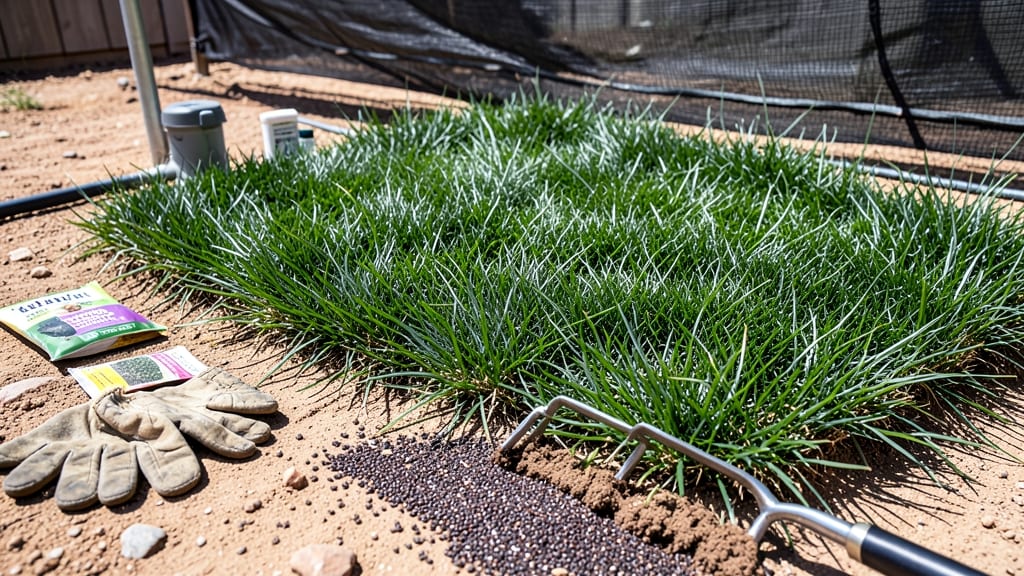
Planting grass seed in Arizona requires timing it just right—between September and November for cool-season varieties or late winter for warm-season types—to beat the scorching heat.
Picture this: you’ve spent hours prepping the soil, choosing the perfect seed blend, and even laying down that expensive starter fertilizer—only to watch it bake under 110°F sun within days. That’s the nightmare I’ve seen too many Arizona homeowners face when they plant at the wrong time.
The key isn’t just avoiding summer’s fury; it’s about leveraging the monsoon’s tail end or the milder winter months when moisture sticks around longer.
Cool-season grasses like tall fescue thrive when soil temps drop below 85°F, while warm-season types like Bermuda need that late-winter window to establish roots before the heat ramps up.
In this guide, I’ll break down the exact months to plant by grass type, how to prep your soil for Arizona’s dry climate, and the watering hacks that keep your new lawn from turning into a crispy memory. Let’s get that green started the right way.
Best months to plant grass seed in Arizona: cool-season vs. warm-season breakdown
Arizona’s climate is a double-edged sword for grass seed—too early, and you’ll battle summer’s 110°F+ heat; too late, and winter’s freezing nights (in higher elevations) can stunt growth.
The key lies in understanding your grass type: cool-season grasses like tall fescue or ryegrass thrive in milder temps, while warm-season varieties like Bermuda or Buffalo grass need heat to activate. Let’s break down the perfect planting windows for each, plus how Arizona’s microclimates (Phoenix vs. Flagstaff) shift the rules.
For cool-season grasses, aim for September through November when daytime temps hover between 60°F–80°F. This window gives seeds time to germinate before winter slows growth. Meanwhile, warm-season grasses demand late spring (April–May) when soil temps hit 65°F+.
But here’s the catch: Arizona’s low humidity and intense sun mean even the right month can fail without proper soil prep and watering discipline. Skip the guesswork—use this month-by-month guide to match your grass type to Arizona’s unpredictable seasons.
🌱 Pro Tip: Test your soil temperature with a soil thermometer (ideal range: 60°F–75°F for cool-season, 70°F+ for warm-season). If it’s outside these zones, wait—even by a week.
| Month | Cool-Season Grasses (e.g., Tall Fescue, Ryegrass) | Warm-Season Grasses (e.g., Bermuda, Buffalo) | Soil Temp Threshold | Arizona Microclimate Notes |
|---|---|---|---|---|
| August | ❌ Risky (heat stress) | ✅ Early warm-season start (low desert only) | 70°F+ | Phoenix: Possible; Flagstaff: Too hot |
| September | ✅ Ideal (60°F–80°F) | ⚠️ Borderline (wait for 70°F+ soil) | 60°F–75°F | Best for all elevations |
| October | ✅ Peak window | ❌ Too cool for germination | 55°F–70°F | Flagstaff: Perfect; Phoenix: Still good |
| November | ✅ Last chance (before frost risk) | ❌ Dormant until spring | 50°F–65°F | High elevations only |
| February–March | ⚠️ Late winter (soil must warm) | ✅ Ideal (soil 65°F+) | 65°F+ | Low desert: Best; High desert: Wait until April |
| April–May | ❌ Too hot for cool-season | ✅ Prime time |
Critical pre-planting checks to avoid failure: soil, moisture, and heat toleranceArizona’s grass seed survival hinges on three critical factors: soil temperature, moisture levels, and heat tolerance. Skipping these checks means risking seed dormancy, fungal growth, or outright failure. I’ve planted lawns in Phoenix and Flagstaff—trust me, preparation makes all the difference. First, check your soil temperature with a soil thermometer. Ideal planting temps for most Arizona grasses hover between 60°F and 75°F. Warm-season grasses like Bermuda tolerate slightly higher temps, but cool-season grasses (like ryegrass) struggle above 80°F. Test in the morning when temps are coolest. Next, assess moisture retention by digging a small hole (4-6 inches deep) and filling it with water. If it drains within 10 minutes, your soil is too sandy. Amend with organic matter like compost or peat moss to improve water retention. Clay-heavy soils? Add perlite or coarse sand to prevent compaction. Now, analyze your shade patterns. Use a sun/shade map to track sunlight exposure over a week. Most Arizona grasses need 6+ hours of sun, but partial shade (3-6 hours) works for tall fescue. Avoid planting in deep shade—your seed will struggle to germinate. ⚠️ RED FLAG WARNING: High-Risk Planting ConditionsStop planting if:
🌱 Pro Tip: If temps spike unexpectedly, cover seed with straw mulch to retain moisture and cool the soil. For Arizona’s unpredictable monsoons, prep by installing a drip irrigation system before planting. This gives you precise control over watering, avoiding the 1-inch-per-week rule during dry spells. Test your system a week before seeding to ensure even coverage. Finally, perform a quick germination test on your seed. Place a damp paper towel with seed in a sealed bag for 3-5 days. If 70%+ sprouts, your seed is viable. Low germination? Replace it—don’t waste money on poor-quality seed in Arizona’s harsh climate. By tackling these checks, you’ll dramatically improve your grass seed’s chances of thriving. Skip them, and you’re gambling with your lawn’s future. Your soil, moisture, and heat prep are the foundation—get them right, and your grass will thank you for years to come. 🌱☀️ |