
Companion Plants
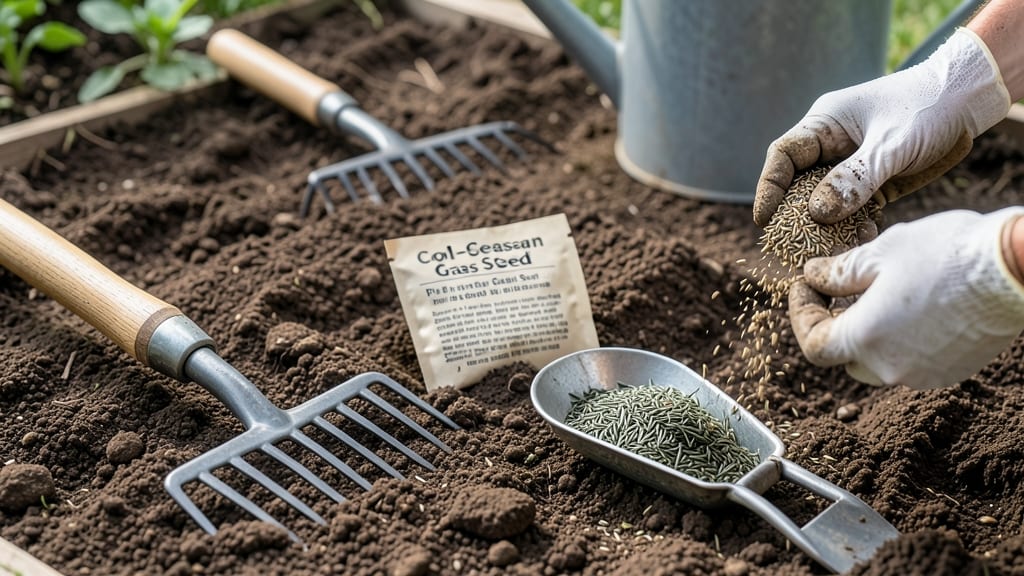
Planting grass seed in the spring at the right time means the difference between a lush lawn and a patchy, frustrating mess—soil warmth and your local climate are the two factors that decide your success.
Timing your spring grass seed planting wrong can mean wasted money and months of patchy lawn frustration—soil temperature and your hardiness zone are the two critical factors you can’t ignore.
In Zone 6a like mine, the ideal window opens around early April, when soil temperatures hit 50°F and stay there. Too early, and the seed just sits; too late, and summer heat zaps the young roots before they take hold.
Below, I break down the exact deadlines by region, how to test your soil like a pro, and the 3-step prep that makes all the difference between a thin lawn and one that fills in thick and green.
Spring grass seed planting deadlines by US hardiness Zone
Getting your spring grass seed in the ground at the right time means the difference between a lush lawn and a patchy eyesore. The key? Your USDA hardiness zone and soil temperature—both dictate your planting window.
Northern zones like Zone 3-5 have earlier deadlines, while Southern zones like Zone 8-9 can plant later. Let’s break it down so you can time it perfectly.
First, find your exact hardiness zone using the USDA Plant Hardiness Zone Map. Most gardeners fall between Zone 3 (coldest) and Zone 9 (warmest). Once you know your zone, use the soil temperature as your second guide—cool-season grasses need 50-65°F soil, while warm-season grasses thrive in 65-75°F soil.
Planting too early in cold soil? Your seeds will rot. Too late? Weeds will outcompete your tender sprouts.
🌱
| Zone | Ideal Planting Window | Soil Temp | Grass Type | Last Chance |
|---|---|---|---|---|
| 3-4 | Early April to mid-May | 50-60°F | Cool-season | Late May |
| 5-6 | Mid-April to early June | 55-65°F | Cool-season | Mid-June |
| 7-8 | Late March to mid-May (cool-season) / Late May to July (warm-season) | 50-65°F (cool) / 65-75°F (warm) | Both | Early June (cool) / Early August (warm) |
| 9 | Late February to April (cool-season) / June to August (warm-season) | 55-65°F (cool) / 70-80°F (warm) | Both | Mid-April (cool) / Early September (warm) |
If you’re in the Northern US (Zones 3-6), focus on cool-season grasses like Kentucky bluegrass or tall fescue. These thrive in cooler soil and can handle early spring planting as soon as the ground is workable—usually 4-6 weeks before your last frost date.
For example, in Zone 5, that’s typically mid-April. Miss this window, and you’ll risk weak germination or weed takeover.
Southern gardeners in Zones 7-9 have more flexibility. You can plant cool-season grasses in late winter to early spring (February-April) or warm-season grasses like Bermuda or Zoysia in late spring to early summer (May-July).
The key is avoiding the dog days of summer when soil temperatures can exceed 80°F, stressing young seedlings.
Pro tip: Use a soil thermometer to check temperatures before planting. Stick it 2 inches deep—that’s where your seeds will be. If it’s below 50°F for cool-season grasses or above 75°F for warm-season types, wait a week or two. Patience now means a thicker, healthier lawn later.
Don’t overlook regional microclimates. A shady spot or urban heat island can shift your ideal planting time by 2-4 weeks. For instance, a Zone 6 garden in the mountains might align with Zone 5 deadlines, while a city lawn could behave more like Zone 7.
Observe your yard’s unique conditions for a few years to fine-tune your timing.
Once you’ve nailed the timing, prep your soil by raking out debris and loosening the top 2 inches for seed-to-soil contact. Then, water lightly but frequently—keep the soil moist (not soggy) for the first 2-3 weeks while seeds germinate. A sprinkler set to 10-15 minutes twice daily works wonders.
Remember: Early spring is for cool-season grasses, while late spring suits warm-season types. Check your zone, test your soil, and you’ll be well on
How to check soil temperature for perfect grass seed germination
Grass seed germination depends on soil temperature more than you might think—cool-season grasses like Kentucky bluegrass and fescue need soil between 50°F and 65°F, while warm-season types such as Bermuda or Zoysia thrive at 65°F to 75°F.
Planting too early or late throws off this delicate balance, leading to slow or uneven growth.
I’ve learned the hard way that checking soil temperature isn’t just about guessing—it’s about precision. A simple soil thermometer (just $10 at any garden center) becomes your best friend.
Stick it 2 inches deep in the soil—this is where grass roots will first establish—and wait 5 minutes for an accurate reading.
For cool-season grasses, aim for 50°F to 65°F—this is usually 4-6 weeks before your last frost date. In Zone 6a, that’s often early April. Warm-season grasses, however, need to wait until soil hits 65°F+, which in my area means late May or early June.
⚠️ WARNING: Planting Too Early or Too Late Too cold (45°F or below) stalls germination, while soil above 75°F can cause warm-season grasses to overheat and die. Even if your local forecast says "spring," don’t trust it—soil warms slower than air.
Check temps for 3 consecutive days before planting to confirm consistency. If your soil is too cold, wait; if it’s too hot, delay until evening or early morning to reduce stress on seedlings.
⚠️ Critical: When to Plant Grass Seed in Spring
Planting grass seed in spring at the wrong time wastes money and effort. Cool-season grasses (like Kentucky bluegrass) need soil temps between 50°F-65°F—usually 4-6 weeks before last frost. Warm-season grasses (like Bermuda) require 65°F+ soil, often late spring or early summer.
✅ DO: Test soil 2" deep for 3 days before planting. Use a soil thermometer ($10) for accuracy.
❌ DON'T: Plant when soil is below 50°F (cool-season) or above 75°F (warm-season).
If your soil is too cold, don’t panic—just cover the seed lightly with straw mulch (¼ inch thick) to insulate it. This helps trap heat and speeds up germination by 2-3 days.
For too-hot soil, wait until evening or early morning to plant and keep the area shaded with burlap or shade cloth until the seed germinates.
Pro tip: Water deeply after planting to settle the soil and keep temps stable. Aim for 1 inch of water per week, split into two sessions (morning and evening). This prevents soil from drying out and keeps the temperature consistent for those critical first few weeks.
Remember, patience is key. Germination can take 7-21 days depending on the grass type and conditions. Stick with it—once those first green shoots appear, you’ll know you’ve nailed the timing. 🌱