
Plants
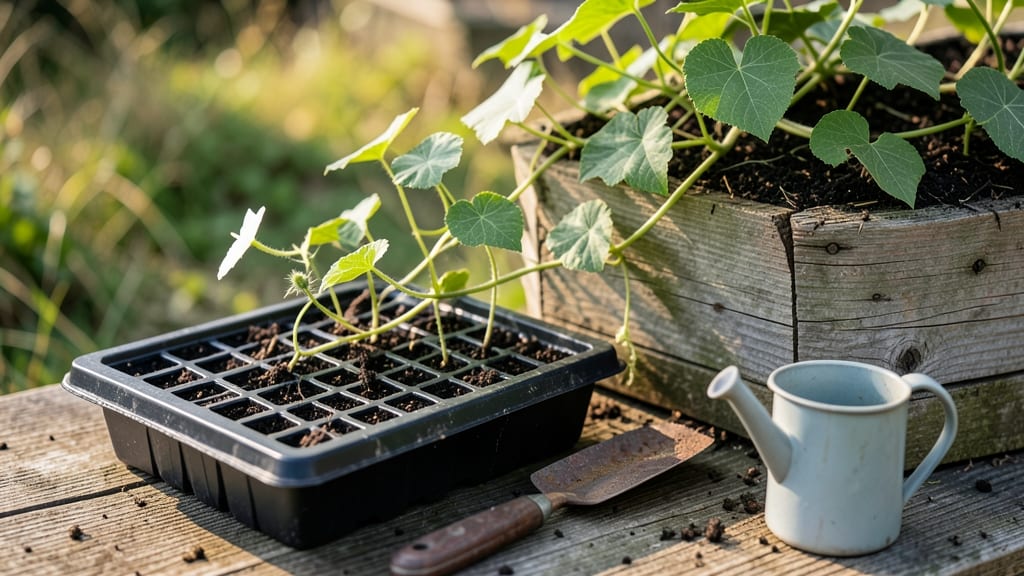
What does a moonflower seedling look like—those tiny, heart-shaped leaves with velvety texture like soft suede, nothing like the glossy foliage of weeds? 🌱 The first true leaves appear within 2-3 weeks of planting, and they grow on slender, hairy stems. that look almost like delicate fishing line.
If you've ever wondered whether those little sprouts are moonflowers or something else, look for the silver-gray hairs along the stems and veins—they're the dead giveaway.
These early seedlings stay low to the ground for weeks, forming a rosette of leaves that can reach 1-2 inches wide before they start climbing. The leaves themselves are a rich, deep green with a slightly fuzzy underside, and they grow in a spiral pattern up the stem.
Unlike mature moonflowers, which can sprawl 10+ feet in a single season, seedlings move slowly—think 1-2 inches per week—so patience is key if you're waiting for those signature white blooms.
Here's the magic: those tiny seedlings you're nurturing now will eventually unfurl 3-5 inch wide trumpet-shaped flowers that open only at night, filling your garden with a sweet, intoxicating fragrance at dusk.
The transformation is worth the wait, especially when you realize you're growing a plant that thrives in full sun to partial shade and handles heat and humidity like a champ—perfect for gardeners in zones 3-11.
If you're growing moonflowers in containers, give them something to climb on early—even a simple trellis or fence will encourage upward growth and keep those delicate stems from flopping.
The key to keeping seedlings happy is consistent moisture (but not soggy soil) and a spot where they get at least 6 hours of sunlight daily. Once they start vining, you'll know you're on the right track to those dreamy night-blooming displays.
Seedling Struggles Explained
Understanding why moonflower seedlings (Ipomoea alba) develop the way they do—or sometimes fail to thrive—boils down to a mix of biological, environmental, and human factors. Below, we break down the key reasons behind their appearance (or lack thereof) with clear, actionable science.
Moonflower seedlings inherit traits from their parent plants, and not all seeds are created equal. Here’s why genetics play a role:
- Hybrid vs. Heirloom Seeds: Some commercial moonflower seeds are hybrids bred for specific traits (e.g., larger blooms or disease resistance), which may alter early seedling vigor.
Heirloom or open-pollinated seeds might produce seedlings with more "wild" characteristics, like slower initial growth or thinner stems. Actionable tip: If you’re growing from saved seeds, expect variability in seedling strength. For consistency, opt for reputable seed brands labeled for germination rates.
- Seed Age & Viability: Moonflower seeds lose viability over time, especially if stored improperly (high humidity or heat).
Older seeds may sprout erratically, producing seedlings with stunted growth or odd leaf shapes. Pro tip: 🌡️ Test seed viability by soaking a few in water for 24 hours—sinkers are likely good, floaters may be dead.
- Dormancy Mechanisms: Some moonflower seeds have natural dormancy, requiring scarification (light scratching) or stratification (cold treatment) to break dormancy.
Unprepared seeds may sprout weakly or not at all. Science note: The seed coat of Ipomoea species often contains hard-to-penetrate layers that block water absorption, delaying or stunting germination.
Moonflowers are tropical vines, and their seedlings are no exception—they thrive in warmth but wilt in cold. Here’s how temperature affects their early stages:
- Ideal Germination Range: Moonflower seeds germinate best between 70–85°F (21–29°C). Below 60°F (15°C), germination slows dramatically, leading to leggy, weak seedlings with pale leaves. Visual clue: Seedlings grown too cool may have elongated stems (etiolation) and small, yellowish leaves—signs of stretching toward light.
- Post-Germination Heat Stress: While seeds need warmth to sprout, seedlings can suffer if exposed to sudden heat spikes (above 90°F/32°C).
This causes: - Wilting or curling leaves (a response to transpiration stress). - Stunted growth due to protein denaturation in young cells. Solution: Use shade cloth (30–50%) if planting outdoors in hot climates. For indoor starts, maintain consistent warmth with a seedling heat mat.
- Cold Shock: Temperatures below 50°F (10°C) can halt growth or kill seedlings entirely. Moonflowers are not frost-tolerant, even as seedlings. Warning: ❄️ Never plant moonflower seeds outdoors in spring until soil temperatures stabilize above 60°F (15°C).
Moonflower seedlings are sensitive to moisture levels, and both extremes can distort their appearance:
- Overwatering & Root Rot: - Symptoms: Dark, mushy stems; yellowing leaves; seedlings that topple over. - Why it happens: Moonflower roots are shallow and fibrous, prone to suffocation in soggy soil.
Overwatering triggers fungal infections (e.g., Pythium), cutting off nutrient uptake. - Fix: Use well-draining soil (mix potting soil with perlite or vermiculite) and water only when the top inch is dry. Avoid saucers that trap excess water.
- Underwatering & Stress Signals: - Symptoms: Crispy leaf edges; seedlings that feel dry or "woody" to the touch; slow or no new growth. - Why it happens: Moonflowers are drought-tolerant as mature plants, but seedlings lack the root depth to recover quickly.
Prolonged dryness causes osmotic stress, halting cell expansion. - Pro tip: 💡 Mist seedlings lightly in the morning to simulate humidity, but avoid soggy soil.
- Inconsistent Moisture:
- Problem: Alternating between dry and wet conditions stresses seedlings, leading to uneven growth (e.g., lopsided leaves or stunted stems).
- Solution: Aim for consistent moisture—think "damp sponge," not "drenched" or "bone-dry."
Moonflowers are heliophytes (light-loving plants), but too little or too much light can warp their development:
- Leggy Seedlings (Etiolation): - Cause: Seedlings stretched toward light sources (e.g., a sunny window) but not receiving enough blue spectrum light (critical for compact growth). - Result: Thin, weak stems; small, pale leaves; and a "reaching" posture. - Fix: Provide 12–14 hours of bright, indirect light (grow lights work best).
Rotate seedlings daily to prevent leaning.
- Leaf Scorch or Bleaching: - Cause: Direct, intense sunlight (especially in hot climates) burns delicate seedlings, causing: - Brown or white patches on leaves (oxidative damage). - Curling or wilting as cells lose moisture too quickly. - Solution: Acclimate seedlings gradually to full sun (a process called hardening off).
Start with 2–3 hours of morning sun, then increase over 1–2 weeks.
- Low Light Stunting:
- Symptoms: Dark green, thick leaves; slow growth; seedlings that "sit" instead of climb.
- Why it happens: Without sufficient light, seedlings prioritize leaf production over stem elongation, leading to a "bushy" but weak structure.
- Actionable tip: 🌱 Use full-spectrum LED grow lights 6 inches above seedlings for 14 hours/day if natural light is insufficient.
Moonflowers prefer fertile, slightly acidic soil (pH 6.0–6.8), but poor soil conditions can alter seedling appearance:
- Compacted or Poor-Draining Soil:
- Effect: Seedlings develop root-bound systems, limiting nutrient uptake. Symptoms include:
- Purple-tinged leaves (phosphorus deficiency).
- Yellowing between veins (iron chlorosis).
- Fix: Amend soil with compost or worm castings and ensure pots have drainage holes.
- Effect: Seedlings develop root-bound systems, limiting nutrient uptake. Symptoms include:
- Nitrogen Shock:
- Cause: Over-fertilizing with nitrogen (e.g., blood meal or high-N synthetic fertilizers) leads to:
- Rapid, weak stem growth (prone to snapping).
- Dark green leaves with no flowers (energy diverted to foliage).
- Balance tip: 🎯 Use a balanced 10-10-10 fertilizer at half-strength once seedlings have 2–3 true leaves.
- Cause: Over-fertilizing with nitrogen (e.g., blood meal or high-N synthetic fertilizers) leads to:
- Micronutrient Deficiencies:
- Magnesium (Mg) deficiency: Yellow patches between leaf veins (common in sandy soils).
- Calcium (Ca) deficiency: Stunted growth and distorted leaves (often from hard water).
- Solution: Apply Epsom salt (magnesium sulfate) or lime (for Ca) sparingly, following package rates.
Even before moonflowers bloom, tiny pests and diseases can sabotage seedlings:
- Fungal Issues (Damping-Off): - Culprits: Rhizoctonia or Pythium fungi thrive in damp, warm conditions. - Signs: Seedlings collapse at the soil line; black, mushy stems. - Prevention: Sterilize soil with hydrogen peroxide (3%) or baking soda (1 tsp per gallon of water).
Avoid overcrowding seedlings.
- Aphids & Spider Mites:
- Why they target seedlings: Young plants have tender sap, making them easy meals.
- Visual clues: Sticky residue (honeydew) on leaves; white webbing; curled or discolored leaves.
- Remedy: Spray with neem oil solution (1 tsp per quart of water) or introduce ladybugs.
- Slugs & Snails:
- Nighttime raiders: These mollusks decimate seedlings overnight, leaving behind slime trails and chewed leaves.
Identifying and Nurturing Moonflower Seedlings
If you’ve spotted tiny green sprouts in your garden and wonder, "Is this a moonflower seedling?"—you’re in the right place! Moonflower seedlings have distinct traits, but they can also face challenges like slow growth, pests, or disease.
Here’s how to spot them correctly and keep them thriving with simple, actionable solutions.
Moonflower (Ipomoea alba) seedlings start small but have key identifiers that set them apart from weeds or other vines. Here’s what to look for:
| Feature | Moonflower Seedling | Common Look-Alikes |
|---|---|---|
| Leaf Shape | Heart-shaped, velvety texture, deep green | Ivy or morning glory (smoother leaves) |
| Stem | Thin, hairy, and slightly woody as it matures | Weedy vines (often smoother, less structured) |
| Growth Speed | Slow at first, then rapid vine development | Fast-growing weeds (e.g., bindweed) |
| Seedling Height | 1–3 inches in first 2–3 weeks | Weeds may sprout faster or stay stunted |
💡 Pro Tip: Moonflower seedlings often emerge near where you planted seeds (if sown) or in warm, well-drained soil. If you’re unsure, wait a week—moonflowers develop distinctive silver-white undersides on leaves as they mature.
Moonflowers are night-blooming beauties, but their vines need the right conditions to flourish. If your seedlings are lagging:
🔥 Cause: Insufficient Sunlight
Moonflowers love full sun (6+ hours daily) but can tolerate partial shade.
If they’re leggy or pale: - Fix: Move seedlings to a sunnier spot gradually (avoid sudden exposure to prevent shock). - Prevention: Plant in a location with morning sun + afternoon shade if your climate is scorching.
💧 Cause: Overwatering or Poor Drainage Moonflowers hate soggy roots.
Yellowing leaves or wilting can signal too much moisture. - Fix: - Let the top 1–2 inches of soil dry out between waterings. - Improve drainage by mixing compost into heavy clay soil or planting in a raised bed. - Prevention: Use well-draining pots if growing in containers.
🌡️ Cause: Temperature Stress (Too Cold or Hot)
Moonflowers thrive in warm climates (USDA Zones 9–11) but can be tricky in cooler areas.
- Fix for Cold:
- Start seeds indoors 4–6 weeks before last frost (they need warmth to germinate).
- Use row covers if nights dip below 50°F (10°C).
- Fix for Heat Stress:
- Provide afternoon shade in extreme heat (e.g., black plastic mulch to cool roots).
- Mulch with straw or wood chips to retain moisture.
Moonflowers are generally pest-resistant, but aphids, spider mites, or fungal issues can appear.
🐜 Cause: Aphids or Spider Mites
- Fix:
- Blast them off with a strong spray of water (early morning works best).
- Use neem oil spray (mix 1 tbsp neem oil + 1 tsp mild soap + 1 quart water) every 5–7 days.
- Prevention:
- Encourage ladybugs (natural predators) by planting marigolds nearby.
- Prune affected leaves immediately to stop spread.
🍄 Cause: Powdery Mildew (White Fuzzy Coating)
This fungal disease thrives in humid, shady conditions.
- Fix:
- Remove infected leaves and dispose of them (don’t compost).
- Spray with a baking soda solution (1 tsp baking soda + 1 quart water + a drop of soap).
- Prevention:
- Space plants 18–24 inches apart for airflow.
- Water at the base (avoid wetting leaves).
Moonflowers are vigorous climbers but need proper support to avoid tangling or breaking.
🧵 Cause: Weak or Tangled Vines
- Fix:
- Train vines onto a trellis, fence, or arbor using soft plant ties (avoid wire, which can cut stems).
- Prune side shoots to encourage stronger main vines.
- Prevention:
- Install a trellis at planting time so vines don’t flop.
- Harvest flowers regularly to promote bushier growth.
✂️ Cause: Over-Pruning or Trimming Too Late
- Fix:
- Prune only in early spring or after flowering to avoid stunting growth.
- If you accidentally cut too much, fertilize lightly with a balanced 10-10-10 to encourage regrowth.
- Prevention:
- Mark pruning spots with a pencil if you’re unsure which stems to trim.
Once your seedlings are established, keep them happy with these easy maintenance tips:
- 🌦️ Fertilizer: Use a low-nitrogen, phosphorus-rich fertilizer (e.g., 5-10-10) once a month during growing season.
- 🌿 Mulching: Apply 2–3 inches of mulch (straw or shredded leaves) to retain moisture and suppress weeds.
- 🌸 Deadheading: Remove spent blooms to encourage more flowers (though moonflowers self-seed easily).
- 🌍 Overwintering (Cold Climates): In Zones 8 and below, dig up tubers in fall, dry them, and store in a cool, dark place until spring.
Final Thought: Moonflower seedlings are delicate but resilient—with the right care, they’ll reward you with stunning night-blooming flowers and lush vines. Keep an eye out for their velvety leaves and rapid growth, and don’t hesitate to adjust conditions if they’re struggling. Happy gardening! 🌙✨
Frequently asked questions
How can I tell if my tiny sprouts are moonflower seedlings and not weeds?
Look for heart-shaped leaves with a velvety texture and silver-gray hairs along the stems—these are the key identifiers. Moonflower seedlings also grow in a spiral pattern and stay close to the ground for the first 2-3 weeks before climbing. Weeds like morning glory have smoother leaves and grow faster.
Why are my moonflower seedlings growing so slowly?
Moonflower seedlings naturally grow 1-2 inches per week—they're not fast growers! Slow growth usually means they need more warmth (70-85°F), better sunlight (6+ hours daily), or consistent moisture. If they're leggy, they're stretching toward light—move them to a brighter spot or add grow lights.
Should I thin moonflower seedlings, and if so, how?
Yes, thin them to 12-18 inches apart when they're 2-3 inches tall to give roots room to grow. Use clean scissors to snip at soil level rather than pulling—this prevents disturbing the remaining plants. The strongest seedling with the most vibrant leaves should stay.
When will my moonflower seedlings start climbing?
Seedlings typically stay low to the ground for 4-6 weeks before beginning to climb. Once they reach 6-8 inches tall, provide a trellis or support structure immediately—they'll use anything to climb, including fences or nearby plants. Without support, vines may flop or break.
Can I grow moonflower seedlings indoors before transplanting?
Start seeds indoors 4-6 weeks before last frost using seedling trays with well-draining soil. Keep them under grow lights (12-14 hours/day) at 70-80°F. Harden off seedlings by gradually exposing them to outdoor conditions for 1-2 weeks before transplanting after soil warms to 60°F+.