
Plants
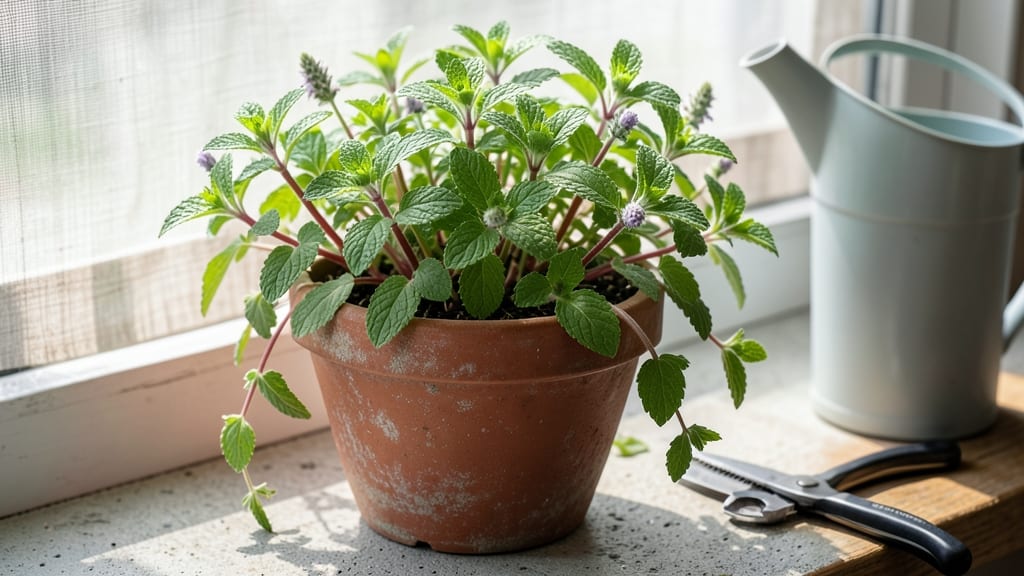
Spearmint seedlings look like they start with small round cotyledons that eventually grow into bright green, jagged-edged leaves with a pointed oval shape. The stems stay upright, and leaves grow in opposite pairs along the square stem, releasing a strong minty scent as they mature.
When you first spot spearmint seedlings, those initial round cotyledons might fool you into thinking they're just any other plant. 🌱 But once they develop their true leaves, you'll notice the distinctive serrated edges and pointed tips that set them apart.
The vibrant green color deepens as they grow, and that unmistakable minty aroma becomes stronger—especially when you crush a leaf between your fingers.
I always check for this scent when identifying seedlings, as it's a dead giveaway for spearmint compared to its peppermint cousin, which tends to have broader leaves and a slightly different fragrance.
What's fascinating is how quickly these tiny seedlings transform. Within just a few weeks, those delicate cotyledons give way to the characteristic spearmint foliage that gardeners love. The square stems and paired leaves create a distinctive pattern that makes identification straightforward once you know what to look for.
💡 In This Article
- Spearmint Seedling Leaf Shape and Color Identification
- Growth Stages of Spearmint Seedlings: When and How to Transplant
Spearmint seedling leaf shape and color identification
The journey from seed to spearmint begins with cotyledons—those first tiny, round leaves that emerge from the soil.
These initial leaves are typically pale green to yellowish-green, measuring about 0.25-0.5 inches in diameter, and have a smooth, slightly waxy texture. 🌱 Unlike the later true leaves, cotyledons lack the characteristic serrations and grow in a single pair directly opposite each other on the stem.
Think of them as nature's placeholder leaves, designed to perform photosynthesis while the plant's roots establish themselves.
Once the true leaves appear—usually within 2-3 weeks—you'll notice a dramatic transformation. These leaves are pointed ovals with serrated edges (think jagged like a saw blade) and grow in pairs along the square-shaped stem.
The color deepens from pale green to a vibrant bright green, often with a slight bluish tint when viewed under sunlight. This color shift occurs because the chlorophyll concentration increases as the plant focuses on maximizing photosynthesis for rapid growth.
The leaves also develop a fine downy texture on the underside, which helps retain moisture in their preferred humid conditions.
Here's where things get interesting: spearmint seedlings can be confused with peppermint, but there's a key difference in their leaf shape.
Spearmint leaves tend to be narrower (about 1-2 inches long and 0.5-1 inch wide) with a more pronounced point, while peppermint leaves are broader and more rounded. 🌿 Another telltale sign?
Crush a leaf between your fingers—spearmint releases a sweeter, more complex aroma with hints of carrot or apple, whereas peppermint has a sharper, more medicinal scent. This aromatic difference comes from their chemical compositions: spearmint contains carvone, while peppermint has menthol.
The square stem is another distinctive feature worth noting. Unlike round stems found in many plants, spearmint's four-sided stem (technically called a tetragonal stem) contains vascular bundles arranged in a square pattern. This structure provides structural support while allowing efficient water transport.
When you run your fingers along the stem, you'll feel four distinct edges—this is a dead giveaway for spearmint (or other mint family members) and helps distinguish it from plants with round stems.
Light conditions play a crucial role in leaf development. In full sunlight, spearmint seedlings develop darker green leaves with more pronounced serrations, while partial shade results in lighter green, broader leaves.
This adaptation helps the plant balance photosynthesis with moisture retention—too much sun can cause the leaves to scorch, while too little shade may lead to leggy growth. 💚 The ideal light exposure for healthy seedlings is 4-6 hours of direct sunlight per day, which encourages robust leaf development without stressing the young plant.
One fascinating detail often overlooked is how the leaf arrangement changes as the seedling matures. Early true leaves grow directly opposite each other (a pattern called "decussate"), but as the plant grows taller, the leaves may start to alternate slightly along the stem.
This shift occurs because the plant's apical meristem (growth tip) begins producing new leaves at slightly different angles, creating a more complex branching pattern.
Observing this progression can help you predict when your seedlings are ready for transplanting—typically when they've developed 4-6 true leaves and the stem reaches about 3-4 inches in height.