
Plants
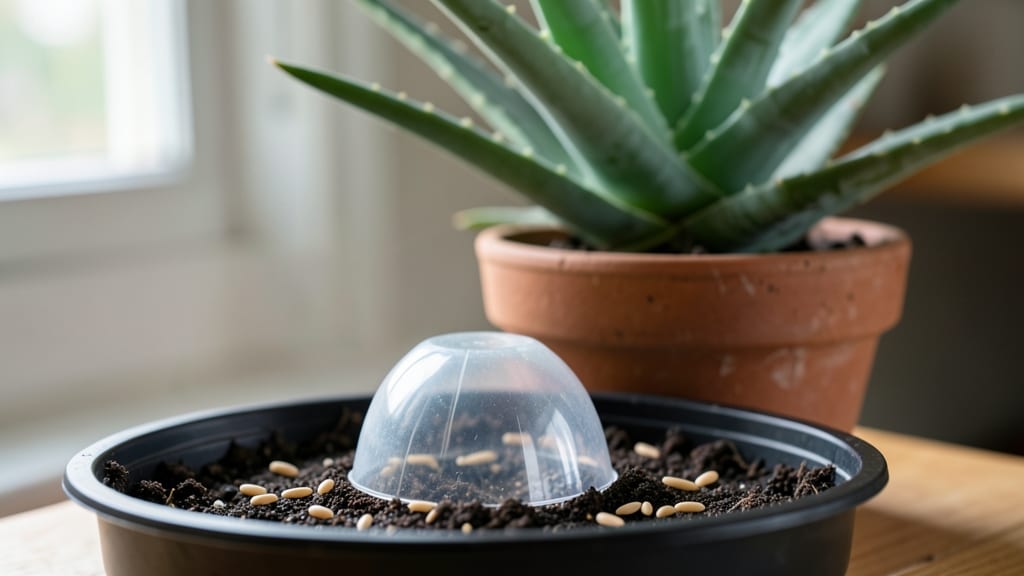
Aloe vera seeds look like tiny brown beads or small, flat ovals about 3-5mm long, clustered in dry, papery pods. Their texture is lighter than coffee beans, with a slightly rough surface.
Aloe vera seeds develop inside elongated pods that start green but turn tan or brown as they mature. 🌱 These pods resemble dried corn husks when fully ripe, with seeds nestled inside like tiny grains.
Unlike the plant's gel-filled leaves, the seeds are hard and dry—perfect for long-term storage if you're planning propagation. The color varies from light tan to dark brown depending on the plant's maturity, and you'll often find clusters of 5-10 seeds per pod.
When harvesting, look for pods that have turned completely dry and papery—this signals they're ready for seed collection. 🌿 The best time to gather them is during the plant's dormant season (late fall to winter), when the pods naturally release their seeds.
If you're growing aloe vera from seed, these tiny brown beads will give you a head start on cultivating new plants without needing to propagate from cuttings.
💡 In This Article
- Identifying Mature Aloe Vera Seeds vs. Immature Pods
- Where to Find and Harvest Aloe Vera Seeds for Planting
Identifying mature aloe vera seeds vs. immature pods
Aloe vera seeds mature through distinct stages, starting as soft, green pods that gradually harden and change color. Immature pods feel spongy and contain a clear, gel-like substance similar to the plant's leaves. These early-stage pods are typically 1-2 inches long and bright green—almost translucent when held up to light.
As they mature, they develop a waxy coating and turn yellowish-brown, signaling the seeds inside are developing.
The key difference lies in the pod's texture and contents. Mature seeds appear as 3-5mm elongated brown beads with a slightly rough, papery surface when dry.
Under magnification, you'll notice tiny ridges along their edges, unlike the smooth surface of immature pods. 🌱 These mature seeds are lightweight—almost hollow-feeling when tapped—and rattle slightly inside the pod. Immature pods, by contrast, feel dense and filled with thick gel, making them heavier for their size.
Color is another critical clue. Immature pods stay vibrant green, while mature pods fade to tan or light brown. The transition happens over 6-8 weeks, depending on climate conditions. In hot, dry environments, pods ripen faster, while cooler or humid conditions slow the process.
Once fully mature, the pod's outer layer becomes brittle and splits open naturally, releasing the seeds—this is your cue that they're ready for harvesting.
Size also plays a role in identification. Mature seeds are consistently 3-5mm long, while immature pods can grow up to 3 inches before they begin to dry out.
The seed clusters inside mature pods are tightly packed, whereas immature pods contain fewer, larger gel-filled sacs. 💫 This density difference is why mature pods feel lighter despite their smaller size—the seeds have lost most of their moisture during maturation.
For gardeners, distinguishing between these stages is crucial because immature pods won't produce viable seeds. Attempting to harvest seeds from unripe pods results in poor germination rates, as the embryos inside aren't fully developed.
The best practice is to wait until the pod turns completely dry and papery, at which point the seeds will be ready for collection or storage.
One pro tip: Gently tap a mature pod—if you hear a hollow sound, it's ready. Immature pods produce a dull thud. This simple test saves time and ensures you're working with seeds that have the highest chance of successful propagation. 🌿