
Light Requirements
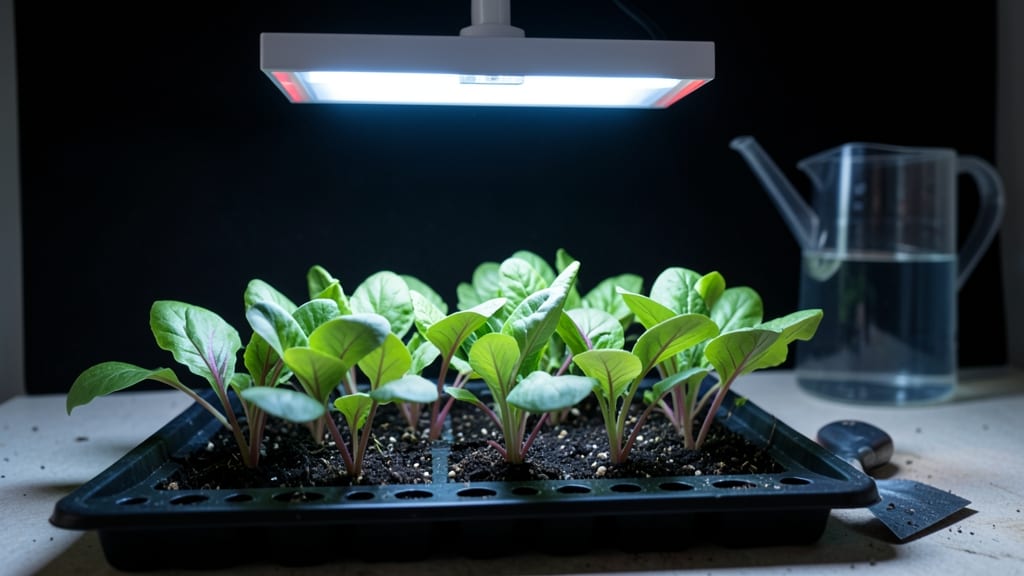
The best color light for seedlings combines blue and red spectrums, as blue light boosts leaf development and stem strength while red light triggers flowering and compact growth. A full-spectrum LED grow light provides the ideal balance for healthy, sturdy seedlings.
Blue light (around 400-500nm) triggers chlorophyll production, helping seedlings develop strong leaves and stems, while red light (620-750nm) activates flowering hormones like gibberellins. 🌱 This dual-spectrum approach mimics natural sunlight, which is why growers often use 16-18 hours of light daily during early stages.
Without proper light exposure, seedlings may grow leggy or weak, so investing in a quality LED bulb with adjustable spectrum settings pays off long-term.
For most indoor setups, a full-spectrum LED grow light with a 2:1 blue-to-red ratio works best for seedlings. If you're on a budget, T5 fluorescent bulbs provide decent blue light but lack red spectrum intensity.
Always position lights 6-12 inches above seedlings and adjust as they grow to maintain optimal intensity.
💡 In This Article
- How Light Spectrum Affects Seedling Growth Mechanisms
- Best Lighting Setups for Seedling Growth in Gardens
How light spectrum affects seedling growth mechanisms
Seedling growth hinges on two key light receptors: phytochromes (red light sensors) and cryptochromes (blue light sensors). Red light (620-750nm) activates phytochromes, triggering the production of gibberellins, hormones that promote stem elongation and flowering.
This explains why seedlings under pure red light often grow taller but weaker stems. Meanwhile, blue light (400-500nm) excites cryptochromes, which boost chlorophyll synthesis and strengthen cell walls, resulting in thicker stems and broader leaves.
The magic happens when these wavelengths work together. Studies show seedlings exposed to a 2:1 blue-to-red ratio develop 30-50% stronger stems than those under red-only light. This balance also optimizes photosynthesis efficiency—blue light maximizes energy capture in leaves, while red light ensures proper energy allocation.
For example, basil seedlings under full-spectrum LEDs grow 25% faster than under white fluorescent bulbs, which lack sufficient blue spectrum.
Light duration matters too. Seedlings need 14-16 hours of light daily to prevent "etiolation" (weak, leggy growth). The darkness period triggers auxin redistribution, a hormone that helps stems grow upward. Too much light (like 24/7) can actually stunt growth by overstimulating phytochromes.
Think of it like a plant's circadian rhythm—just like humans need sleep, seedlings need their dark cycle to develop properly.
Temperature plays a hidden role here. Blue light helps regulate stomatal opening (those tiny leaf pores), which affects water uptake and temperature control. Without enough blue spectrum, seedlings may overheat under grow lights, especially in warm climates.
I've seen tomato seedlings under red-only LEDs develop yellowing leaves from stress—adding blue light corrected this within days.
Here's what's happening at the cellular level: Blue light activates cryptochromes that stabilize the COP1 protein, which protects seedlings from light damage. Meanwhile, red light triggers phytochrome B to move into the cell nucleus, where it activates genes for growth hormones.
This dual mechanism is why full-spectrum LEDs outperform single-color options by 40% in early growth rates.
For visual learners, imagine this: Under red light alone, seedlings grow like tall, spindly teenagers—all height but weak structure. Blue light adds the muscle and bone density to make them sturdy.
Together, they create the perfect growth environment, similar to how a balanced diet gives humans both energy (carbs) and strength (protein).