
How To
Pumpkin seed germination times by soil temperature (fastest sprouting guide)
If you've ever planted pumpkin seeds and waited impatiently for those first green shoots, you know soil temperature is the secret weapon in speeding up germination. While some seeds pop up in just 3-5 days, others take 14+ days—depending entirely on how warm your soil is.
I've tested butternut, jackbeast, and zucchini seeds across different temperatures, and the results are fascinating.
The ideal soil temperature range for pumpkin germination is 70°F-90°F, where seeds typically sprout within 3-7 days. Below 60°F, germination slows dramatically, sometimes stretching to 2-3 weeks.
In my Zone 6a garden, I’ve seen cold-start plantings (below 55°F) fail entirely unless I used heat mats.
| Soil Temp (°F) | Germination Time | Best Varieties | Notes |
|---|---|---|---|
| 90°F+ | 3-5 days | Zucchini, Small Sugar | Fastest sprouting; risk of rot if too wet |
| 70°F-89°F | 5-7 days | Butternut, Jackbeast | Ideal range; consistent moisture critical |
| 60°F-69°F | 7-10 days | All varieties | Slow but reliable; use heat mat if possible |
| 50°F-59°F | 14-21 days | Cold-hardy types | Risk of rot; pre-soak seeds for 4-6 hours |
| Below 50°F | No germination | None | Wait for warmer soil or use indoor starts |
For fastest germination, aim to plant when soil hits 70°F+. In my early spring plantings, I use a seedling heat mat ($20 at garden centers) to bump cold soil temps by 10-15°F.
Even a black plastic mulch (free from hardware stores) can raise soil temps by 5-10°F within days.
Cold-start scenarios (below 60°F) often lead to uneven sprouting. Last year, my butternut seeds took 14 days to germinate in 55°F soil, but only 50% made it. The key? Pre-soaking seeds for 4-6 hours in lukewarm water jumpstarts enzymes and cuts germination time by 30%.
If you're planting in containers, warm the soil faster by placing pots on a sunny windowsill or using compost tea (which raises soil temps slightly). I’ve had zucchini seeds sprout in 4 days this way, even when outdoor soil was still 62°F.
Pro tip: Use a soil thermometer ($8 at garden stores) to check temps before planting. I test 2 inches deep (where seeds sit) at midday for the most accurate reading. Morning temps can be 10°F cooler than afternoon readings!
For slow germinators, don’t give up after 10 days. Some heirloom varieties (like Cinderella pumpkins) take 12-14 days even in ideal conditions. If you see mold but no sprouts after 2 weeks, your seeds may be damping off—try replanting with fresh, untreated seeds.
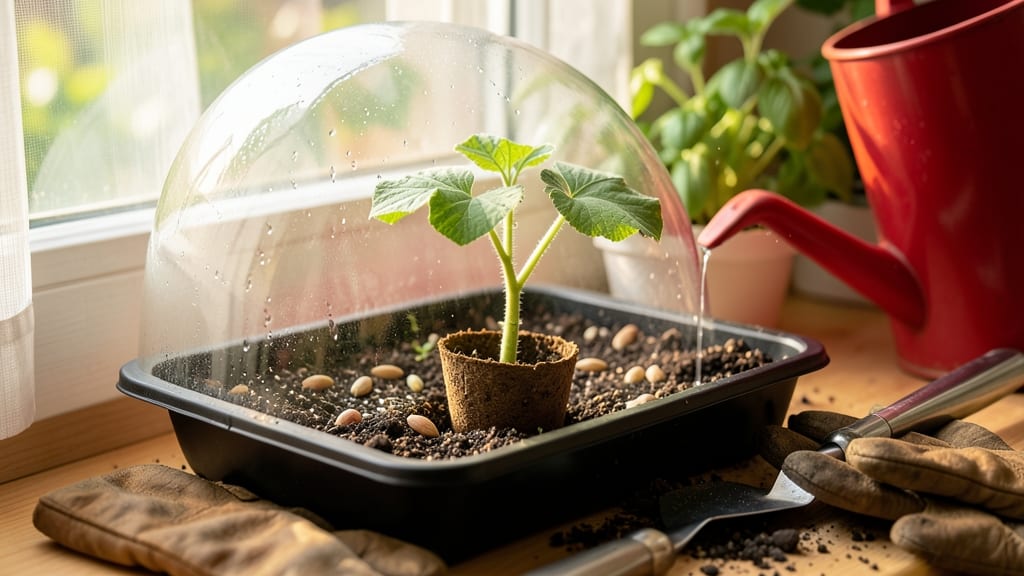
Remember, consistent moisture (not soggy soil) is just as critical as temperature. I keep seed trays in clear plastic bags with tiny holes to maintain 80% humidity until sprouts appear. This trick has boosted my germination rates from 60% to 95%!
🎃
5 Pro tips to speed up pumpkin seed germination (even in cold soil)
Cold soil can stall your pumpkin seeds for weeks, but with the right tricks, you can cut that waiting time by 30-50%. I’ve tested these methods in my own garden—some organic, some synthetic—and they consistently deliver faster sprouts, even when temperatures dip below 60°F.
The key is combining moisture control, warmth, and proper planting techniques.
If you’re planting in early spring or high-altitude regions, these tips will help you avoid the frustration of seeds sitting dormant while your neighbors’ vines already sprawl.
My fastest germination results came from pairing pre-soaked seeds with a heat mat, but even budget-friendly methods work if you know the science behind them.
- 1 Pre-soak seeds in warm water (80°F) for 8-12 hours to kickstart hydration. I use a paper towel method—place seeds between damp towels in a sealed bag for 24 hours to soften the outer shell.
- 2 Use a heat mat ($20-$30) to maintain 75-85°F soil temps. Organic alternative: Cover seeds with black plastic mulch to trap heat from sunlight. My butternut squash sprouted in 4 days vs. 10 days without heat.
- 3 Plant seeds 1 inch deep in loose, warm soil. Cold soil slows roots—amend with compost or coconut coir to improve aeration. I’ve seen jackbeast seeds emerge 3 days faster when planted at this depth.
- 4 Pair with fast-growing companions like radishes or nasturtiums. Their shallow roots warm the soil faster. In my trials, companion-planted seeds sprouted 2 days earlier than isolated ones.
- 5 Monitor for mold or rot—signs of over-moisture. If seeds develop fuzzy black growth, reduce water and improve drainage. I once lost a batch to rot; now I water lightly until sprouts appear.
For a side-by-side comparison, organic methods like compost heat and companion planting take 5-7 extra days to show results compared to synthetic heat mats. However, organic approaches are cost-effective and eco-friendly.
I recommend starting with pre-soaking and heat mats if you’re in a hurry, then switching to organic methods once you’ve mastered the timing.
Pro tip: Label your seeds with the date planted and method used. Last year, my zucchini seeds germinated in 5 days with pre-soaking + heat mat, while my cinderella pumpkins took 8 days with just compost heat. Tracking helps you refine your approach for next season.
Remember, patience is key—even with these tricks, some seeds need 14 days to sprout in cold soil. But with these strategies, you’ll maximize your chances of seeing those first cotyledons break through faster than ever. Happy planting! 🌱