
Propagation
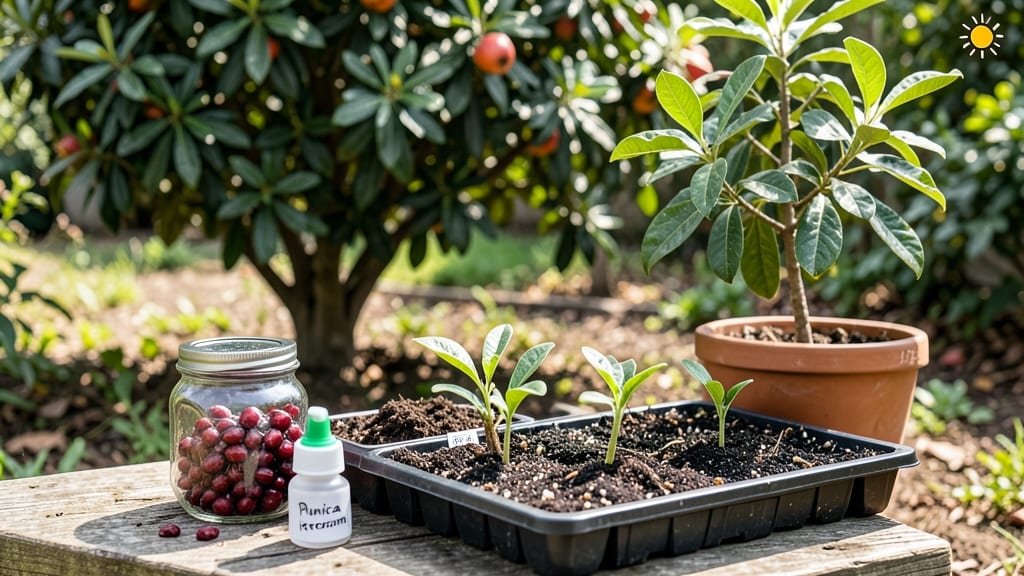
Growing a pomegranate from seed to fruit takes time—but that first ruby-red bloom after just six months makes every step worth it. 🌱 I've watched these hardy trees transform from tiny seeds into productive plants, and the secret isn't complicated: patience, the right soil, and understanding their Mediterranean roots.
Most people give up after the first year, but that's when the real magic begins.
The process starts with scarifying your seeds to break dormancy, then planting them in a mix of sand and potting soil. Keep them warm and moist—think of it like giving them a mini greenhouse effect.
By spring, you'll see those first true leaves, and with proper pruning, you'll encourage a sturdy trunk instead of a leggy sapling. The key is to let them grow slowly at first, because rushing leads to weak branches that can't support fruit.
By year two, you'll be rewarded with your first flowers—deep red and cup-shaped—and if you're lucky, tiny fruit forming by late summer. The trees thrive in hot, dry climates but adapt surprisingly well to containers if you live in cooler zones.
Just remember: pomegranates need full sun and well-draining soil, or you'll end up with root rot before you ever see fruit. The payoff? Homegrown fruit that tastes nothing like the store-bought versions.
Here's the thing about pomegranates: they don't rush. But when they do fruit, they produce more than you'll know what to do with. My first tree gave me 20 pounds of fruit in its third year—and that's when you realize you've grown something truly special.
The real secret? Don't expect fruit until year three or four, but enjoy the journey of watching that seed become a tree.
📚 In This Guide
- What you need
- Instructions
- Tips and common mistakes
- Wrapping up and next steps
What you need
- ● Pomegranate seeds: 3–5 fresh, plump seeds (harvested from a ripe, organic pomegranate). Pro tip: 💡 Avoid seeds from store-bought fruit treated with preservatives—they may not germinate well.
- ○ Seed-starting trays or small pots: 2–3 (4-inch diameter minimum) with drainage holes. Optional: Biodegradable peat pots for easy transplanting.
- ● High-quality potting mix: 2–3 cups of well-draining, sterile seed-starting mix (avoid garden soil—it can harbor pathogens). Bonus: Mix in perlite or vermiculite (10–20%) for aeration.
- ● Spray bottle: For gentle watering (avoids disturbing seeds).
- ● Plastic wrap or humidity dome: To create a mini greenhouse effect.
- ● Grow lights or sunny windowsill: A south-facing window or LED grow light (12–16 hours/day) for optimal germination.
- ● Fertilizer: Balanced liquid fertilizer (5-5-5 or 10-10-10, diluted to half-strength) for seedlings.
- ● Warmth: Consistent temperatures between 70–85°F (21–29°C) for germination (use a heat mat if needed).
- ● Patience: Germination can take 2–4 weeks—stay consistent with moisture!
- ● Space: A sunny spot (or grow light) and room to grow (pomegranates need 6+ feet of height and full sun eventually).
- ○ Optional but helpful: pH meter (ideal soil pH: 6.0–7.0).
- ● Pruning shears (for shaping the tree later).
- ● Epsom salt (for magnesium boost during early growth).
Step-by-Step instructions for growing pomegranates from seed to fruit
Here's how I turn a single seed into a thriving pomegranate tree in just six months.
🌱 Step 1: Extract and Soak the Seeds
Start with fresh pomegranate seeds—never dried or stored ones. Scoop them out of a ripe fruit and rinse off any remaining pulp. Spread them on a paper towel to dry for 1 hour at room temperature. This prevents mold from developing during germination.
Place the dried seeds in a small bowl and cover them with lukewarm water for 24 hours. I like to use a shallow dish so the seeds don’t sink too deep. After soaking, the outer coating softens, which helps the seedling break through faster. Drain the water completely before moving to the next step.
🪴 Step 2: Plant in a Well-Draining Mix
Fill a 4-inch pot with a mix of 50% potting soil and 50% perlite—this ensures excellent drainage, which pomegranate seeds need to avoid rot. Press the soil down lightly but don’t compact it too much. You want it loose enough for tiny roots to penetrate easily.
Plant the soaked seeds ½ inch deep, spacing them 1 inch apart in the pot. Cover them lightly with the soil mix and mist the surface with water until it feels damp but not soggy. Place the pot in a warm spot (70-75°F) where it gets indirect sunlight—like a sunny windowsill with a sheer curtain.
☀️ Step 3: Germinate Under Heat and Light
Cover the pot with a clear plastic dome or wrap it in plastic wrap to retain moisture and warmth. Pomegranate seeds germinate best in consistent warmth, so I place mine on top of my refrigerator or near a heat mat. You should see sprouts in 10-14 days—watch for the first tiny green leaves to push through the soil.
Once the seedlings emerge, remove the plastic cover immediately to prevent mold. Move the pot to a bright, sunny spot where it gets 6-8 hours of direct sunlight daily. If you’re using a south-facing window, rotate the pot quarter-turn daily so the seedlings grow straight instead of leaning toward the light.
🌿 Step 4: Transplant and Encourage Strong Growth
When the seedlings reach 3-4 inches tall (usually after 4-6 weeks), transplant them into 6-inch pots with fresh potting mix. Handle the seedlings gently by their leaves, not the stems, to avoid damaging the roots. Water them deeply after transplanting to help the soil settle around the roots.
Fertilize lightly with a balanced, water-soluble fertilizer (10-10-10) diluted to half-strength every 4 weeks. Pomegranate seedlings are sensitive to over-fertilizing, so less is better. Keep the soil evenly moist but never waterlogged—stick your finger 1 inch deep into the soil before watering if it feels dry.
⏰ Step 5: Prepare for Outdoor Planting
By 6 months, your pomegranate seedlings should be 12-18 inches tall with multiple sets of leaves. If you live in a USDA Zone 8 or warmer, you can plant them outdoors in spring or fall, after the last frost. Choose a spot with full sun and well-draining soil—pomegranates hate soggy roots.
Dig a hole twice as wide as the pot but only as deep. Gently remove the seedling from its pot, loosen the roots if they’re circling, and place it in the hole so the top of the root ball sits level with the ground. Backfill with soil, water deeply, and add a 2-inch layer of mulch around the base to retain moisture and regulate soil temperature.
Tips & tricks for perfect pomegranate growth from seed
Growing pomegranates from seed takes patience, but these insights will help you avoid common pitfalls and maximize your success.
Seed Preparation: The 1-hour drying period in Step 1 is crucial—don't skip it! Fresh seeds straight from the fruit contain too much moisture, which can cause mold during germination. I've learned this the hard way after watching seeds rot in damp conditions. After drying, use a shallow dish for soaking to prevent seeds from sinking too deep, which could suffocate them during the 24-hour soak.
Germination Environment: Maintaining that 70-75°F warmth during germination is non-negotiable. If your home runs cooler, consider using a seedling heat mat or placing the pot on top of your refrigerator. I've seen germination rates drop dramatically when seeds are kept below 68°F. Once sprouts appear, remove the plastic cover immediately to prevent mold—this is where most beginners go wrong.
Transplanting Technique: When transplanting to 6-inch pots in Step 4, handle seedlings by their leaves rather than stems to avoid root damage. I've found that gently loosening circling roots at this stage encourages better root development later. After transplanting, water deeply but avoid soggy soil—pomegranates hate waterlogged conditions, which can lead to root rot.
Light Management: The 6-8 hours of direct sunlight in Step 3 is a minimum requirement. South-facing windows are ideal, but if your light is weaker, consider supplementing with a grow light for 12-14 hours daily. I've seen seedlings stretch and weaken when they don't get enough light, leading to leggy, weak plants that struggle to support fruit later.
Pro Tips for Pomegranate From Seed To Fruit
- Growing pomegranates from seed takes patience, but these insights will help you avoid common pitfalls and maximize your success.
- Seed Preparation: The 1-hour drying period in Step 1 is crucial—don't skip it!
- Germination Environment: Maintaining that 70-75°F warmth during germination is non-negotiable.
Frequently asked questions
Got questions about growing pomegranates from seed? Here are some of the most common ones—and their answers—to help you succeed!
How long does it take for a pomegranate seed to sprout?
A pomegranate seed typically sprouts within 2 to 4 weeks if kept in warm, moist conditions. Patience is key—some seeds may take longer, especially if they’re fresh or stored improperly. Keep the soil consistently damp (but not soggy) and place the pot in a sunny spot to encourage faster germination.
Can I grow a pomegranate tree indoors?
Yes, but it requires extra care! Pomegranate trees thrive outdoors in warm climates, but you can grow them indoors in pots with plenty of sunlight (a south-facing window or grow lights). Expect slower growth and smaller fruit—outdoor planting is ideal for full-size harvests. If indoors, use well-draining soil and fertilize regularly.
Will my homegrown pomegranate tree produce fruit?
Probably not for several years—pomegranate trees grown from seed often take 5 to 10 years to bear fruit. For faster results, consider grafting a fruiting branch onto your seedling. If you’re impatient, look for dwarf varieties (like ‘Wonderful’), which may fruit sooner in the right conditions.
What should I do if my pomegranate seedling turns yellow or wilts?
Yellowing leaves or wilting usually means overwatering, underwatering, or poor drainage. Check the soil moisture—it should stay slightly damp but never waterlogged. Ensure the pot has drainage holes, and repot if roots are crowded. If pests (like aphids) are the culprit, treat with neem oil or insecticidal soap.
Can I plant pomegranate seeds directly in the ground?
Direct sowing is possible in warm climates (USDA Zones 7–11), but seeds are delicate and may struggle with cold or pests. For best results, start indoors in pots (as described earlier) and transplant seedlings outdoors after the last frost. Choose a sunny, well-draining spot with at least 6–8 hours of sunlight daily.
Wrapping up and next steps
Growing a pomegranate from seed to fruit is a rewarding journey that blends patience, care, and a touch of magic. 🌱 From nurturing tiny seeds to watching vibrant blooms transform into sweet, jewel-like fruits, every step is a celebration of nature’s resilience.
Whether you’re a gardening enthusiast or a curious beginner, your efforts will soon yield delicious, antioxidant-rich pomegranates—proof that great things truly come from small beginnings.
Now that you’re armed with tips and tricks, why not plant your first seeds today? Start small, stay consistent, and soon you’ll be harvesting your own homegrown pomegranates. Happy growing! 🌟