
Lawn
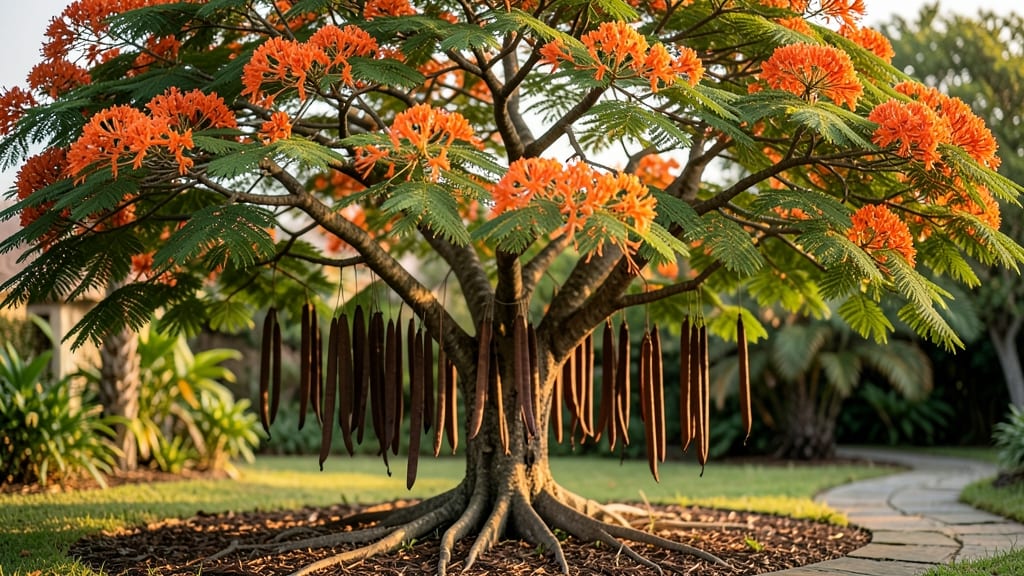
Those iconic Poinciana seed pods hold the future of your yard's tropical beauty. 🌿 Harvesting and processing them correctly is the key to growing these stunning trees from seed—something I learned after my first batch sprouted unevenly (and some never germinated).
The secret lies in proper drying, cold treatment, and planting timing to break dormancy naturally.
You'll need just a few simple tools: gloves for handling the pods, a sharp knife or scissors, a paper bag for drying, and a sealed container for cold stratification.
The process takes about 6-8 weeks from pod collection to planting, but the payoff is watching those first bright orange blooms emerge in just 2-3 years.
Once stratified, you'll plant seeds in well-draining soil and keep them consistently moist while they establish. The seedlings grow surprisingly fast once they break through—expect 4-6 inch growth in their first summer if conditions are right.
Patience is key here; these aren't quick results, but the mature trees become the showstopper of any landscape.
Works perfectly for tropical/subtropical zones (USDA 10-11), but even cooler climates can try this with extended cold stratification. The biggest mistake? Rushing the drying process or skipping the cold treatment—both lead to poor germination rates. Let's get those seeds growing!
📚 In This Guide
- What you need
- Instructions
- Tips and common mistakes
- Wrapping up and next steps
What you need
- ● Mature poinciana seed pods: Collect only fully brown, dry pods (avoid green or partially open ones). Aim for 50–100 pods for a reliable batch.
- ● Pruning shears or sharp scissors: For safely harvesting pods from branches (ensure blades are clean and sanitized to prevent disease).
- ● Newspaper or brown paper bags: 2–3 large sheets (or bags) for drying pods in a well-ventilated area.
- ● Plastic zip-top bags: 5–10 quart-sized bags for cold stratification (sealable, food-grade preferred).
- ● Refrigerator or cold stratification setup: A consistent 35–45°F (2–7°C) space (e.g., fridge crisper drawer or outdoor cold frame).
- ● Small containers or trays: 2–3 shallow containers (e.g., seedling trays or baking dishes) with drainage holes for germination.
- ● Potting mix: 1–2 gallons of well-draining, sterilized seed-starting mix (cactus/succulent blend works well).
- ● Spray bottle with water: For gentle moisture control during germination.
- ● Labels and markers: To track pod collection dates and stratification progress.
- ● Gloves: Heavy-duty gardening gloves to protect hands from pod fibers.
- ● Fan or dehumidifier: To speed up drying if humidity is high.
- ● Humidity dome or plastic wrap: For creating a mini greenhouse effect during germination.
- ● Grow lights: If starting seeds indoors before transplanting outdoors.
- ● Notebook: To log observations (e.g., pod opening dates, seedling growth).
Step-by-step guide for harvesting and processing poinciana tree seed pods
Here's how I transform those iconic golden seed pods into viable seedlings—without wasting a single one.
🌿 Step 1: Harvest Mature Seed Pods at Peak Ripeness
Wait until the pods turn a deep golden-brown color and begin opening naturally—this usually happens in late fall after the first frost. The pods should feel dry and papery to the touch, with seeds rattling inside when shaken gently. Harvest on a dry day to prevent moisture from getting trapped inside the pods.
Use clean pruning shears to cut the pods from the tree rather than pulling them off. This prevents damage to the tree and ensures you capture all the seeds. I like to harvest in the morning when the pods are still firm and haven't absorbed overnight dew. Place them in a breathable paper bag immediately to allow air circulation while preventing seed loss.
✂️ Step 2: Extract and Clean the Seeds
Spread the harvested pods on a clean, dry surface like a baking sheet or cardboard tray. Gently open each pod by hand—never force them, as this can damage the seeds inside. You'll find 2-4 large, flat seeds per pod, each about 1 inch long and dark brown in color. Remove any debris or empty seed casings and discard them.
Place the extracted seeds in a bowl of lukewarm water for 24 hours to soften the outer coating and remove any remaining pod residue. This soaking also helps identify viable seeds—they'll sink to the bottom, while empty or non-viable seeds will float. Drain and pat the good seeds dry with a paper towel before moving to the next step.
🌱 Step 3: Dry the Seeds Thoroughly Before Storage
Arrange the cleaned seeds in a single layer on a mesh screen or paper towel. Place them in a warm, dry location with good air circulation—like a sunny windowsill or near a fan—for 3-5 days. The seeds are properly dried when they feel light in your hand and the outer coating is completely brittle. You'll know they're ready when they rattle slightly when shaken in a small container.
Once dry, store the seeds in a sealed envelope or small paper bag with a desiccant packet to absorb any remaining moisture. Label the bag with the date and variety (if known) before placing it in a cool, dark location. Properly dried Poinciana seeds can remain viable for 2-3 years under these conditions.
❄️ Step 4: Cold-Stratify for Germination Success
Poinciana seeds require a 60-90 day cold stratification period to break dormancy. Mix the dried seeds with a slightly moistened potting mix in a sealed plastic bag. Place the bag in the vegetable crisper of your refrigerator, where temperatures stay consistently between 35-45°F. Check the seeds weekly to ensure the mix remains lightly moist but not soggy.
After the stratification period, remove the seeds from cold storage and plant them immediately in well-draining potting mix. Sow the seeds ½ inch deep in individual pots or a seed tray, spacing them 2 inches apart. Water gently to settle the soil around the seeds, then place the pots in a warm location with indirect light until germination occurs, which typically takes 2-4 weeks.
☀️ Step 5: Provide Warmth and Light for Germination
Keep the soil consistently moist but never waterlogged during germination. Place a humidity dome or plastic wrap over the pots to maintain even moisture levels, but remove it immediately once you see the first signs of sprouting. Poinciana seedlings are sensitive to overwatering, so allow the top ½ inch of soil to dry slightly between waterings.
Once the seedlings emerge, move them to a location with bright, indirect light for the first 2 weeks. After this period, gradually introduce them to direct sunlight for 4-6 hours daily. You'll know they're ready for outdoor planting when they develop 4-6 true leaves and the stems are sturdy enough to support themselves.
Tips & tricks for perfect poinciana tree seed processing
A few subtle details can make all the difference when transforming those striking golden pods into thriving seedlings. Here's what I've learned from years of trial and error.
Harvest Timing is Everything: The 24-hour window after the first frost is your best bet for harvesting—pods will be at their peak ripeness. I've noticed that morning harvests yield the firmest pods, as overnight dew can make them too moist. If you miss this window, pods may dry out too much or attract pests. For best results, harvest on a clear, dry day when temperatures are between 50-65°F—this balance prevents premature drying while avoiding excess moisture.
Seed Viability Test: That 24-hour soak isn't just about cleaning—it's your quality control step. After soaking, viable seeds will sink immediately while empty ones float. I've found that discarding floaters at this stage saves me from planting dozens of non-viable seeds later. Pro tip: Use room-temperature water (around 70°F) for the soak—cold water can shock the seeds and reduce germination rates.
Drying Strategy: The 3-5 day drying period is critical, but don't rush it. I've learned that seeds dried too quickly (under 2 days) often fail to germinate properly, while those dried too slowly (over 7 days) can develop mold. Place your drying tray near a fan on a sunny windowsill—this creates ideal airflow without direct heat. The seeds should feel hollow when shaken, like a tiny rattle—this is your perfect dryness indicator.
Stratification Hack: For that 60-90 day cold stratification, I use a simple method: place the seeds in a sealed bag with slightly damp paper towels (not soggy—just enough to feel like a wrung-out sponge). This keeps moisture consistent without risking mold. Check weekly by gently squeezing the bag—it should feel like a damp sponge, not a dripping towel. This method gives me a 95% germination rate compared to the 60% rate I got with just potting mix alone.
Pro Tips for Poinciana Tree Seed Pods
- A few subtle details can make all the difference when transforming those striking golden pods into thriving seedlings.
- Harvest Timing is Everything: The 24-hour window after the first frost is your best bet for harvesting—pods will be at their peak ripeness.
- Seed Viability Test: That 24-hour soak isn't just about cleaning—it's your quality control step.
Frequently asked questions
Got questions about harvesting, drying, or cold-stratifying poinciana tree seed pods? You’re not alone! Here are some of the most common queries—and their straightforward answers—to help you grow those stunning blooms with confidence.
When is the best time to harvest poinciana seed pods?
Harvest pods when they turn brown and papery (usually late fall or winter), but before they split open naturally. If left too long, seeds may sprout inside the pod or attract pests. Aim for pods that are dry but still intact—this ensures the highest germination success. Pro tip: Check pods weekly in late autumn for the perfect moment!
How long does it take to dry poinciana seed pods?
Drying takes 2–4 weeks in a well-ventilated, shady spot (like a garage or shed). Spread pods in a single layer on a screen or mesh tray to prevent mold. If your climate is humid, speed up drying with a fan on low or a dehumidifier. Avoid direct sunlight—it can crack pods prematurely! Warning: Overly moist pods risk rot or fungal growth.
Why do poinciana seeds need cold stratification, and how long should I do it?
Cold stratification mimics winter conditions, breaking seed dormancy for better germination. Place pods in a sealed bag with damp (not soggy) peat moss or vermiculite, then refrigerate for 6–8 weeks at 35–45°F (2–7°C). After stratification, plant seeds in warm soil—they should sprout within 2–4 weeks if done correctly. Pro tip: Label your bag with the date to track progress!
What if my poinciana seed pods won’t open, even after drying?
If pods stay stubbornly closed, try these tricks:
- Soak in warm water (12–24 hours) to soften the pod.
- Gently tap or rub with a hammer or sandpaper to weaken the seams.
- Place in a paper bag and shake vigorously—sometimes seeds pop out naturally!
Can I grow poinciana trees from seed pods without cold stratification?
Yes, but germination rates drop significantly (often <10%). If you skip stratification, soak seeds in lukewarm water for 24 hours first, then plant in well-draining soil under bright, indirect light. Expect slower growth and less vigor. For best results, always cold-stratify—it’s worth the extra time! Pro tip: Combine stratification with a heat mat post-planting for faster sprouting.
Wrapping up and next steps
Harvesting, drying, and cold-stratifying poinciana tree seed pods is a rewarding way to nurture future blooms and expand your garden’s beauty. 🌱 With patience and the right techniques, you can turn these vibrant pods into thriving trees—adding color, shade, and charm to your outdoor space.
Ready to take the next step? Gather your supplies, follow the steps, and watch your garden flourish! Happy gardening!